


HILL MYNAH
Gracula religiosa
DESCRIPTION
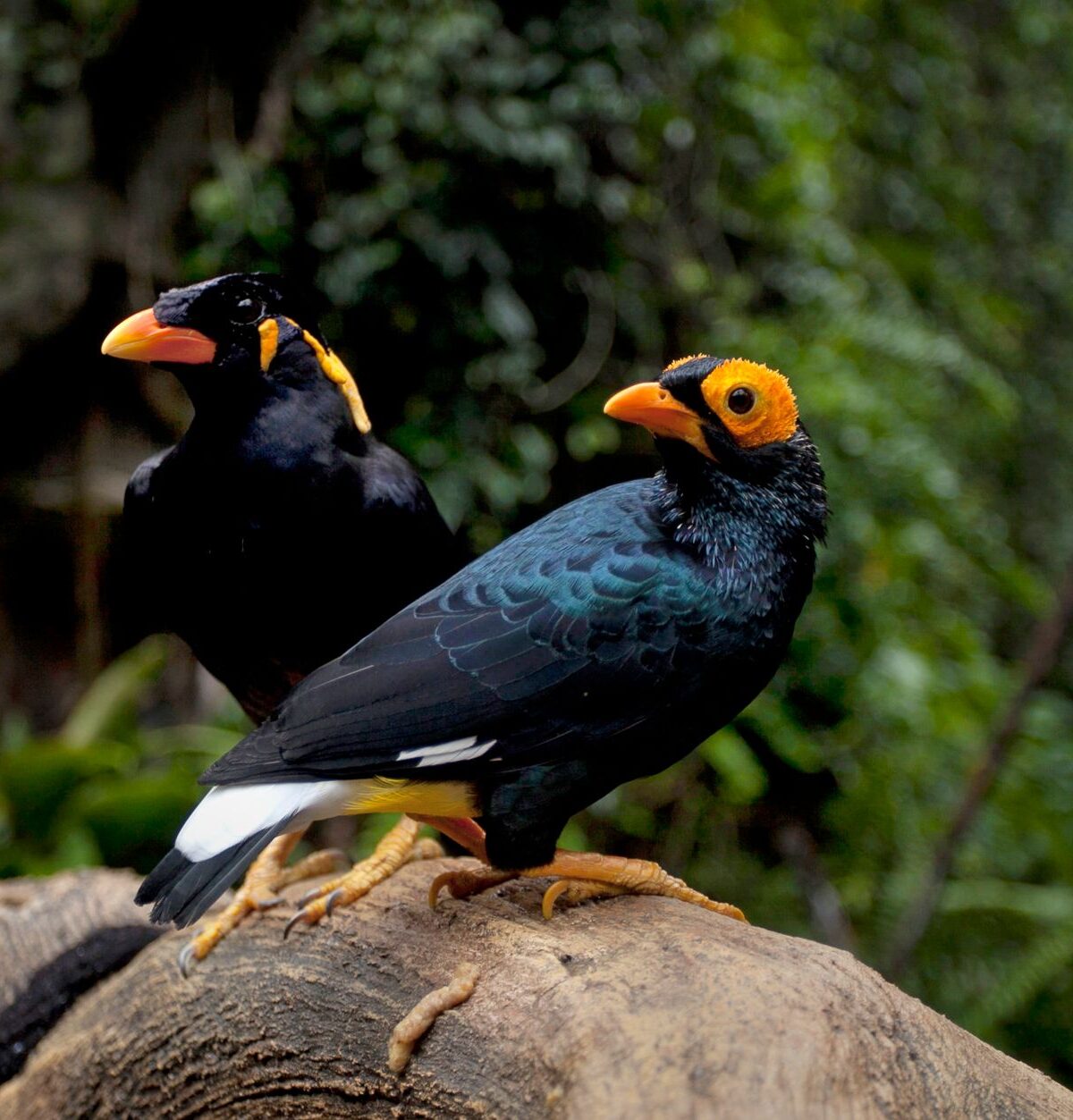
Hill Mynah (Gracula religiosa) is commonly known as the Common Hill Mynah and the Indian Hill Mynah. This bird is notable for its striking black plumage, bright yellow facial patches, and orange-yellow wing and tail feathers. Highly social and intelligent, Hill Mynahs are known for their remarkable ability to mimic human speech and other sounds, making them popular as pets and in aviculture.
FUN FACTS
- Hill Mynahs are known for their exceptional vocal mimicry, often imitating human speech and various environmental sounds, which has made them popular pets
- In the wild, they play a crucial role in seed dispersal, helping to maintain the health of their forest ecosystems by spreading the seeds of the fruits they consume
QUICK INFO
Lifespan10-15 years in the wild, up to 25 years in captivi
Average Weight150-200 g
Average Length25-30 cm
Diet TypeOmnivore
Social StructureThey are typically found in pairs or small groups, often seen foraging together.
Activity PatternDiurnal
Breeding SeasonSpring to early summer
- Habitat
- Hill Mynahs inhabit tropical and subtropical forests, often found in areas with dense vegetation. They prefer habitats that provide ample food sources and nesting sites.
- Biomes
- Tropical Rainforest, Subtropical Forest
- Native Range
- The native range of Hill Mynah includes parts of South and Southeast Asia, particularly in countries like India, Sri Lanka, and Indonesia.
- Continent
- Asia
- Countries
- India, Sri Lanka, Indonesia, Malaysia, Thailand, Myanmar
- Diet
- Hill Mynahs primarily feed on fruits, insects, and small invertebrates. They are known to forage in trees and on the ground for their food.
- Diet Type
- Omnivore
- Favorite Food
- Fruits, insects
- Social Structure
- They are typically found in pairs or small groups, often seen foraging together.
- Activity Pattern
- Diurnal
- Group Size
- 2-10
- Territorial
- 0
 LC
LC
 VU
VU
150-200 g
Weight
25-30 cm
Length
- Coloration
- Predominantly black with bright yellow and orange accents.
- Lifespan
- 10-15 years in the wild, up to 25 years in captivi
- Offspring per Birth
- 2-4
- Sexual Maturity
- 1-2 years
- Breeding Season
- Spring to early summer
LC
Least Concern
IUCN Red List Status
- Population Status
- The population is currently stable, but habitat loss poses a potential threat.
- Wild Population Estimate
- Unknown
- Population Trend
- Stable
- Endangered
- 0
- Threats
- Main threats include habitat destruction due to deforestation and the pet trade. These factors can lead to localized declines in their populations.
- Predators
- Snakes, birds of prey, and larger mammals may prey on Hill Mynahs, especially when they are young or nesting.
- Defense Mechanisms
- Hill Mynahs use vocalizations to warn of danger and may also rely on their agility to escape predators.
- Compatible Animals
- Other birds, particularly those of similar size and temperament, such as other mynas or small parrots.
- Found in Zoos
- Common