


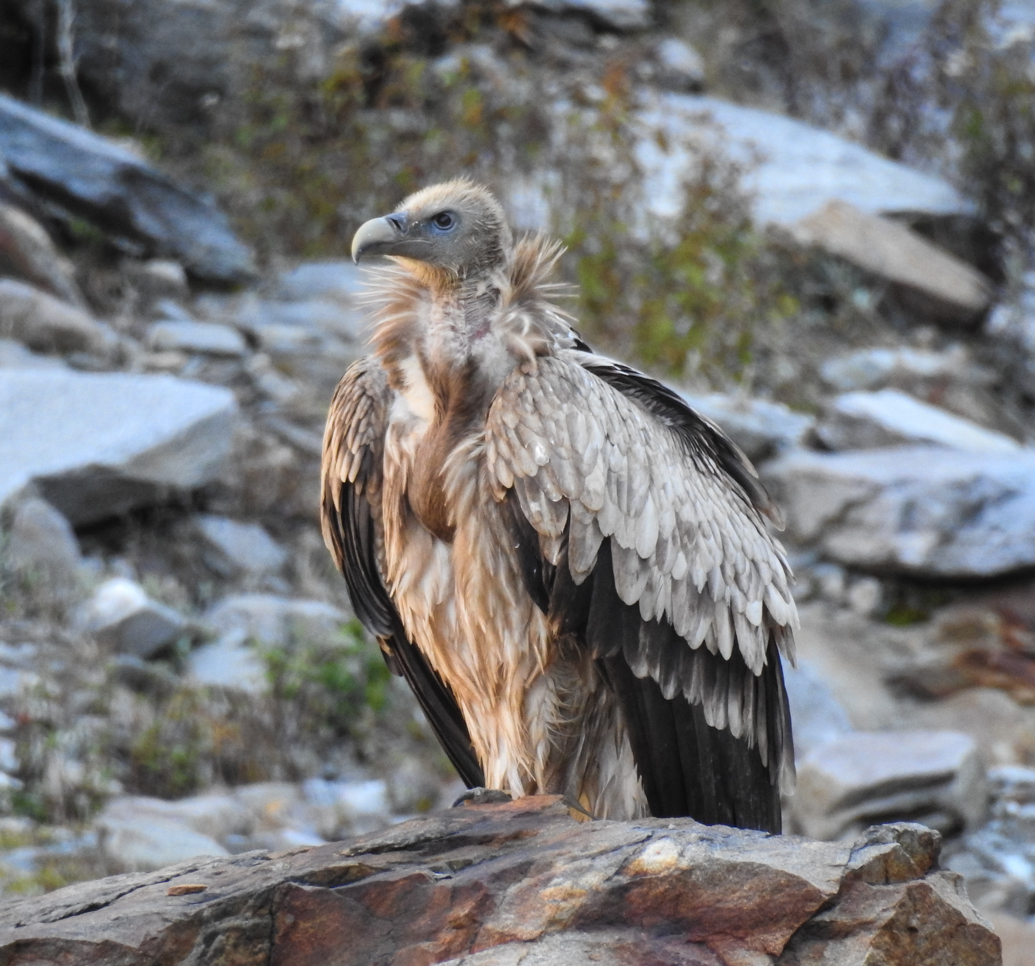
HIMALAYAN GRIFFON VULTURE
Gyps himalayensis
DESCRIPTION
Himalayan Griffon Vulture (Gyps himalayensis) is a large bird of prey known for its impressive wingspan, which can reach up to 3 meters. It has a distinctive appearance with a broad, rounded head, a thick neck covered in downy feathers, and a mostly white body with dark brown wings. This vulture is primarily found in the mountainous regions of the Himalayas, where it plays a crucial role in the ecosystem by scavenging on carrion and helping to keep the environment clean.
FUN FACTS
- Himalayan Griffon Vultures can soar at altitudes of over 10,000 feet, making them one of the highest-flying birds in the world
- They have excellent eyesight, allowing them to spot carrion from great distances, which is essential for their scavenging lifestyle.|These vultures play a critical role in their ecosystem by consuming dead animals, which helps prevent the spread of disease
- Their decline has raised concerns about the health of the ecosystems they inhabit
QUICK INFO
Lifespan20-30 years in the wild
Average Weight7-12 kg
Average Length80-100 cm
Diet TypeCarnivore
Social StructureThey are typically found in groups, especially when feeding, but can also be solitary when searching for food.
Activity PatternDiurnal
Breeding SeasonSpring (March-May)
- Habitat
- This species inhabits high-altitude mountainous regions, often found at elevations between 3,000 and 5,500 meters. It prefers open areas where it can soar and search for food.
- Biomes
- Mountain, Alpine
- Native Range
- The native range of the Himalayan Griffon Vulture includes the Himalayas and surrounding mountain ranges across Central and South Asia.
- Continent
- Asia
- Countries
- India, Nepal, Bhutan, Pakistan, China
- Diet
- The Himalayan Griffon Vulture primarily feeds on the carcasses of large mammals, such as sheep and goats. It is an important scavenger, helping to dispose of dead animals in its habitat.
- Diet Type
- Carnivore
- Favorite Food
- carrion
- Social Structure
- They are typically found in groups, especially when feeding, but can also be solitary when searching for food.
- Activity Pattern
- Diurnal
- Group Size
- 5-30
- Territorial
- 0
7-12 kg
Weight
80-100 cm
Length
- Coloration
- The plumage is predominantly white with dark brown wings and a pale head.
- Sexual Dimorphism
- Males and females are similar in appearance, with no significant differences.
- Lifespan
- 20-30 years in the wild
- Offspring per Birth
- 1
- Sexual Maturity
- 5 years
- Breeding Season
- Spring (March-May)
EN
Endangered
IUCN Red List Status
- Population Status
- The population of Himalayan Griffon Vultures is currently declining due to various threats.
- Wild Population Estimate
- 10,000-20,000
- Population Trend
- Decreasing
- Endangered
- 1
- Threats
- Main threats include habitat loss, poisoning from carcasses treated with veterinary drugs, and food scarcity due to declining livestock populations. These factors have significantly impacted their numbers.
- Conservation Program
- Various conservation programs are in place to protect vulture populations, including breeding programs and awareness campaigns.
- Predators
- While adult Himalayan Griffon Vultures have few natural predators, they can be vulnerable to large birds of prey and human activities.
- Found in Zoos
- Uncommon