


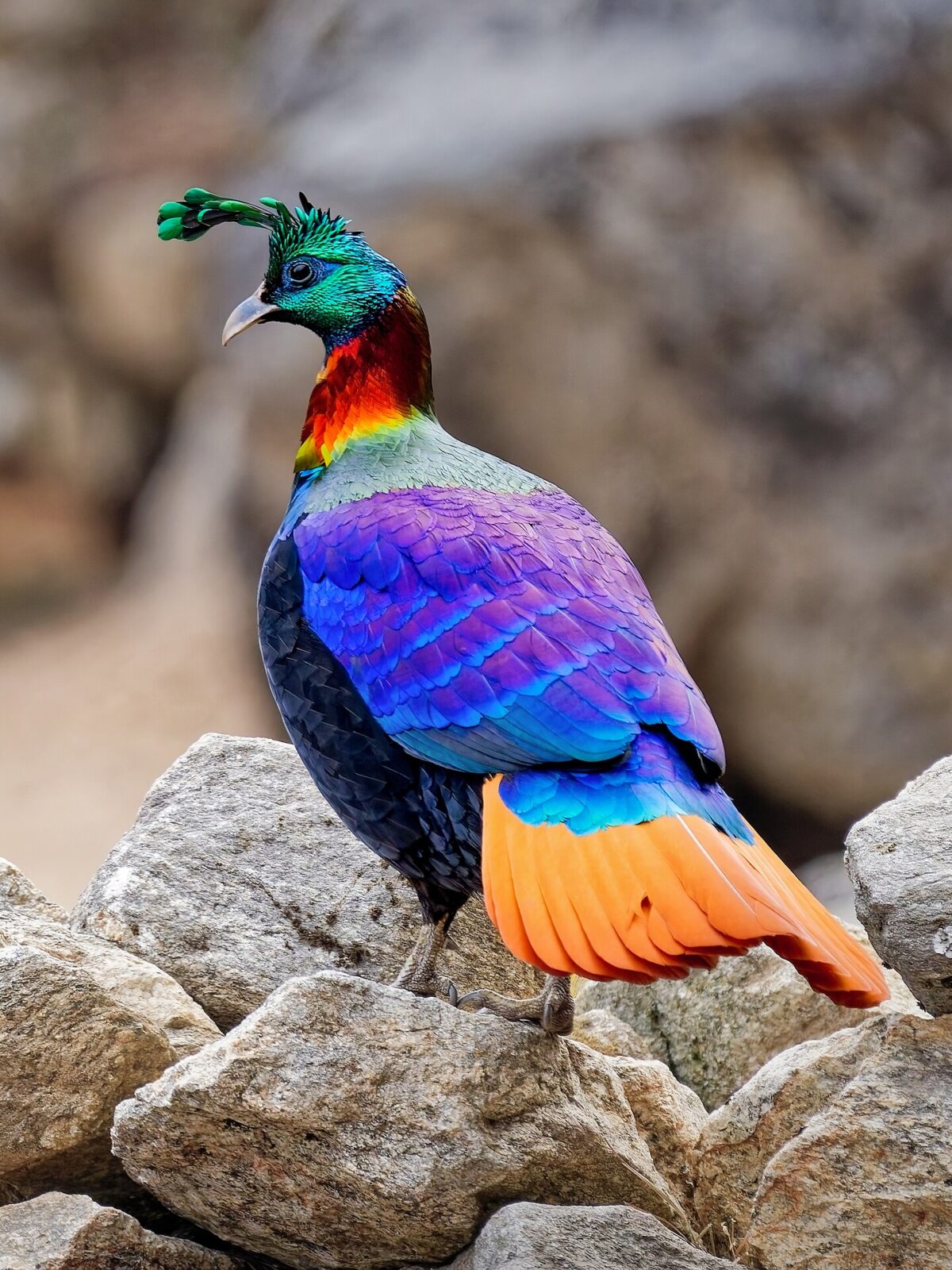
HIMALAYAN IMPEYAN PHEASANT
Lophophorus impejanus
DESCRIPTION
Himalayan Impeyan Pheasant (Lophophorus impejanus) is also known as the Danphe and is renowned for its striking plumage, featuring vibrant colors and iridescent feathers. Males are particularly notable for their long, elegant tail and bright blue and green coloration, while females are more subdued in color, providing camouflage in their natural habitat. This species is primarily found in the mountainous regions of the Himalayas, where it inhabits dense forests and alpine meadows, showcasing a unique adaptation to high-altitude environments.
FUN FACTS
- The Himalayan Impeyan Pheasant is the national bird of Nepal, symbolizing the country's rich biodiversity and cultural heritage
- Its vibrant colors and unique appearance have made it a popular subject in art and photography, often representing the beauty of the Himalayan region.| These pheasants are known for their elaborate courtship displays, where males perform intricate dances and vocalizations to attract females
- This behavior not only showcases their physical fitness but also plays a crucial role in mate selection
QUICK INFO
Lifespan10-15 years in the wild, up to 20 in captivity
Average Weight1.5-2.5 kg
Average Length70-90 cm
Diet TypeOmnivore
Social StructureThey are typically found in pairs or small groups, especially during the non-breeding season.
Activity PatternDiurnal
Breeding SeasonSpring (March-May)
- Habitat
- This pheasant prefers dense forests and alpine meadows, often at elevations between 2,500 and 4,500 meters. It thrives in areas with ample cover and food sources, which are crucial for its survival in harsh mountain climates.
- Biomes
- Montane Forest, Alpine Meadow
- Native Range
- The native range of the Himalayan Impeyan Pheasant includes the eastern Himalayas, particularly in Nepal, India, and Bhutan.
- Continent
- Asia
- Countries
- Nepal, India, Bhutan
- Diet
- Himalayan Impeyan Pheasant primarily feeds on seeds, fruits, and various plant materials, foraging on the ground. They may also consume insects and small invertebrates, particularly during the breeding season.
- Diet Type
- Omnivore
- Favorite Food
- seeds, fruits, plant materials
- Social Structure
- They are typically found in pairs or small groups, especially during the non-breeding season.
- Activity Pattern
- Diurnal
- Group Size
- 2-10
- Territorial
- 1
 VU
VU
 LC
LC

1.5-2.5 kg
Weight
70-90 cm
Length
- Coloration
- Males exhibit vibrant blue and green plumage with a long tail, while females are brown and mottled for camouflage.
- Sexual Dimorphism
- Males are more colorful and larger than females.
- Lifespan
- 10-15 years in the wild, up to 20 in captivity
- Offspring per Birth
- 4-8 eggs
- Sexual Maturity
- 1 year
- Breeding Season
- Spring (March-May)
LC
Least Concern
IUCN Red List Status
- Population Status
- The population of Himalayan Impeyan Pheasants is currently stable, but they face habitat loss and hunting pressures.
- Wild Population Estimate
- 20,000-30,000
- Population Trend
- Stable
- Endangered
- 0
- Threats
- Main threats include habitat destruction due to deforestation and hunting for sport and food. Conservation efforts are needed to protect their natural habitats and mitigate hunting pressures.
- Predators
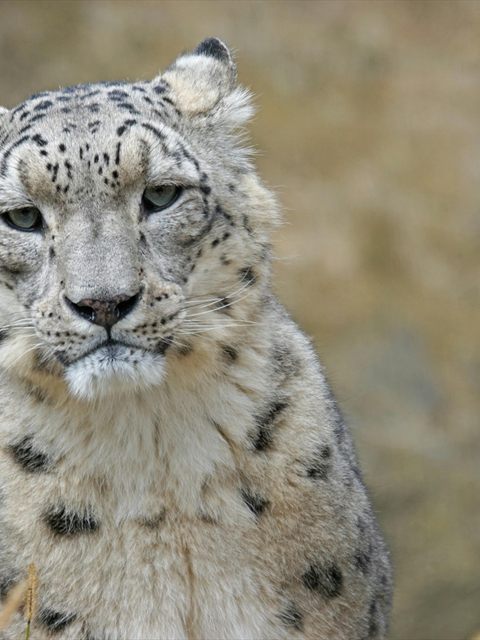
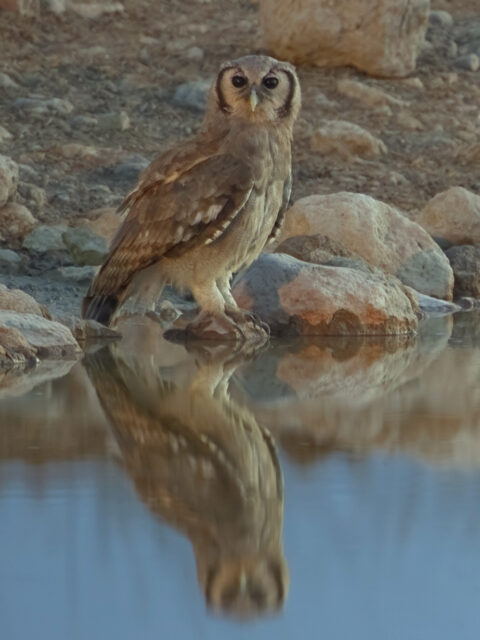
- Snow Leopards, Eagles, Foxes
- Defense Mechanisms
- They rely on their camouflage and ability to remain still to avoid detection by predators.
- Found in Zoos
- Uncommon