


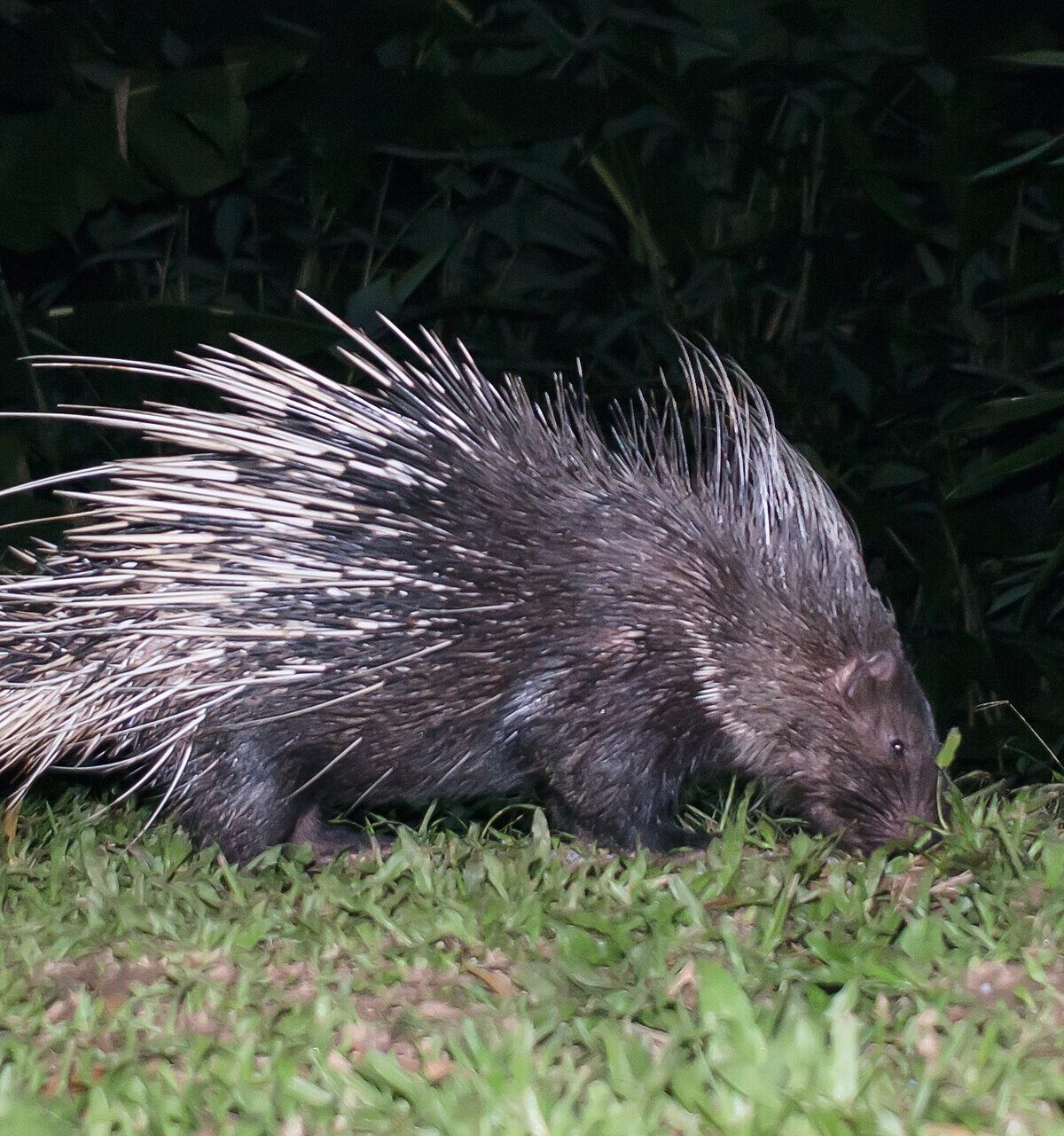
HIMALAYAN PORCUPINE
Hystrix hodgsoni
DESCRIPTION
Himalayan Porcupine (Hystrix hodgsoni) is a large rodent native to the mountainous regions of the Himalayas. It has a distinctive appearance characterized by its spiny quills, which can be raised when threatened, and a robust body covered in coarse fur. This species is primarily nocturnal and is known for its solitary behavior, often foraging alone in search of food.
FUN FACTS
- Himalayan Porcupines are known for their unique defense mechanism of raising their quills when threatened, which can cause serious injury to potential predators
- Additionally, they have a remarkable ability to climb trees, which helps them escape from threats and find food in the canopy.|These porcupines are also known to communicate through a variety of vocalizations, including grunts and hisses, which they use to express distress or to communicate with potential mates
QUICK INFO
Lifespan10-15 years in the wild, up to 20 years in captivi
Average Weight10-20 kg
Average Length60-90 cm
Diet TypeHerbivore
Social Structuresolitary
Activity PatternNocturnal
Breeding SeasonSpring (March-May)
- Habitat
- These porcupines inhabit forested areas, rocky slopes, and grasslands in the Himalayas. They prefer regions with dense vegetation that provide ample food sources and shelter.
- Biomes
- Temperate Forest, Montane Forest
- Native Range
- The native range of the Himalayan Porcupine extends across the Himalayan mountain range, including parts of Nepal, India, Bhutan, and Tibet.
- Continent
- Asia
- Countries
- Nepal, India, Bhutan, Tibet
- Diet
- Himalayan Porcupines are herbivorous, primarily feeding on a variety of plant materials including leaves, fruits, and bark. They are known to gnaw on tree bark and roots, which helps them maintain their ever-growing teeth.
- Diet Type
- Herbivore
- Favorite Food
- leaves, fruits, bark
- Social Structure
- solitary
- Activity Pattern
- Nocturnal
- Group Size
- 1
- Territorial
- 0
 VU
VU
 EN
EN
 VU
VU
10-20 kg
Weight
60-90 cm
Length
- Coloration
- The coloration of the Himalayan Porcupine is typically dark brown to black, with lighter-colored quills that can appear spiky.
- Sexual Dimorphism
- males are generally larger than females
- Lifespan
- 10-15 years in the wild, up to 20 years in captivi
- Gestation Period
- 90-112 days
- Offspring per Birth
- 1-3
- Sexual Maturity
- 1-2 years
- Breeding Season
- Spring (March-May)
LC
Least Concern
IUCN Red List Status
- Population Status
- The population of Himalayan Porcupines is currently stable, but they face threats from habitat loss and hunting.
- Wild Population Estimate
- unknown
- Population Trend
- Stable
- Endangered
- 0
- Threats
- Main threats include habitat destruction due to deforestation and hunting for their quills and meat. These pressures can lead to localized declines in their populations.
- Predators
- leopards, tigers, and large birds of prey
- Defense Mechanisms
- Himalayan Porcupines have sharp quills that they can raise to deter predators, making them difficult to attack.
- Found in Zoos
- Uncommon