


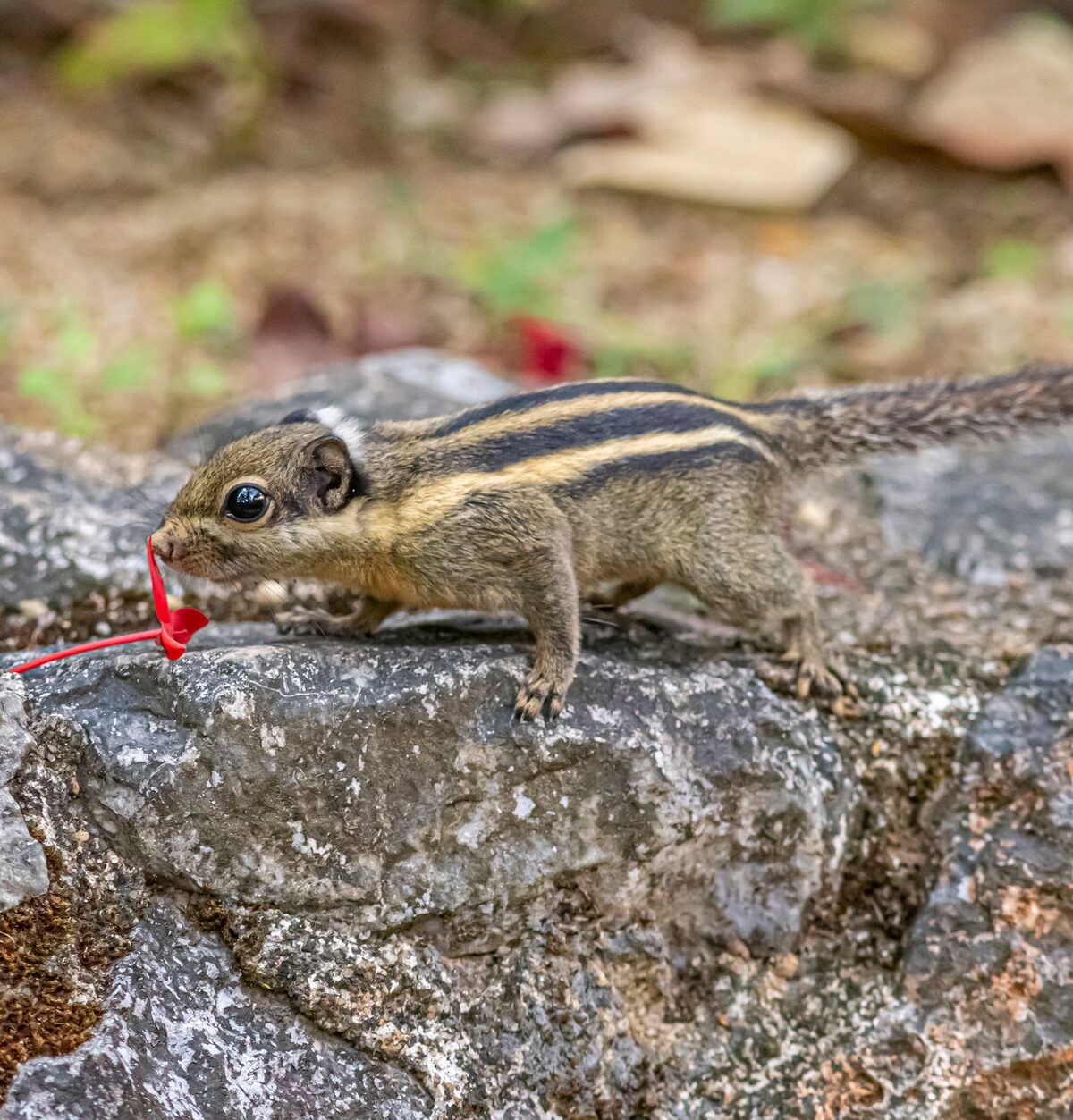
HIMALAYAN STRIPED SQUIRREL
Tamiops macclellandii
DESCRIPTION
Himalayan striped squirrel (Tamiops macclellandii) is also known as Macclelland's striped squirrel. This small rodent is characterized by its distinctive striped fur, which features a combination of brown, gray, and white colors. They are agile climbers, often seen foraging in trees and are known for their lively behavior and vocalizations, which they use to communicate with one another.
FUN FACTS
- Himalayan striped squirrels are known for their impressive climbing skills, often seen leaping between branches with ease
- They play a crucial role in their ecosystem by helping to disperse seeds, which contributes to forest regeneration.| These squirrels have a unique vocalization system, using a variety of chirps and whistles to communicate with each other, especially when warning of potential threats
QUICK INFO
Lifespan5-10 years in the wild
Average Weight150-250 g
Average Length20-25 cm
Diet TypeHerbivore
Social Structuresolitary or small groups, often seen foraging alone but may come together during feeding.
Activity PatternDiurnal
Breeding SeasonSpring (March-May)
- Habitat
- These squirrels inhabit montane forests and shrublands, often at elevations ranging from 1,500 to 3,000 meters. They prefer areas with dense vegetation that provide ample food sources and cover from predators.
- Biomes
- Temperate Forest, Montane Forest
- Native Range
- The native range of the Himalayan striped squirrel includes the eastern Himalayas, particularly in regions of Nepal, India, and Bhutan.
- Continent
- Asia
- Countries
- Nepal, India, Bhutan
- Diet
- Himalayan striped squirrels primarily feed on seeds, nuts, and fruits, foraging both on the ground and in trees. They are known to cache food for later consumption, which helps them survive during leaner times.
- Diet Type
- Herbivore
- Favorite Food
- seeds, nuts, fruits
- Social Structure
- solitary or small groups, often seen foraging alone but may come together during feeding.
- Activity Pattern
- Diurnal
- Group Size
- 1-5
- Territorial
- 0
 LC
LC
 CR
CR
 LC
LC
150-250 g
Weight
20-25 cm
Length
- Coloration
- brown and gray fur with distinctive white stripes along the back
- Lifespan
- 5-10 years in the wild
- Gestation Period
- 30-40 days
- Offspring per Birth
- 2-4
- Sexual Maturity
- 6-12 months
- Breeding Season
- Spring (March-May)
LC
Least Concern
IUCN Red List Status
- Population Status
- The population status of the Himalayan striped squirrel is currently considered stable, although habitat loss poses a potential threat.
- Wild Population Estimate
- unknown
- Population Trend
- Stable
- Endangered
- 0
- Threats
- Main threats include habitat destruction due to deforestation and human encroachment. Climate change may also impact their habitat and food availability.
- Predators
- Eagles, hawks, snakes, and domestic cats are known predators of the Himalayan striped squirrel.
- Defense Mechanisms
- They use agility and speed to escape predators, often retreating to the safety of trees.
- Found in Zoos
- Uncommon