


HISPANIOLAN GIANT ANOLE
Anolis gundlachi
DESCRIPTION
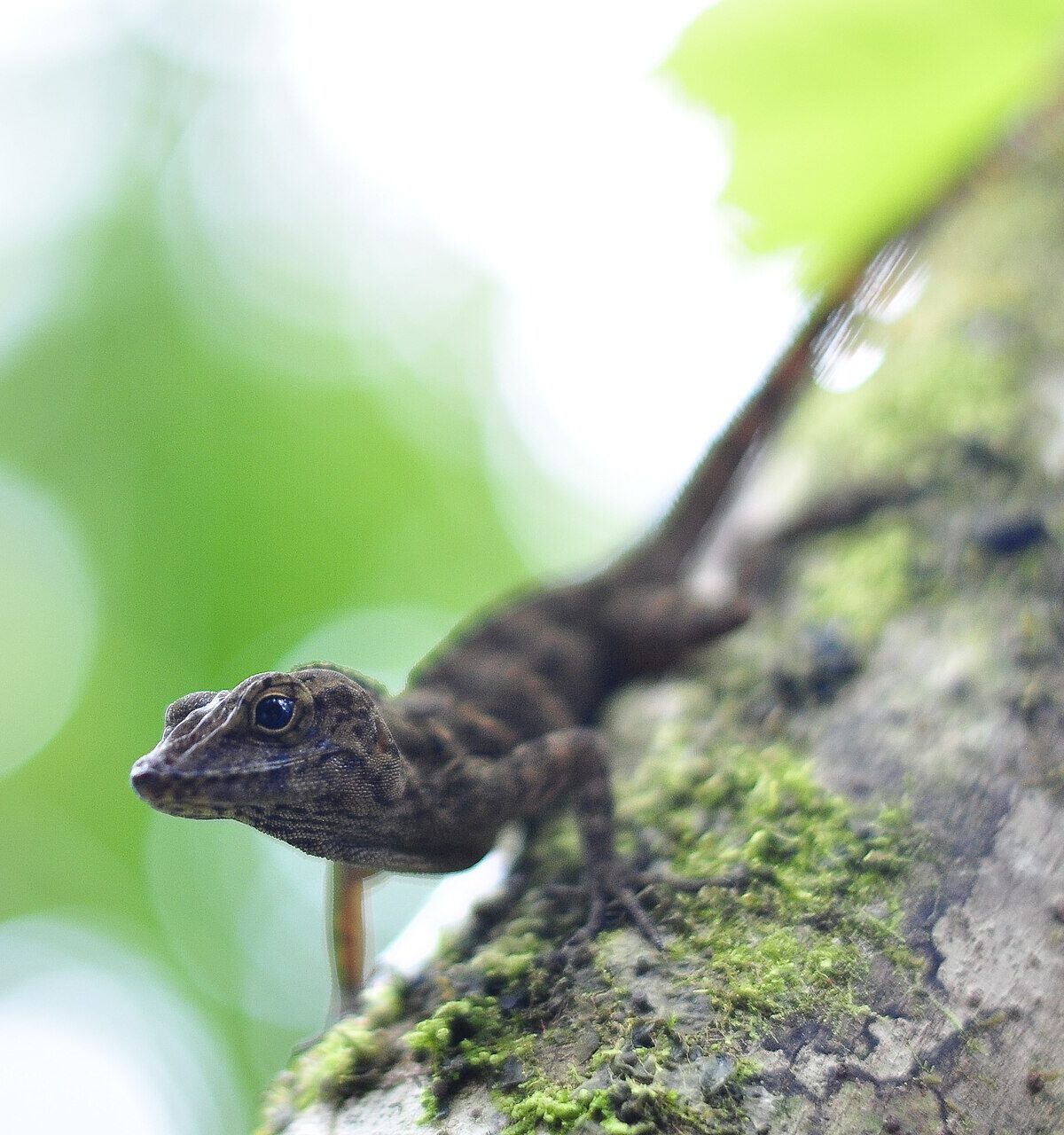
Hispaniolan Giant Anole (Anolis gundlachi) is also known as Gundlach's Anole, a large lizard native to the island of Hispaniola. This species exhibits a robust body with a long tail, and its coloration can vary from green to brown, often with patterns that help it blend into its surroundings. It is primarily arboreal, spending much of its time in trees and shrubs, where it displays territorial behavior and engages in elaborate courtship displays.
FUN FACTS
- Hispaniolan Giant Anoles are known for their impressive displays during mating season, where males will puff up their dewlaps and perform push-up movements to attract females
- These lizards are also capable of losing their tails as a defense mechanism, which can later regenerate, although the new tail may differ in appearance from the original.| This species plays a crucial role in its ecosystem as both predator and prey, helping to control insect populations while also serving as a food source for larger animals
- Their ability to adapt to various microhabitats within the forest makes them a fascinating subject for ecological studies
QUICK INFO
Lifespan5-7 years in the wild
Average Length15-20 cm
Diet TypeInsectivore
Social Structuresolitary, with males being particularly territorial
Activity PatternDiurnal
Breeding SeasonSpring to early summer
- Habitat
- This species inhabits tropical forests and woodlands, often found in areas with dense vegetation. It prefers elevated habitats where it can bask in the sun and hunt for food.
- Biomes
- Tropical Rainforest
- Native Range
- Hispaniolan Giant Anole is native to the island of Hispaniola, which includes the countries of Haiti and the Dominican Republic.
- Continent
- North America
- Countries
- Haiti, Dominican Republic
- Diet
- Hispaniolan Giant Anole primarily feeds on insects and other small invertebrates. It uses its keen eyesight to spot prey from a distance before darting out to catch it.
- Diet Type
- Insectivore
- Favorite Food
- insects, small invertebrates
- Social Structure
- solitary, with males being particularly territorial
- Activity Pattern
- Diurnal
- Group Size
- 1-3
- Territorial
- 1
 VU
VU
 LC
LC
15-20 cm
Length
- Coloration
- varies from green to brown, often with patterns
- Sexual Dimorphism
- males are generally larger and more colorful than females
- Lifespan
- 5-7 years in the wild
- Sexual Maturity
- 6-12 months
- Breeding Season
- Spring to early summer
LC
Least Concern
IUCN Red List Status
- Population Status
- The population of Hispaniolan Giant Anole is currently stable, but habitat loss poses a potential threat.
- Wild Population Estimate
- unknown
- Population Trend
- Stable
- Endangered
- 0
- Threats
- Main threats include habitat destruction due to deforestation and urbanization. Invasive species may also pose a risk to their populations.
- Predators
- birds of prey, snakes, and larger lizards
- Defense Mechanisms
- Hispaniolan Giant Anoles can change color to blend in with their environment, aiding in camouflage from predators.
- Found in Zoos
- Uncommon