


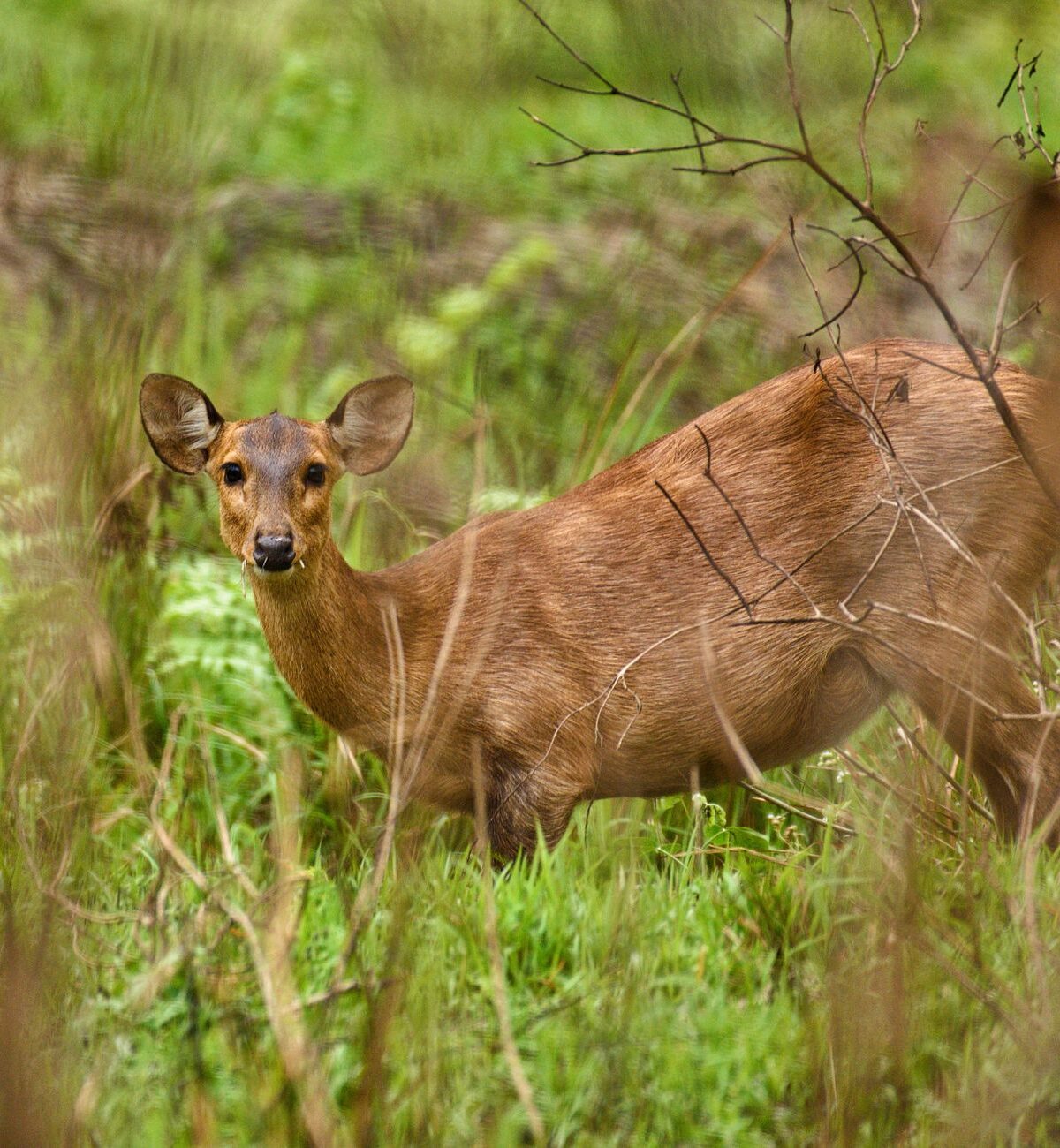
HOG DEER
Axis porcinus
DESCRIPTION
Hog Deer (Axis porcinus) is also known as Swamp Deer and Marsh Deer, characterized by its stocky build and short legs, which are adaptations for its wetland habitat. This species has a reddish-brown coat with white spots and a distinctive white patch on its throat. Hog Deer are known for their unique behavior of 'roaching,' where they stand on their hind legs to reach foliage, and they are often found in small groups or alone, making them somewhat elusive in the wild.
FUN FACTS
- Hog Deer are unique among deer species for their ability to stand on their hind legs to reach higher foliage, a behavior known as 'roaching.' This adaptation allows them to exploit food sources that are otherwise inaccessible to many other herbivores
- | Despite their name, Hog Deer are not closely related to pigs; the name comes from their stout body shape and foraging behavior that resembles that of hogs
- They are an important part of their ecosystem, helping to maintain the health of wetland habitats through their grazing activities
QUICK INFO
Lifespan10-15 years in the wild, up to 20 in captivity
Average Weight50-100 kg
Average Length1.2-1.5 m
Diet TypeHerbivore
Social StructureHog Deer are typically solitary or found in small groups, often consisting of females and their young.
Activity PatternCrepuscular
Breeding SeasonAutumn (September-November)
- Habitat
- Hog Deer inhabit marshy areas, swamps, and grasslands, often near water sources. They prefer dense vegetation that provides cover and food.
- Biomes
- Wetlands, Grasslands
- Native Range
- Hog Deer are native to the Indian subcontinent, particularly found in India, Nepal, and parts of Southeast Asia.
- Continent
- Asia
- Countries
- India, Nepal, Bangladesh, Myanmar
- Diet
- Hog Deer primarily feed on grasses, leaves, and aquatic plants, which are abundant in their wetland habitats. They are known to graze in the early morning and late afternoon.
- Diet Type
- Herbivore
- Favorite Food
- grasses, leaves, aquatic plants
- Social Structure
- Hog Deer are typically solitary or found in small groups, often consisting of females and their young.
- Activity Pattern
- Crepuscular
- Group Size
- 1-5
- Territorial
- 0
 EN
EN
 VU
VU
50-100 kg
Weight
1.2-1.5 m
Length
0.8-1.0 m at shoulder
Height (Shoulder)
- Coloration
- reddish-brown with white spots
- Sexual Dimorphism
- Males have antlers, while females do not.
- Lifespan
- 10-15 years in the wild, up to 20 in captivity
- Gestation Period
- 210 days
- Offspring per Birth
- 1
- Sexual Maturity
- 1-2 years
- Breeding Season
- Autumn (September-November)
LC
Least Concern
IUCN Red List Status
- Population Status
- The population of Hog Deer is currently stable, but they face habitat loss and hunting pressures.
- Wild Population Estimate
- 10,000-15,000
- Population Trend
- Stable
- Endangered
- 0
- Threats
- Main threats to Hog Deer include habitat destruction due to agriculture and urbanization, as well as poaching for their antlers and meat. Conservation efforts are needed to protect their wetland habitats.
- Predators
- Tigers, leopards, and wild dogs are known predators of Hog Deer.
- Defense Mechanisms
- Hog Deer rely on their camouflage and agility to escape predators, often fleeing into dense vegetation.
- Found in Zoos
- Uncommon