


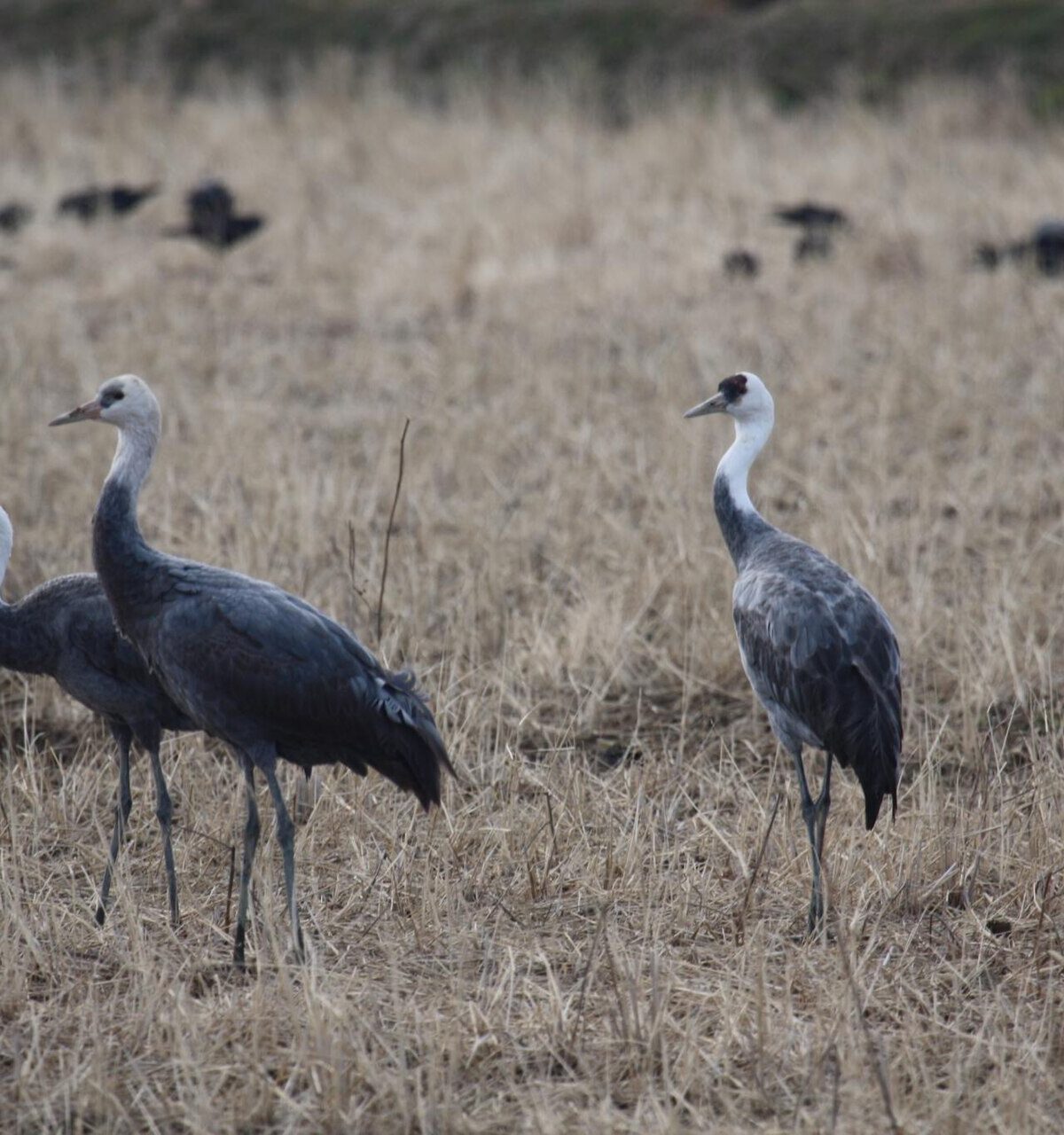
HOODED CRANE
DESCRIPTION
Hooded Crane is a large, elegant bird known for its distinctive hood-like feathering on the head, which is gray with a black crown. It has long legs and a long neck, with a predominantly gray body and white feathers on the face and neck. This species is known for its elaborate courtship displays, which include dancing and calling, and it typically inhabits wetlands and grasslands where it forages for food.
FUN FACTS
- Hooded Cranes are known for their impressive courtship dances, which involve intricate movements and synchronized steps that can last for several minutes
- These displays are not only a way to attract mates but also strengthen pair bonds
- | During migration, Hooded Cranes can travel long distances, sometimes flying over 1,000 kilometers in a single day
- They are known to stop at specific sites along their migratory routes, which are crucial for resting and feeding
QUICK INFO
Lifespan20-30 years in the wild.
Average Weight4-6 kg
Average Length1.0-1.2 m
Diet TypeOmnivore
Social StructureThey are typically seen in pairs or small groups, especially during the breeding season, but can gather in larger flocks during migration.
Activity PatternDiurnal
Breeding SeasonSpring (April-June)
- Habitat
- Hooded Cranes prefer wetland habitats, including marshes, rice fields, and shallow lakes. They are often found in areas with abundant vegetation that provides cover and food sources.
- Biomes
- Wetlands, Grasslands
- Native Range
- Hooded Cranes are native to East Asia, with breeding populations found in northeastern China, Mongolia, and parts of Russia.
- Continent
- Asia
- Countries
- China, Mongolia, Russia, Japan, South Korea
- Diet
- Hooded Cranes primarily feed on plant material, including seeds, grains, and tubers, but they also consume small invertebrates. They forage in shallow waters and mudflats, using their long bills to probe for food.
- Diet Type
- Omnivore
- Favorite Food
- seeds, grains, tubers
- Social Structure
- They are typically seen in pairs or small groups, especially during the breeding season, but can gather in larger flocks during migration.
- Activity Pattern
- Diurnal
- Group Size
- 5-50
- Territorial
- 1

 VU
LC
VU
LC
4-6 kg
Weight
1.0-1.2 m
Length
- Coloration
- Predominantly gray with a black crown and white facial markings.
- Sexual Dimorphism
- Males and females are similar in appearance, but males are generally larger.
- Lifespan
- 20-30 years in the wild.
- Offspring per Birth
- 1-2
- Sexual Maturity
- 3-4 years
- Breeding Season
- Spring (April-June)
LC
Least Concern
IUCN Red List Status
- Population Status
- The population of Hooded Cranes is currently stable, but they face threats from habitat loss.
- Wild Population Estimate
- 10,000-15,000
- Population Trend
- Stable
- Endangered
- 0
- Threats
- Main threats include habitat destruction due to agricultural expansion and wetland drainage. Climate change also poses a risk to their migratory patterns and breeding grounds.
- Predators
- Foxes, large birds of prey, and domestic dogs.
- Defense Mechanisms
- Hooded Cranes rely on their ability to fly and their social behavior to evade predators, often using alarm calls to warn others.
- Compatible Animals
- none
- Found in Zoos
- Uncommon