


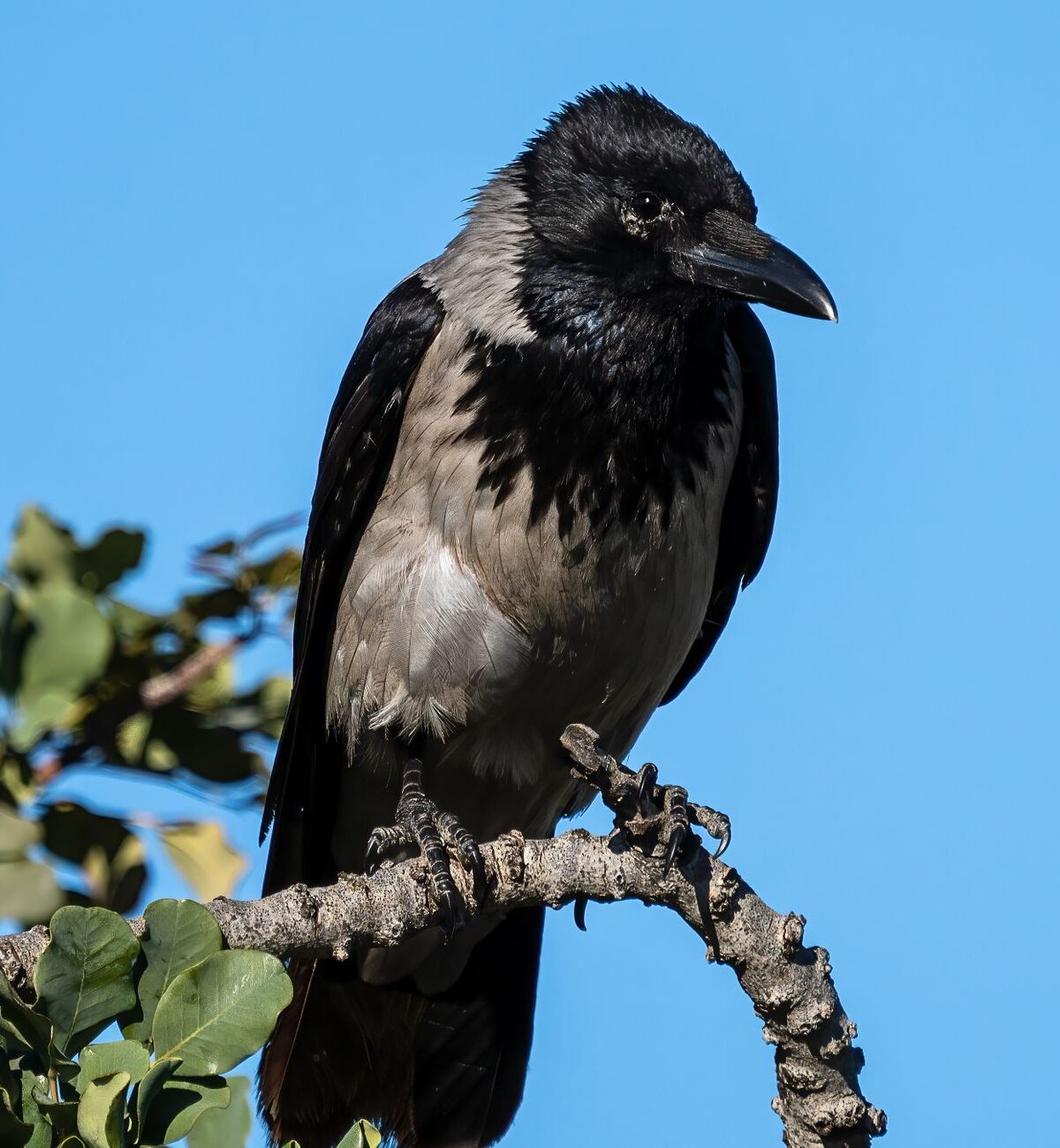
HOODED CROW
Corvus cornix
DESCRIPTION
Hooded Crow (Corvus cornix) is a medium-sized bird known for its distinctive two-tone plumage, featuring a gray body and black head, wings, and tail. This species exhibits intelligent behavior, often using tools and displaying problem-solving skills, which is characteristic of the corvid family. Hooded Crows are highly adaptable and can thrive in various environments, often seen scavenging in urban areas as well as in rural settings.
FUN FACTS
- Hooded Crows are known for their intelligence and problem-solving abilities, often using tools to access food
- They have been observed dropping nuts on roads for cars to crack them open, showcasing their ability to use their environment to their advantage.|These birds are also highly social and have complex social structures, often engaging in cooperative breeding where non-breeding individuals help care for the young
- Their adaptability allows them to thrive in both rural and urban settings, making them a common sight in many areas
QUICK INFO
Lifespan10-15 years in the wild, up to 20 in captivity
Average Weight400-600 g
Average Length46-52 cm
Diet TypeOmnivore
Social StructureThey are often seen in pairs or small groups, displaying a social structure that allows for cooperative foraging.
Activity PatternDiurnal
Breeding SeasonSpring (March-May)
- Habitat
- Hooded Crows inhabit a range of environments, including coastal areas, farmland, and urban regions. They prefer open landscapes where they can forage for food and build their nests in trees or on buildings.
- Biomes
- Temperate Forest, Grassland, Urban
- Native Range
- Hooded Crows are native to Europe and parts of the Middle East, with populations found in northern Africa as well.
- Continent
- Europe, Asia, Africa
- Countries
- United Kingdom, Ireland, Poland, Germany, Russia, Turkey
- Diet
- Hooded Crows are omnivorous and have a varied diet that includes carrion, small animals, insects, and plant material. They are opportunistic feeders and will scavenge for food in a wide range of habitats.
- Diet Type
- Omnivore
- Favorite Food
- carrion, small animals, insects
- Social Structure
- They are often seen in pairs or small groups, displaying a social structure that allows for cooperative foraging.
- Activity Pattern
- Diurnal
- Group Size
- 2-10
- Territorial
- 1
 LC
LC
 CR
CR
 LC
LC
400-600 g
Weight
46-52 cm
Length
- Coloration
- Gray body with black head, wings, and tail.
- Lifespan
- 10-15 years in the wild, up to 20 in captivity
- Offspring per Birth
- 3-6
- Sexual Maturity
- 2-3 years
- Breeding Season
- Spring (March-May)
LC
Least Concern
IUCN Red List Status
- Population Status
- The population of Hooded Crows is generally stable, with a wide distribution across their native range.
- Wild Population Estimate
- 1,000,000-2,000,000
- Population Trend
- Stable
- Endangered
- 0
- Threats
- Hooded Crows face threats from habitat loss and persecution in some areas due to their scavenging behavior. However, they are generally adaptable and resilient to changes in their environment.
- Predators
- Eagles, large hawks, foxes, and domestic cats.
- Defense Mechanisms
- Hooded Crows use vocalizations to warn of predators and may mob larger birds of prey to protect their nests.
- Compatible Animals
- none
- Found in Zoos
- Uncommon