


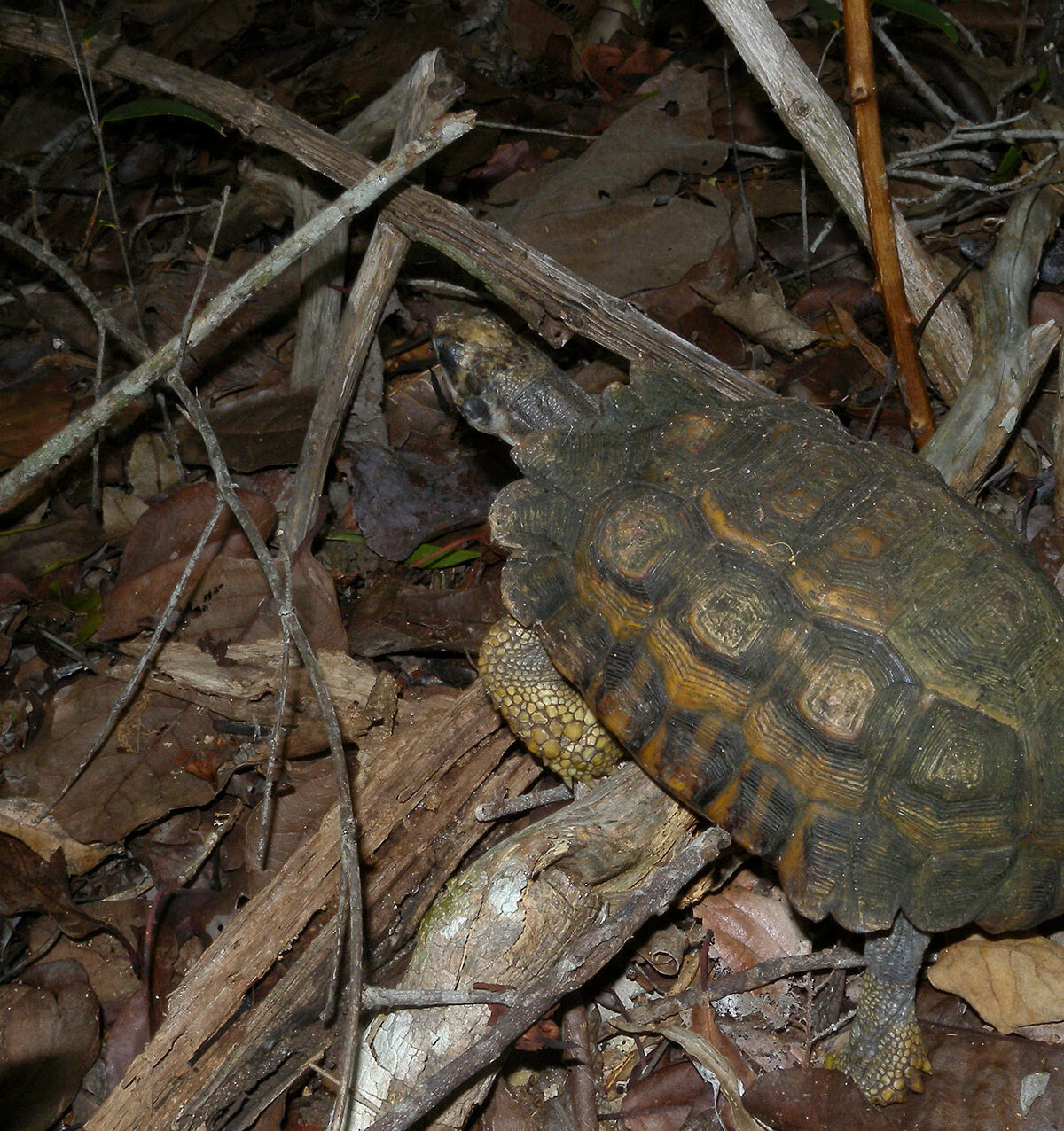
HOODED TORTOISE
Pyxis planicauda
DESCRIPTION
Hooded Tortoise (Pyxis planicauda) is a small tortoise species native to Madagascar, characterized by its distinctive hood-like structure on the front of its shell. This tortoise has a high-domed shell that is typically dark brown to black with yellowish markings, providing it with excellent camouflage in its natural habitat. It is primarily terrestrial and exhibits a slow-moving lifestyle, often found in dry forest areas where it forages for food and seeks shelter.
FUN FACTS
- Hooded Tortoises are known for their unique shell shape, which resembles a hood, providing them with a distinctive appearance among tortoises
- They are also one of the few tortoise species that can survive in relatively arid environments, showcasing their adaptability to different habitats.|These tortoises have a fascinating reproductive strategy, where females can store sperm for several years, allowing them to fertilize eggs even when a male is not present
- This adaptation is particularly beneficial in their fragmented habitats where finding a mate can be challenging
QUICK INFO
Lifespanup to 50 years in captivity
Average Weight1-2 kg
Average Length20-25 cm
Diet TypeHerbivore
Social Structuresolitary, typically found alone except during mating season
Activity PatternDiurnal
Breeding SeasonSpring (October-December)
- Habitat
- These tortoises inhabit dry forests and scrublands, often preferring areas with ample vegetation for foraging. They require access to both food sources and shelter to thrive.
- Biomes
- Tropical Dry Forest
- Native Range
- Endemic to Madagascar, specifically found in the western and southern regions of the island.
- Continent
- Africa
- Countries
- Madagascar
- Diet
- Hooded Tortoises are herbivorous, primarily feeding on a variety of plant materials including leaves, fruits, and flowers. They play a crucial role in their ecosystem by aiding in seed dispersal.
- Diet Type
- Herbivore
- Favorite Food
- leaves, fruits, flowers
- Social Structure
- solitary, typically found alone except during mating season
- Activity Pattern
- Diurnal
- Group Size
- 1
- Territorial
- 0
 LC
LC
 VU
VU
1-2 kg
Weight
20-25 cm
Length
- Coloration
- dark brown to black with yellowish markings
- Sexual Dimorphism
- males are generally smaller with a more concave plastron
- Lifespan
- up to 50 years in captivity
- Gestation Period
- 60-90 days
- Offspring per Birth
- 1-5
- Sexual Maturity
- 5-7 years
- Breeding Season
- Spring (October-December)
CR
Critically Endangered
IUCN Red List Status
- Population Status
- The population of Hooded Tortoises is currently declining due to habitat loss and illegal pet trade.
- Wild Population Estimate
- unknown
- Population Trend
- Decreasing
- Endangered
- 1
- Threats
- Main threats include habitat destruction due to deforestation and the illegal pet trade, which significantly impacts their numbers in the wild. Conservation efforts are needed to protect their natural habitats and regulate trade.
- Predators
- domestic dogs, birds of prey, and larger reptiles
- Defense Mechanisms
- Hooded Tortoises can retract into their shells for protection against predators.
- Found in Zoos
- Rare