


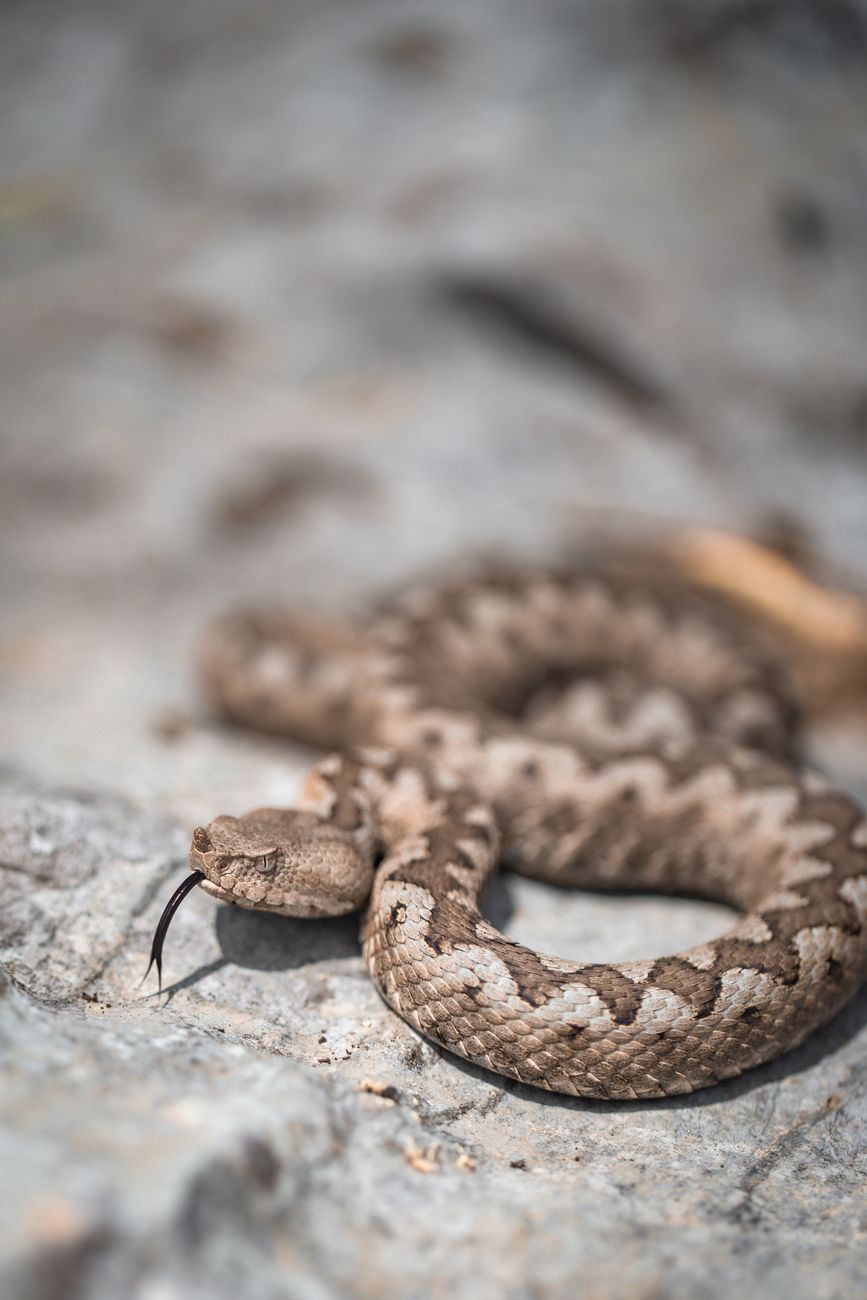
HORNED VIPER
Vipera ammodytes
DESCRIPTION
Horned Viper (Vipera ammodytes) is commonly known as the Ammodytes Viper and Horned Snake. This species is characterized by its distinctive horn-like scales above its eyes, which give it a unique appearance among vipers. It is primarily found in rocky and dry habitats, where it exhibits a cryptic coloration that helps it blend into its surroundings, making it an effective ambush predator.
FUN FACTS
- Horned Vipers are known for their unique horn-like scales, which not only serve as a distinguishing feature but may also play a role in mating displays
- Additionally, they have a potent venom that is primarily hemotoxic, allowing them to immobilize their prey quickly and efficiently.| Despite their fearsome reputation, Horned Vipers are generally shy and prefer to avoid human contact
- They will often remain motionless when approached, relying on their camouflage to escape detection
QUICK INFO
Lifespan10-15 years in the wild, up to 20 years in captivi
Average Weight0.5-1.5 kg
Average Length0.6-1.2 m
Diet TypeCarnivore
Social Structuresolitary, typically found alone except during mating season
Activity PatternNocturnal
Breeding SeasonSpring (April-June)
- Habitat
- Horned Vipers inhabit rocky, dry areas, often preferring open grasslands and scrublands. They are also found in mountainous regions, where they can hide among rocks and vegetation.
- Biomes
- Temperate Forest, Grassland, Mediterranean
- Native Range
- The native range of the Horned Viper includes parts of southeastern Europe, particularly in the Balkans.
- Continent
- Europe
- Countries
- Albania, Bosnia and Herzegovina, Croatia, Greece, Montenegro, Serbia, Slovenia
- Diet
- Horned Vipers primarily feed on small mammals, birds, and lizards. They are ambush predators, relying on their camouflage to surprise their prey.
- Diet Type
- Carnivore
- Favorite Food
- small mammals, birds, lizards
- Social Structure
- solitary, typically found alone except during mating season
- Activity Pattern
- Nocturnal
- Group Size
- 1
- Territorial
- 1
 VU
VU
0.5-1.5 kg
Weight
0.6-1.2 m
Length
- Coloration
- The coloration of the Horned Viper varies but typically includes shades of brown, gray, and yellow, often with darker patterns.
- Sexual Dimorphism
- Males are generally smaller than females and may have more vibrant coloration.
- Lifespan
- 10-15 years in the wild, up to 20 years in captivi
- Gestation Period
- 90-100 days
- Offspring per Birth
- 3-20
- Sexual Maturity
- 2-3 years
- Breeding Season
- Spring (April-June)
LC
Least Concern
IUCN Red List Status
- Population Status
- The population of Horned Vipers is currently stable, but local declines may occur due to habitat loss.
- Wild Population Estimate
- unknown
- Population Trend
- Stable
- Endangered
- 0
- Threats
- Main threats include habitat destruction due to urbanization and agriculture, as well as persecution due to fear of venomous snakes. Conservation efforts are needed to protect their natural habitats.
- Predators
- Birds of prey, larger snakes, and mammals such as foxes may prey on Horned Vipers.
- Defense Mechanisms
- Horned Vipers rely on their cryptic coloration for camouflage and may also exhibit defensive behaviors such as hissing or striking when threatened.
- Found in Zoos
- Uncommon