


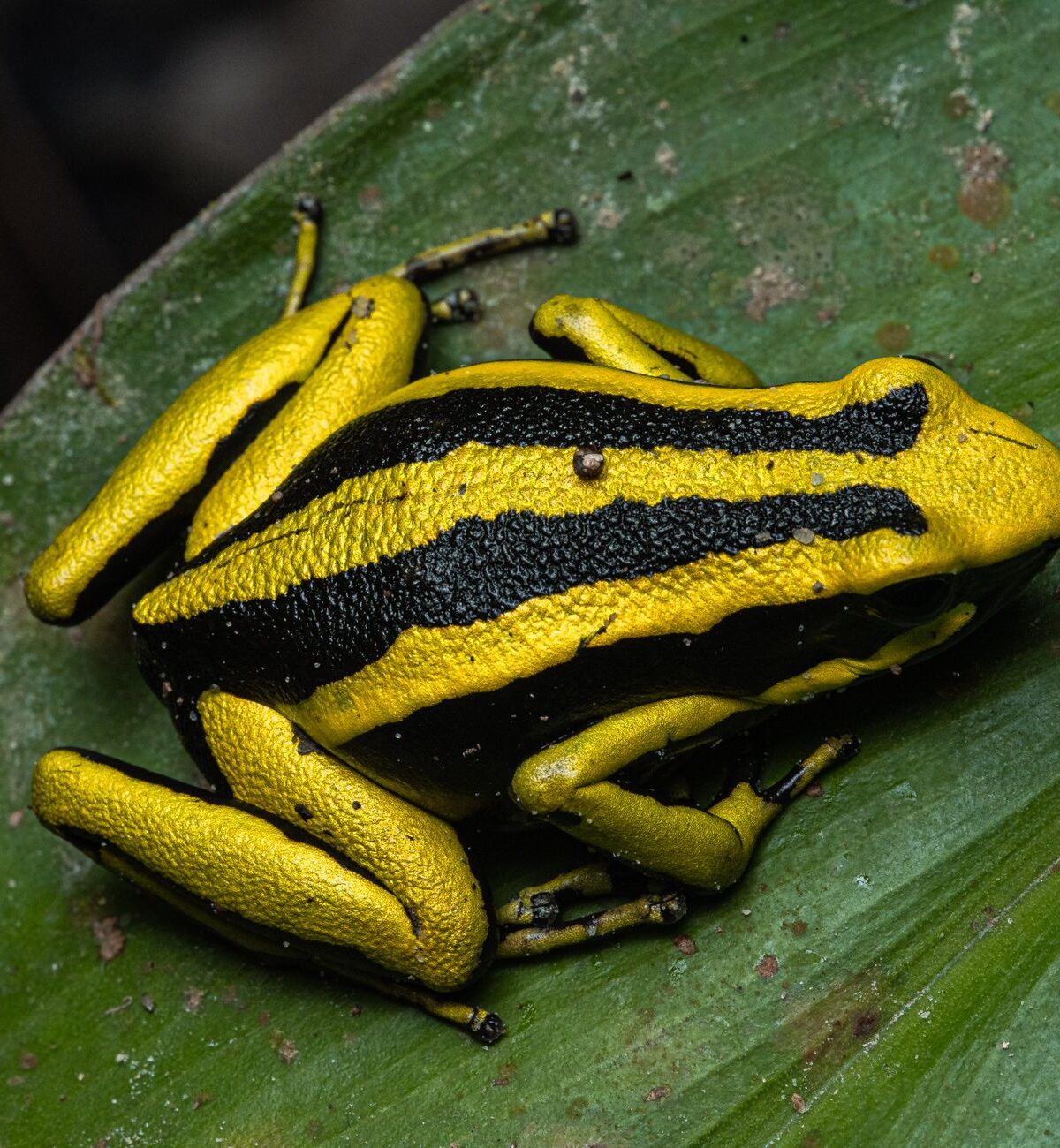
HORRIBLE POISON DART FROG
Phyllobates terribilis
DESCRIPTION
Horrible Poison Dart Frog (Phyllobates terribilis) is commonly known as the Golden Poison Frog due to its striking bright yellow coloration, which serves as a warning to potential predators about its toxicity. This small amphibian typically measures around 2 inches in length and has a smooth, shiny skin that is often adorned with black spots. Inhabiting the rainforests of Colombia, these frogs are known for their secretive behavior, often hiding among leaf litter and vegetation during the day.
FUN FACTS
- Horrible Poison Dart Frogs are among the most toxic animals in the world, with enough poison in one frog to kill several adult humans
- Interestingly, they do not produce these toxins themselves; instead, they acquire them through their diet of toxic ants and other invertebrates
- | The bright coloration of the Horrible Poison Dart Frog is not just for show; it plays a crucial role in their survival by warning predators of their lethal toxicity
- This adaptation is a classic example of how evolution shapes the behavior and appearance of species in response to environmental pressures
QUICK INFO
Lifespan5-10 years in the wild, up to 15 years in captivit
Average Length2-5 cm
Diet TypeInsectivore
Social Structuresolitary, occasionally found in pairs during the breeding season
Activity PatternDiurnal
Breeding SeasonYear-round, with peaks during the rainy season
- Habitat
- These frogs thrive in humid tropical rainforests, often found near water sources such as streams and ponds. They prefer areas with dense vegetation that provides cover and ample food sources.
- Biomes
- Tropical Rainforest
- Native Range
- Phyllobates terribilis is native to the Pacific coast of Colombia, particularly in the Chocó region.
- Continent
- South America
- Countries
- Colombia
- Diet
- Horrible Poison Dart Frogs primarily feed on small invertebrates, particularly ants and termites, which contribute to their toxicity. Their diet is crucial for acquiring the alkaloids that make them one of the most poisonous animals on Earth.
- Diet Type
- Insectivore
- Favorite Food
- ants, termites
- Social Structure
- solitary, occasionally found in pairs during the breeding season
- Activity Pattern
- Diurnal
- Group Size
- 1-2
- Territorial
- 0
 VU
VU
 LC
LC
2-5 cm
Length
- Coloration
- bright yellow with black spots
- Sexual Dimorphism
- males are typically smaller than females
- Lifespan
- 5-10 years in the wild, up to 15 years in captivit
- Offspring per Birth
- up to 20
- Sexual Maturity
- 1-2 years
- Breeding Season
- Year-round, with peaks during the rainy season
LC
Least Concern
IUCN Red List Status
- Population Status
- The population of Horrible Poison Dart Frogs is currently stable, but they are vulnerable to habitat loss.
- Wild Population Estimate
- unknown
- Population Trend
- Stable
- Endangered
- 0
- Threats
- Main threats include habitat destruction due to deforestation and pollution. Climate change also poses a risk to their rainforest habitat.
- Predators
- Birds, snakes, and some mammals are known to prey on Horrible Poison Dart Frogs, although their toxicity deters many potential predators.
- Defense Mechanisms
- Their bright coloration serves as a warning signal to predators about their toxicity, a phenomenon known as aposematism.
- Found in Zoos
- Uncommon