


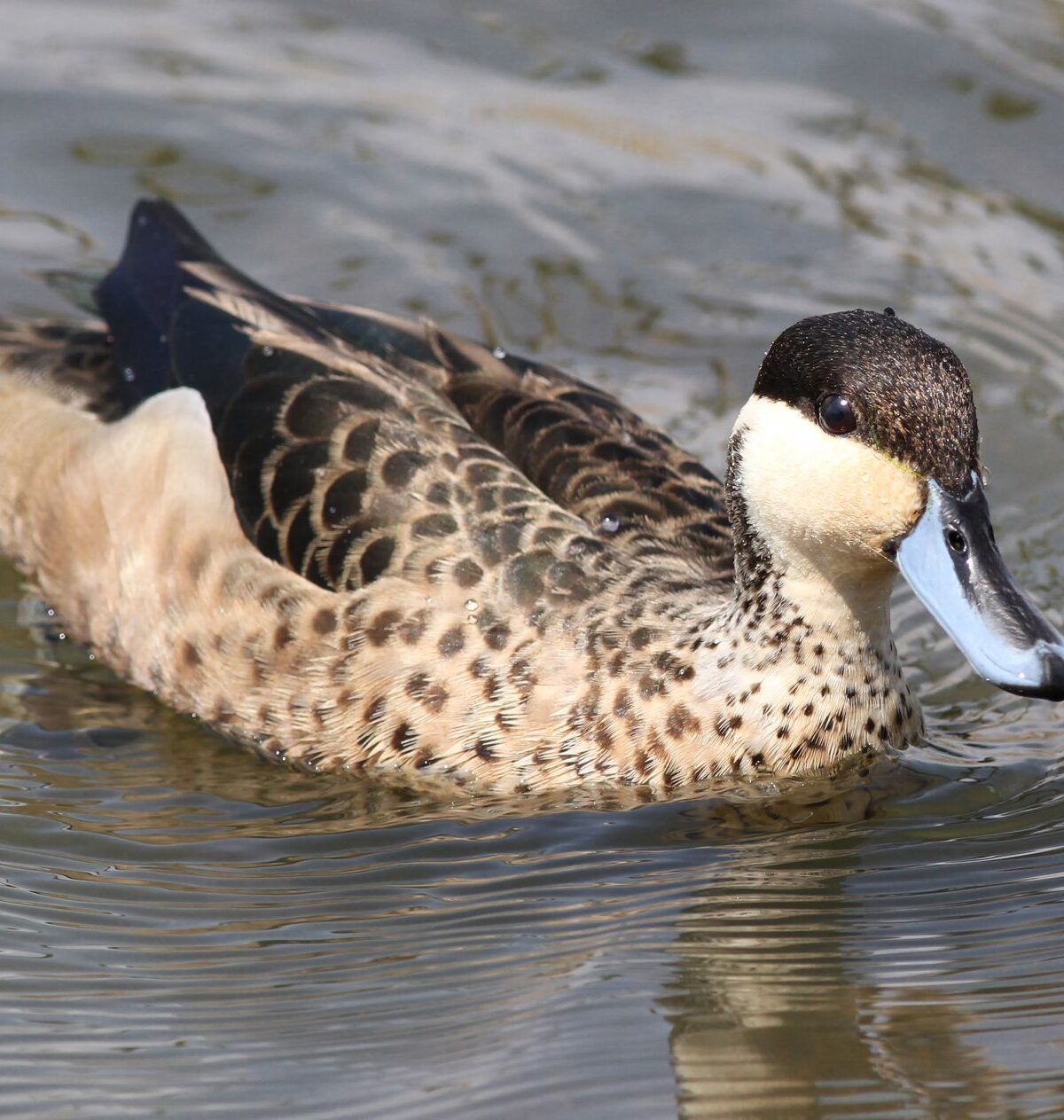
HOTTENTOT TEAL
Anas hottentota
DESCRIPTION
Hottentot Teal (Anas hottentota) is a small dabbling duck known for its striking coloration and distinctive features. It has a compact body with a short neck, and males typically exhibit a rich chestnut-brown color with a greenish speculum, while females are more mottled and brownish. This species is often found in shallow wetlands and marshes, where it forages for food and engages in social behaviors with other waterfowl.
FUN FACTS
- Hottentot Teal is known for its unique vocalizations, which include a series of whistles and quacks that can be heard during courtship displays
- Additionally, this species has a fascinating breeding behavior where the female often builds her nest in dense vegetation near water, providing safety for her young from potential predators.| Despite their small size, Hottentot Teal are agile flyers and can cover considerable distances when migrating between seasonal habitats
- Their adaptability to various wetland environments makes them a resilient species in the face of changing ecological conditions
QUICK INFO
Lifespan5-10 years in the wild
Average Weight300-400 g
Average Length30-35 cm
Diet TypeOmnivore
Social StructureThey are often found in pairs or small groups, especially during the breeding season.
Activity PatternDiurnal
Breeding SeasonSpring to early summer
- Habitat
- This species inhabits freshwater wetlands, marshes, and shallow lakes. They prefer areas with dense vegetation for cover and nesting.
- Biomes
- Wetlands, Marshes
- Native Range
- Hottentot Teal is native to sub-Saharan Africa, primarily found in the eastern and southern regions.
- Continent
- Africa
- Countries
- South Africa, Namibia, Botswana, Zambia, Tanzania
- Diet
- Hottentot Teal primarily feeds on aquatic plants, seeds, and small invertebrates. They forage by dabbling in the water and grazing on vegetation.
- Diet Type
- Omnivore
- Favorite Food
- aquatic plants, seeds, small invertebrates
- Social Structure
- They are often found in pairs or small groups, especially during the breeding season.
- Activity Pattern
- Diurnal
- Group Size
- 2-10
- Territorial
- 0

 LC
LC
300-400 g
Weight
30-35 cm
Length
- Coloration
- Males are chestnut-brown with a greenish speculum, while females are mottled brown.
- Sexual Dimorphism
- Males are more brightly colored than females.
- Lifespan
- 5-10 years in the wild
- Offspring per Birth
- 6-12
- Sexual Maturity
- 1 year
- Breeding Season
- Spring to early summer
LC
Least Concern
IUCN Red List Status
- Population Status
- The population is currently stable, but habitat loss poses a potential threat.
- Wild Population Estimate
- Unknown
- Population Trend
- Stable
- Endangered
- 0
- Threats
- Main threats include habitat destruction due to agriculture and urban development. Pollution and climate change also pose risks to their wetland habitats.
- Predators
- Predators include larger birds of prey, foxes, and domestic cats.
- Defense Mechanisms
- They rely on their ability to quickly escape into water and dense vegetation to avoid predators.
- Compatible Animals
- Other small waterfowl, such as various species of ducks
- Found in Zoos
- Uncommon