


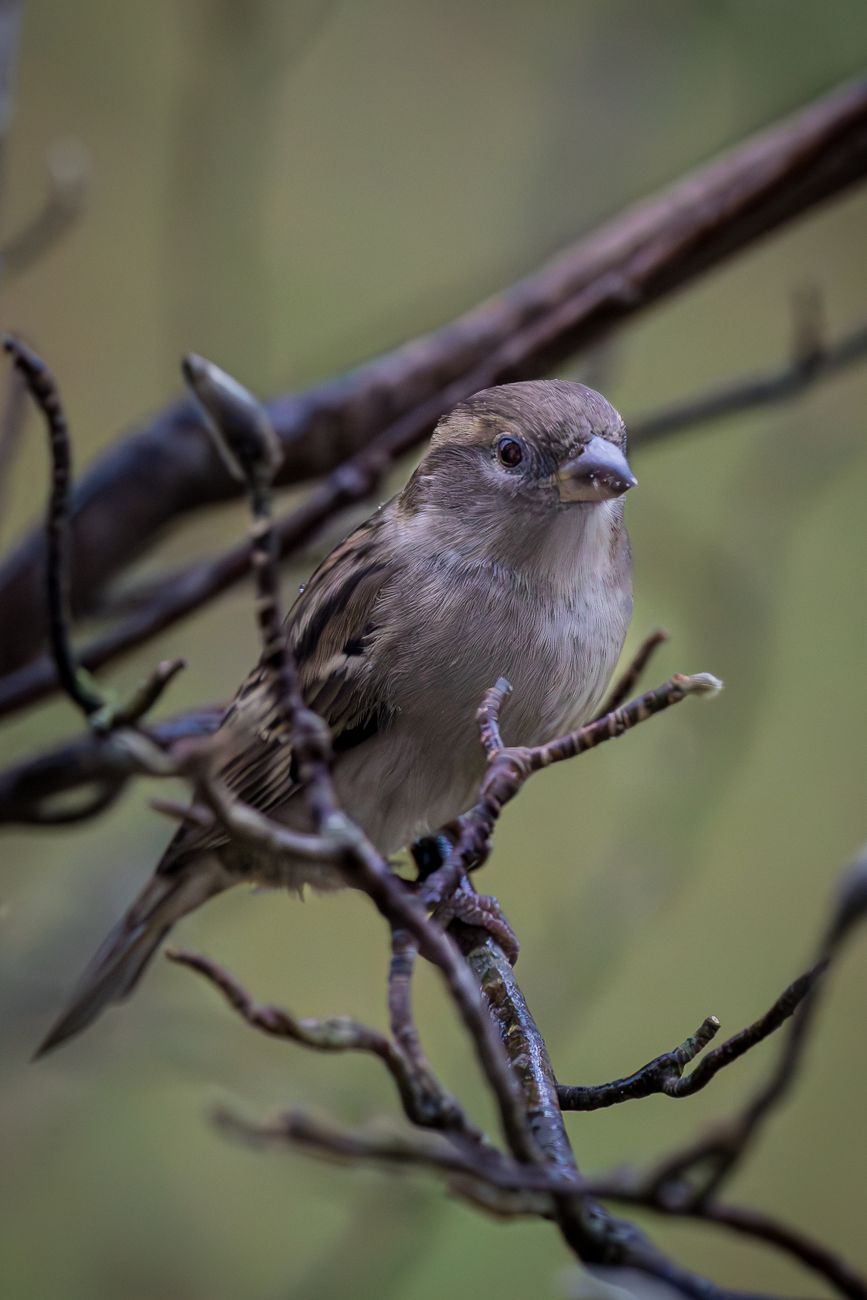
HOUSE SPARROW
Passer domesticus
DESCRIPTION
House Sparrow (Passer domesticus) is commonly known as the English Sparrow and Garden Sparrow. This small bird exhibits a stout body with a short tail and a thick bill, typically displaying a mix of brown, gray, and black plumage. They are highly social birds, often found in urban areas, where they thrive in close proximity to humans, exhibiting a range of vocalizations and behaviors that reflect their adaptability to various environments.
FUN FACTS
- House Sparrows are known for their remarkable adaptability, allowing them to thrive in diverse environments, from rural farmlands to bustling cities
- They have a unique ability to recognize human faces, which helps them navigate their urban habitats
- | Interestingly, House Sparrows have been observed engaging in cooperative breeding, where non-breeding individuals help care for the young of breeding pairs, showcasing their complex social structures
QUICK INFO
Lifespan3-5 years in the wild, up to 10 years in captivity
Average Weight24-39 g
Average Length16-18 cm
Diet TypeOmnivore
Social Structuregroup — they are often found in flocks, especially when foraging.
Activity PatternDiurnal
Breeding SeasonSpring to early summer
- Habitat
- House Sparrows are commonly found in urban and suburban areas, often nesting in buildings, trees, and shrubs. They prefer habitats that provide food sources and nesting sites close to human activity.
- Biomes
- Urban, Grassland, Agricultural
- Native Range
- Originally native to Europe and Asia, House Sparrows have been introduced to many parts of the world, including North America and Australia.
- Continent
- Asia, Europe, North America, Australia
- Countries
- United States, Canada, United Kingdom, Australia, India
- Diet
- House Sparrows primarily feed on seeds, grains, and small insects, often foraging in groups. They are known to scavenge for food scraps in urban settings.
- Diet Type
- Omnivore
- Favorite Food
- seeds, grains
- Social Structure
- group — they are often found in flocks, especially when foraging.
- Activity Pattern
- Diurnal
- Group Size
- 5-50
- Territorial
- 0
 CR
CR
 LC
LC
24-39 g
Weight
16-18 cm
Length
- Coloration
- brown and gray with black streaks and a distinctive black bib in males
- Sexual Dimorphism
- males are more colorful with a black bib, while females are more subdued in color.
- Lifespan
- 3-5 years in the wild, up to 10 years in captivity
- Offspring per Birth
- 3-5
- Sexual Maturity
- 1 year
- Breeding Season
- Spring to early summer
LC
Least Concern
IUCN Red List Status
- Population Status
- House Sparrows are widespread and abundant, though some populations have shown declines in certain areas.
- Wild Population Estimate
- 100 million
- Population Trend
- Stable
- Endangered
- 0
- Threats
- Main threats include habitat loss, pesticide use, and competition with native bird species. Urbanization has also impacted their nesting sites.
- Predators
- cats, hawks, snakes, and larger birds of prey.
- Defense Mechanisms
- They often rely on their flocking behavior to evade predators and can quickly take flight when threatened.
- Found in Zoos
- Common