


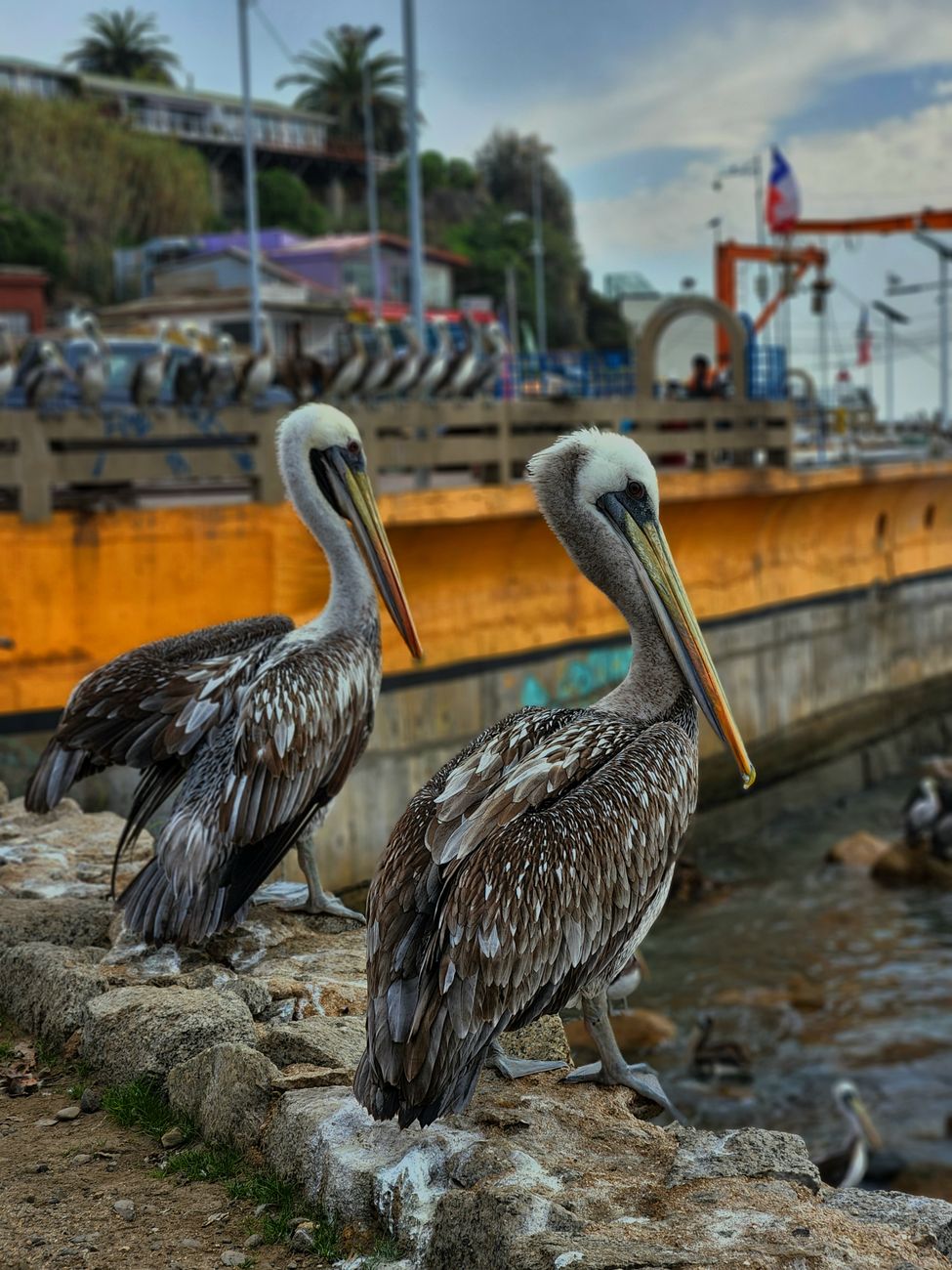
HUMBOLDT BROWN PELICAN
Pelecanus thagus
DESCRIPTION
Humboldt brown pelican (Pelecanus thagus) is commonly known as the Peruvian pelican. This large bird features a distinctive brown plumage with a striking white head and a long, curved bill, which is well-adapted for catching fish. They are often seen diving into the ocean to catch their prey, showcasing their impressive aerial skills and social behavior when foraging in groups.
FUN FACTS
- Humboldt brown pelicans are known for their unique feeding technique, where they can dive from heights of up to 20 feet to catch fish
- Additionally, they have a remarkable ability to store food in their throat pouch, allowing them to catch multiple fish at once and consume them later.|These pelicans are named after the Humboldt Current, which provides rich feeding grounds along the coast of South America
- This current is crucial for the marine ecosystem, supporting a diverse range of fish species that the pelicans rely on for survival
QUICK INFO
Lifespan10-15 years in the wild
Average Weight3-5 kg
Average Length1.1-1.4 m
Diet TypePiscivore
Social Structuregroup — they often gather in large flocks, especially during feeding.
Activity PatternDiurnal
Breeding SeasonSpring (August-October)
- Habitat
- These pelicans inhabit coastal regions, particularly in areas with abundant fish populations. They are often found near rocky shorelines and estuaries.
- Biomes
- Coastal, Marine
- Native Range
- The Humboldt brown pelican is native to the Pacific coasts of South America, ranging from northern Peru to southern Chile.
- Continent
- South America
- Countries
- Peru, Chile, Ecuador
- Diet
- Humboldt brown pelicans primarily feed on fish, which they catch by diving into the water from the air. They may also consume small invertebrates occasionally.
- Diet Type
- Piscivore
- Favorite Food
- small fish
- Social Structure
- group — they often gather in large flocks, especially during feeding.
- Activity Pattern
- Diurnal
- Group Size
- 10-50
- Territorial
- 0
 VU
VU
3-5 kg
Weight
1.1-1.4 m
Length
- Coloration
- brown body with a white head and neck
- Lifespan
- 10-15 years in the wild
- Offspring per Birth
- 1-3
- Sexual Maturity
- 3-4 years
- Breeding Season
- Spring (August-October)
LC
Least Concern
IUCN Red List Status
- Population Status
- The population of Humboldt brown pelicans is currently stable, although they face threats from environmental changes.
- Wild Population Estimate
- 50,000-100,000
- Population Trend
- Stable
- Endangered
- 0
- Threats
- Main threats include habitat loss due to coastal development and pollution, as well as changes in fish populations due to overfishing and climate change.
- Predators
- Large birds of prey, such as eagles, and human activities pose threats to their nests and young.
- Defense Mechanisms
- They rely on their size and group behavior for protection, often nesting in colonies to deter predators.
- Found in Zoos
- Uncommon