


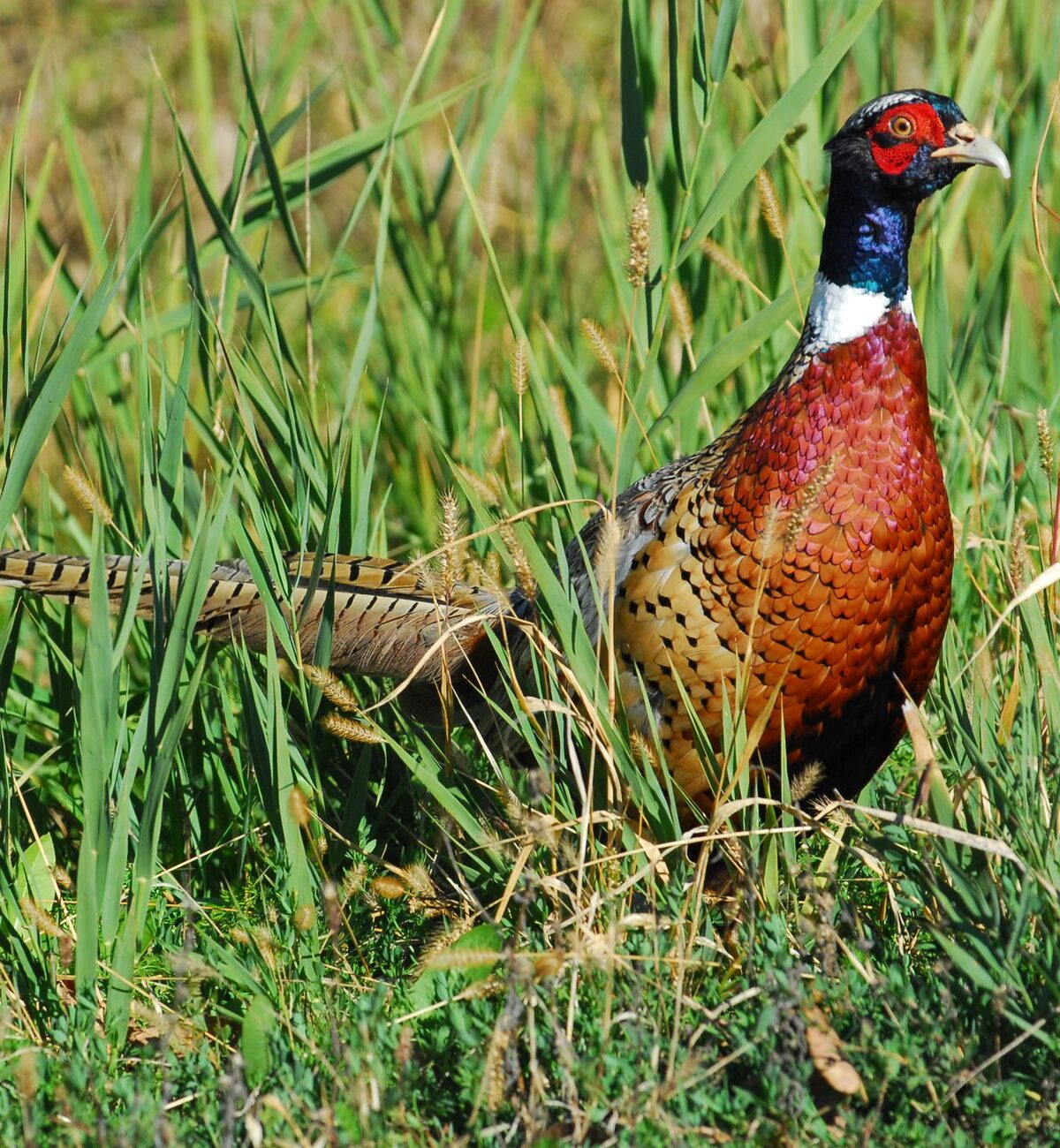
HUNTING PHEASANT
DESCRIPTION
Hunting Pheasant, also known as the Ring-necked Pheasant, is a colorful bird characterized by its long tail and vibrant plumage. Males typically exhibit a striking combination of green, gold, and brown feathers, while females are more subdued in coloration, featuring mottled brown and tan. This species is known for its ground-dwelling behavior, often found in fields and grasslands, where it forages for food and seeks cover from predators.
FUN FACTS
- Hunting Pheasants are known for their elaborate courtship displays, where males puff up their feathers and make loud calls to attract females
- These displays can be quite a spectacle during the breeding season, showcasing the male's vibrant colors and physical prowess
- | In many regions, Hunting Pheasants are popular game birds, and their hunting is a traditional activity that supports local economies
- They are often raised in captivity for release into the wild, contributing to both conservation efforts and recreational hunting
QUICK INFO
Lifespan3-5 years in the wild, up to 10 years in captivity
Average Weight1-1.5 kg
Average Length60-90 cm
Diet TypeOmnivore
Social StructureHunting Pheasants are typically solitary or found in small groups, especially outside of the breeding season. Males are particularly territorial and may engage in displays to assert dominance.
Activity PatternDiurnal
Breeding SeasonSpring (March-May)
- Habitat
- Hunting Pheasants thrive in open fields, grasslands, and agricultural areas, often near cover such as shrubs or tall grasses. They prefer habitats that provide both foraging opportunities and protection from predators.
- Biomes
- Temperate Forest, Grassland
- Native Range
- Originally native to Asia, particularly China, Hunting Pheasants have been introduced to various regions around the world, including North America and parts of Europe.
- Continent
- Asia, North America, Europe
- Countries
- China, United States, Canada, United Kingdom
- Diet
- Hunting Pheasants primarily feed on seeds, grains, and insects, making them opportunistic foragers. They often scratch the ground to uncover food sources.
- Diet Type
- Omnivore
- Favorite Food
- seeds, grains, insects
- Social Structure
- Hunting Pheasants are typically solitary or found in small groups, especially outside of the breeding season. Males are particularly territorial and may engage in displays to assert dominance.
- Activity Pattern
- Diurnal
- Group Size
- 1-10
- Territorial
- 1
 CR
CR
1-1.5 kg
Weight
60-90 cm
Length
- Coloration
- Males are brightly colored with iridescent green and gold feathers, while females are brown and mottled for camouflage.
- Sexual Dimorphism
- Males are more colorful and larger than females.
- Lifespan
- 3-5 years in the wild, up to 10 years in captivity
- Offspring per Birth
- 8-15 eggs
- Sexual Maturity
- 1 year
- Breeding Season
- Spring (March-May)
LC
Least Concern
IUCN Red List Status
- Population Status
- The population of Hunting Pheasants is generally stable, but local declines can occur due to habitat loss.
- Wild Population Estimate
- 1 million+
- Population Trend
- Stable
- Endangered
- 0
- Threats
- Main threats include habitat destruction due to agricultural expansion and hunting pressure. In some areas, predation by domestic animals can also impact local populations.
- Predators
- Foxes, coyotes, hawks, and domestic cats are known predators of Hunting Pheasants.
- Defense Mechanisms
- Hunting Pheasants rely on their camouflage and ability to run quickly to evade predators, often hiding in dense cover.
- Found in Zoos
- Uncommon