


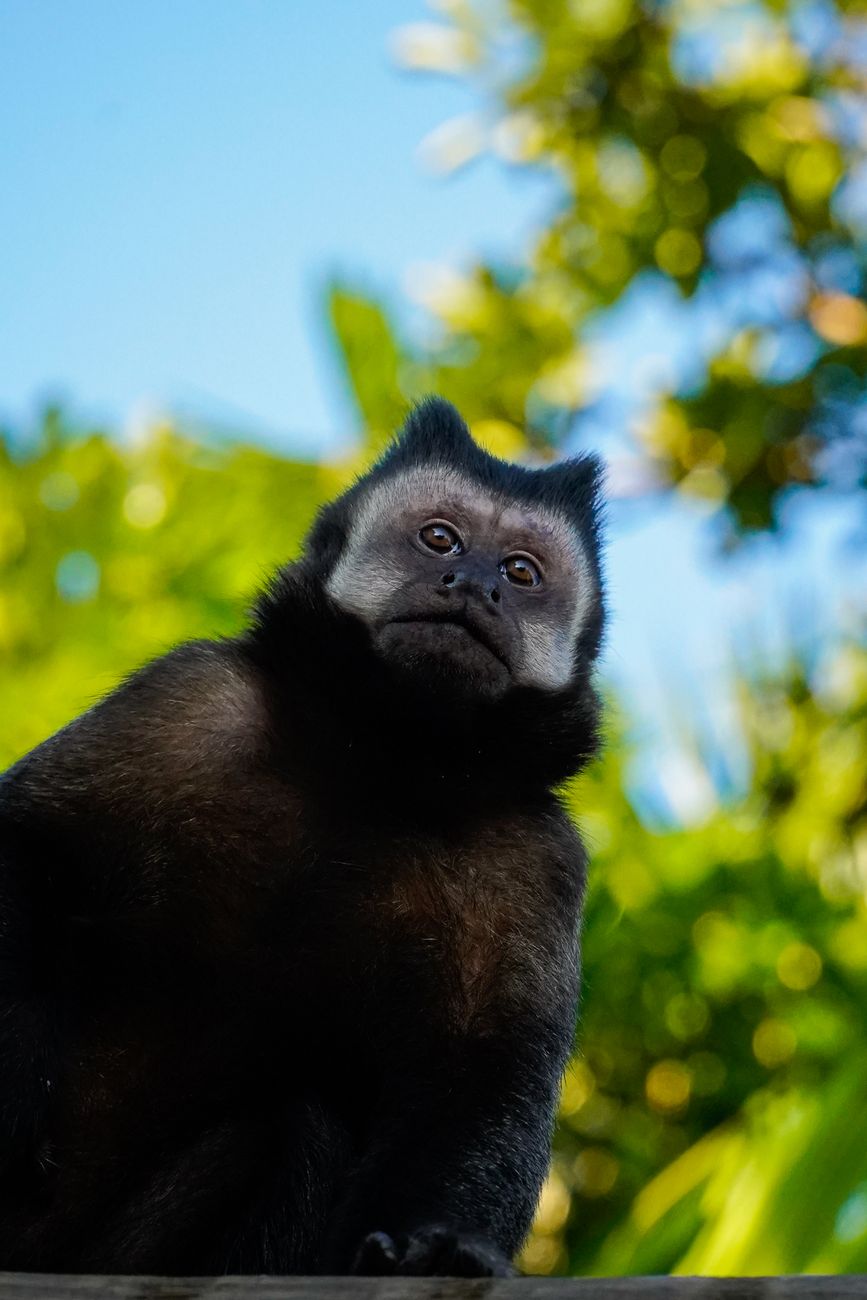
HUSSAR MONKEY
DESCRIPTION
Hussar Monkey, also known as the Hussar Capuchin, is a medium-sized primate characterized by its distinctive black cap and white face. These monkeys are highly social and often found in groups, displaying complex behaviors and vocalizations. They inhabit tropical forests and are known for their agility and intelligence, often using tools to access food.
FUN FACTS
- Hussar Monkeys are known for their intelligence and problem-solving abilities, often using tools to access hard-to-reach food
- They have a complex social structure and are capable of forming strong bonds with other members of their group, often engaging in grooming behaviors to strengthen these relationships
QUICK INFO
Lifespan15-25 years in the wild, up to 30 in captivity
Average Weight3-4 kg
Average Length40-55 cm
Diet TypeOmnivore
Social Structuregroup — they live in social groups that can range from 10 to 30 individuals.
Activity PatternDiurnal
Breeding SeasonYear-round, with peaks depending on local conditions
- Habitat
- These monkeys thrive in tropical rainforests and can also be found in secondary forests and mangroves. They prefer areas with abundant tree cover for foraging and nesting.
- Biomes
- Tropical Rainforest, Mangrove
- Native Range
- Hussar Monkeys are native to the tropical regions of South America, particularly in Brazil and parts of the Amazon Basin.
- Continent
- South America
- Countries
- Brazil
- Diet
- Hussar Monkeys primarily consume fruits, seeds, and insects, showcasing their omnivorous diet. They are known to forage in trees and on the ground for various food sources.
- Diet Type
- Omnivore
- Favorite Food
- fruits, seeds, insects
- Social Structure
- group — they live in social groups that can range from 10 to 30 individuals.
- Activity Pattern
- Diurnal
- Group Size
- 10-30
- Territorial
- 1
 VU
VU
 LC
LC
3-4 kg
Weight
40-55 cm
Length
- Coloration
- They have a black cap on their head, a white face, and a brownish body.
- Sexual Dimorphism
- males are generally larger than females
- Lifespan
- 15-25 years in the wild, up to 30 in captivity
- Gestation Period
- 150 days
- Offspring per Birth
- 1-2
- Sexual Maturity
- 3-4 years
- Breeding Season
- Year-round, with peaks depending on local conditions
LC
Least Concern
IUCN Red List Status
- Population Status
- The population is currently stable, but habitat loss poses a threat.
- Wild Population Estimate
- Unknown
- Population Trend
- Stable
- Endangered
- 0
- Threats
- Main threats include habitat destruction due to deforestation and hunting. These activities have led to a decline in their natural habitat and food sources.
- Predators
- Large birds of prey, snakes, and felids such as jaguars are known to prey on Hussar Monkeys.
- Defense Mechanisms
- They use vocalizations to alert the group of potential threats and can also flee to the treetops for safety.
- Compatible Animals
- other capuchin monkeys, small primates
- Found in Zoos
- Common