


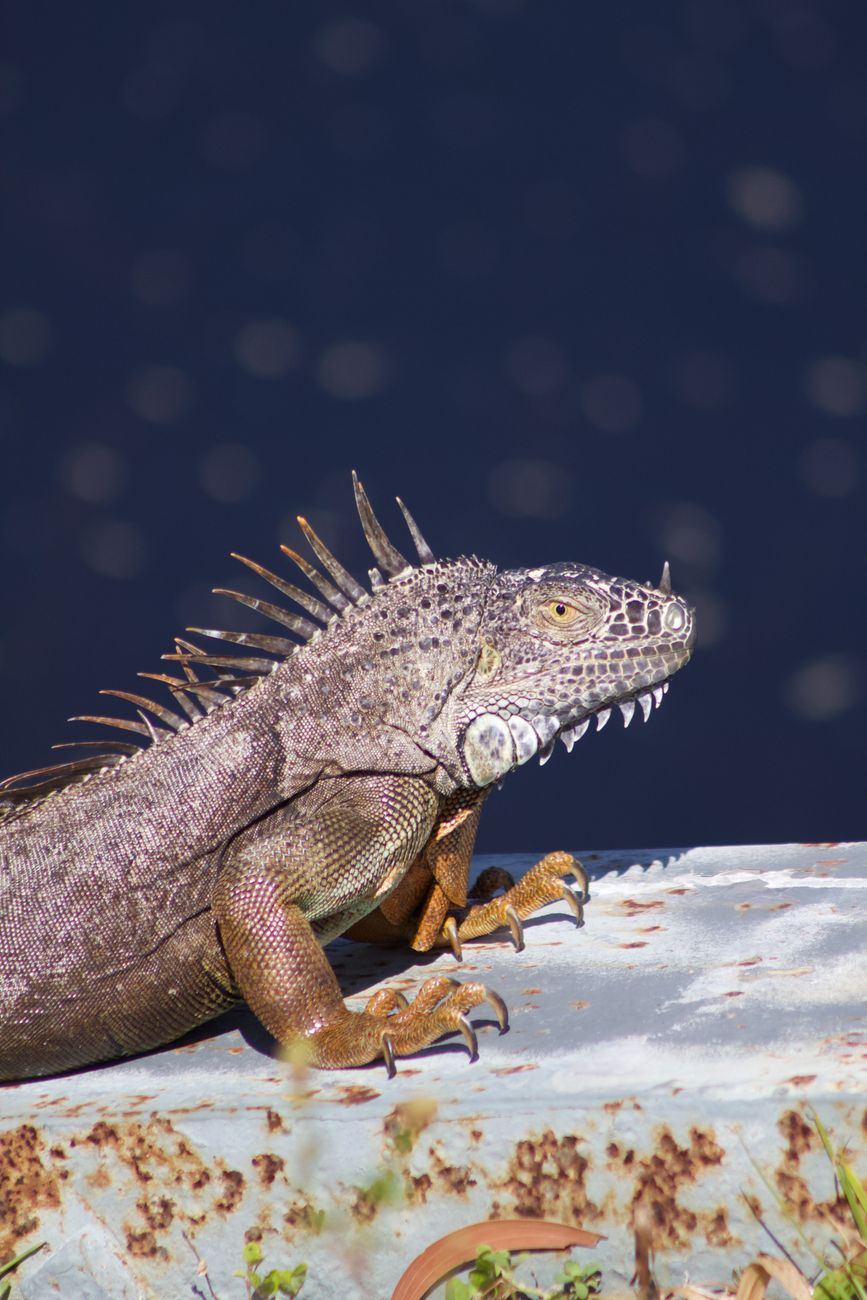
IGUANA
DESCRIPTION
Also called the Green Iguana and Common Iguana, Iguana is a large lizard known for its distinctive dewlap and long tail. They typically exhibit a vibrant green coloration, although they can also be found in shades of blue, orange, and brown depending on their environment and age. Iguanas are primarily arboreal, spending much of their time in trees, and are known for their calm demeanor, although they can become aggressive if threatened.
FUN FACTS
- Iguanas have a unique ability to detach their tails when threatened, allowing them to escape while the predator is distracted
- The tail can regenerate over time, although it may not look the same as the original
- | Iguanas are excellent swimmers and can hold their breath underwater for up to 30 minutes, which helps them evade predators in their natural habitat
- They often dive into water when they feel threatened
QUICK INFO
Lifespan15-20 years in the wild, up to 30 in captivity
Average Weight4-5 kg
Average Length1.5-2.0 m
Diet TypeHerbivore
Social Structuresolitary, occasionally seen in small groups
Activity PatternDiurnal
Breeding SeasonSpring (March-May)
- Habitat
- Iguanas inhabit tropical rainforests, savannas, and coastal areas. They prefer environments with plenty of vegetation for cover and food.
- Biomes
- Tropical Rainforest, Savanna
- Native Range
- Iguanas are native to Central and South America, as well as the Caribbean islands.
- Continent
- North America, South America
- Countries
- Mexico, Costa Rica, Brazil, Puerto Rico
- Diet
- Iguanas are herbivores, primarily feeding on leaves, flowers, and fruits. They have a specialized digestive system that allows them to process tough plant material.
- Diet Type
- Herbivore
- Favorite Food
- leafy greens, fruits
- Social Structure
- solitary, occasionally seen in small groups
- Activity Pattern
- Diurnal
- Group Size
- 1-5
- Territorial
- 0
 VU
VU
 LC
LC

4-5 kg
Weight
1.5-2.0 m
Length
- Coloration
- vibrant green with variations depending on age and environment
- Sexual Dimorphism
- males are generally larger and have more pronounced dewlaps
- Lifespan
- 15-20 years in the wild, up to 30 in captivity
- Offspring per Birth
- 20-70
- Sexual Maturity
- 2-3 years
- Breeding Season
- Spring (March-May)
LC
Least Concern
IUCN Red List Status
- Population Status
- Iguana populations are generally stable, but some local populations may be threatened by habitat loss.
- Wild Population Estimate
- unknown
- Population Trend
- Stable
- Endangered
- 0
- Threats
- Main threats include habitat destruction due to urbanization and deforestation, as well as hunting for meat and the pet trade. These factors can lead to localized declines in certain areas.
- Predators
- birds of prey, snakes, large mammals
- Defense Mechanisms
- Iguanas can use their strong tails to whip at predators and have the ability to camouflage themselves among foliage.
- Found in Zoos
- Common