


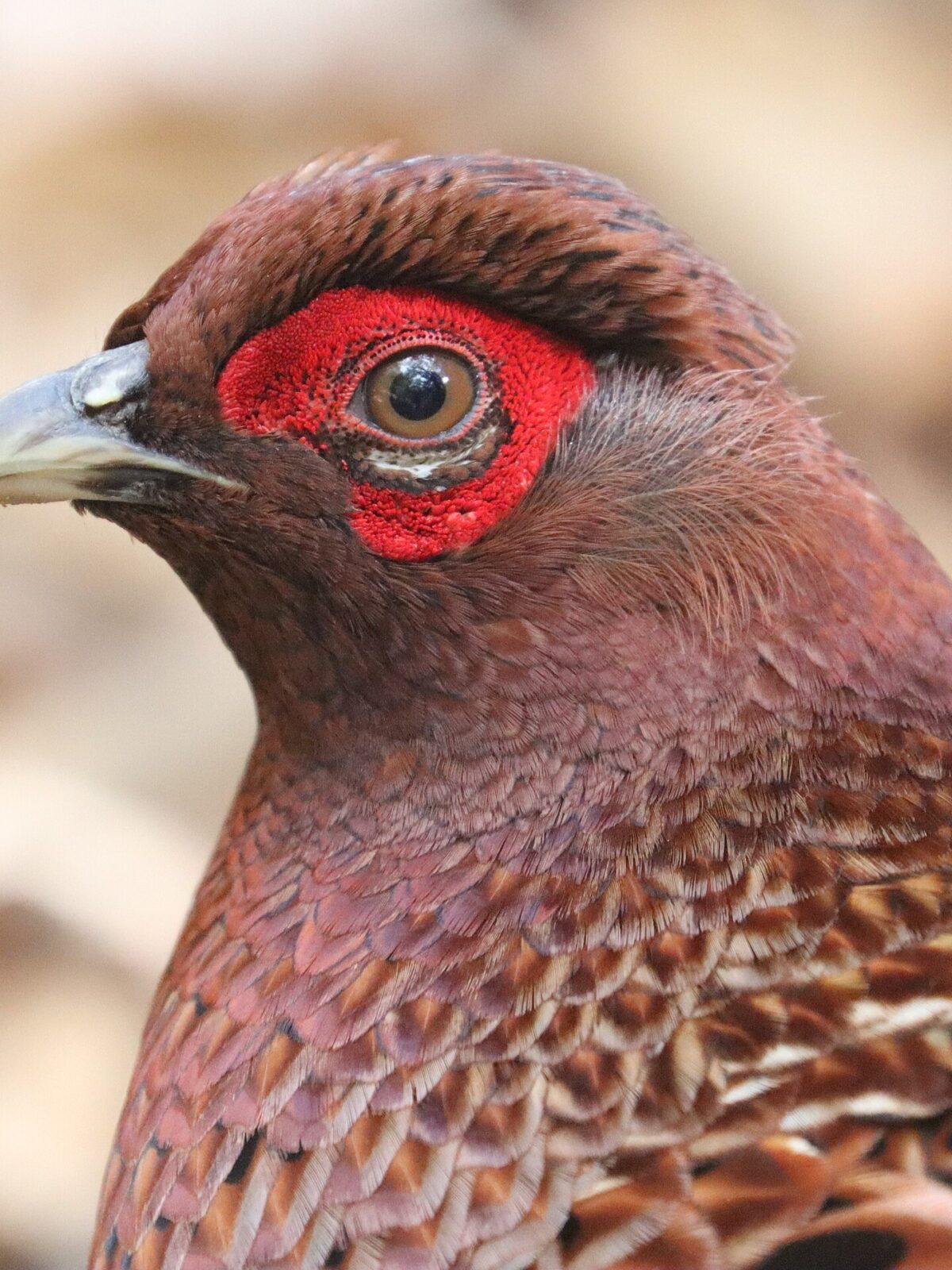
IJIMA'S COPPER PHEASANT
Syrmaticus soemmeringi ijimae
DESCRIPTION
Ijima's copper pheasant (Syrmaticus soemmeringi ijimae) is a striking bird known for its vibrant plumage, which features a mix of copper, green, and black hues. This subspecies exhibits sexual dimorphism, with males being more colorful than females, showcasing a long tail and distinctive markings. They are primarily ground-dwelling birds, often found in dense underbrush, where they forage for food and evade predators.
FUN FACTS
- Ijima's copper pheasant is named after the Japanese zoologist Kiyoshi Ijima, who contributed significantly to the study of Japanese wildlife
- | These birds are known for their elaborate courtship displays, where males will puff up their feathers and perform a series of calls to attract females during the breeding season
QUICK INFO
Lifespan5-10 years in the wild
Average Weight1-1.5 kg
Average Length60-70 cm
Diet TypeOmnivore
Social StructureSolitary or in pairs, they tend to be territorial, especially during the breeding season.
Activity PatternDiurnal
Breeding SeasonSpring (April-June)
- Habitat
- This pheasant inhabits mountainous forests and dense undergrowth, often preferring areas with thick vegetation for cover. They are typically found at elevations ranging from 1,000 to 2,500 meters.
- Biomes
- Temperate Forest, Montane Forest
- Native Range
- Ijima's copper pheasant is native to the mountainous regions of Japan, particularly on the islands of Honshu and Shikoku.
- Continent
- Asia
- Countries
- Japan
- Diet
- Ijima's copper pheasant primarily feeds on seeds, fruits, and insects, foraging on the forest floor. Their diet varies seasonally, depending on the availability of food sources.
- Diet Type
- Omnivore
- Favorite Food
- seeds, fruits, insects
- Social Structure
- Solitary or in pairs, they tend to be territorial, especially during the breeding season.
- Activity Pattern
- Diurnal
- Group Size
- 1-2
- Territorial
- 1

 LC
LC
1-1.5 kg
Weight
60-70 cm
Length
- Coloration
- Males have a rich coppery-brown body with iridescent green and black markings, while females are more subdued in color, featuring browns and tans for camouflage.
- Sexual Dimorphism
- Males are more colorful and larger than females.
- Lifespan
- 5-10 years in the wild
- Offspring per Birth
- 6-12 eggs
- Sexual Maturity
- 1 year
- Breeding Season
- Spring (April-June)
LC
Least Concern
IUCN Red List Status
- Population Status
- The population of Ijima's copper pheasant is currently stable, but habitat loss poses a potential threat.
- Wild Population Estimate
- Unknown
- Population Trend
- Stable
- Endangered
- 0
- Threats
- Main threats include habitat destruction due to logging and land development, which reduces their natural habitat. Additionally, hunting poses a risk in some areas.
- Predators
- Foxes, snakes, and birds of prey are known to prey on Ijima's copper pheasant.
- Defense Mechanisms
- They rely on their cryptic coloration to blend into their surroundings and often freeze to avoid detection.
- Found in Zoos
- Rare