


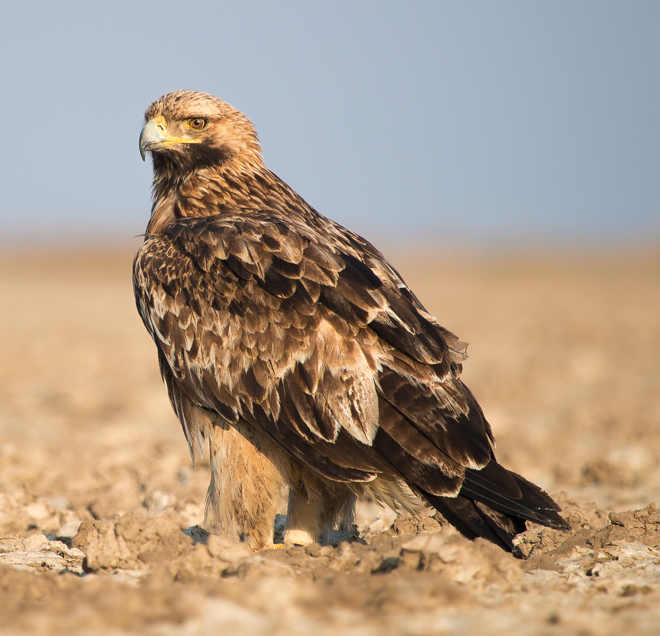
IMPERIAL EAGLE
Aquila heliaca
DESCRIPTION
Also called the Eastern Imperial Eagle, the Imperial Eagle (Aquila heliaca) is a large bird of prey known for its striking appearance and impressive wingspan. It features a dark brown plumage with a distinctive pale nape and a white base on its tail, which is particularly noticeable in flight. This eagle is primarily found in open landscapes, where it exhibits a solitary or pair-based lifestyle, often soaring high in search of prey.
FUN FACTS
- The Imperial Eagle is known for its impressive hunting skills, often soaring at great heights to spot prey from above
- They can dive at speeds of up to 120 km/h when hunting, showcasing their agility and precision in capturing food
- | In some cultures, the Imperial Eagle is considered a symbol of power and freedom, often depicted in art and folklore
- Their majestic presence and hunting prowess have made them a subject of admiration and respect throughout history
QUICK INFO
Lifespan20-25 years in the wild
Average Weight3-4.5 kg
Average Length66-75 cm
Diet TypeCarnivore
Social Structuresolitary or pair, typically seen alone or with a mate during breeding
Activity PatternDiurnal
Breeding SeasonSpring (March-May)
- Habitat
- The Imperial Eagle inhabits a variety of open landscapes, including grasslands, steppes, and forest edges. It prefers areas with ample hunting opportunities and suitable nesting sites, often near water sources.
- Biomes
- Grassland, Temperate Forest, Steppe
- Native Range
- The native range of the Imperial Eagle extends across parts of Europe and Asia, including regions from Eastern Europe to Central Asia.
- Continent
- Europe, Asia
- Countries
- Hungary, Romania, Ukraine, Kazakhstan, Mongolia
- Diet
- The Imperial Eagle primarily feeds on small to medium-sized mammals and birds, utilizing its keen eyesight to spot potential prey from great heights. It is known to hunt rabbits, hares, and various birds, showcasing its adaptability in hunting techniques.
- Diet Type
- Carnivore
- Favorite Food
- rabbits, hares, birds
- Social Structure
- solitary or pair, typically seen alone or with a mate during breeding
- Activity Pattern
- Diurnal
- Group Size
- 1-2
- Territorial
- 1
3-4.5 kg
Weight
66-75 cm
Length
- Coloration
- dark brown with a pale nape and white tail base
- Sexual Dimorphism
- females are generally larger than males
- Lifespan
- 20-25 years in the wild
- Offspring per Birth
- 1-3
- Sexual Maturity
- 4-5 years
- Breeding Season
- Spring (March-May)
LC
Least Concern
IUCN Red List Status
- Population Status
- The population of Imperial Eagles is currently considered to be stable, although local declines have been observed in some areas.
- Wild Population Estimate
- 10,000-20,000
- Population Trend
- Stable
- Endangered
- 0
- Threats
- Main threats to the Imperial Eagle include habitat loss due to agricultural expansion and human encroachment, as well as persecution from farmers who view them as threats to livestock. Additionally, power line collisions pose a significant risk to their survival.
- Conservation Program
- Various conservation programs are in place across Europe and Asia to monitor and protect Imperial Eagle populations.
- Predators
- Humans, larger birds of prey may occasionally pose a threat to young eagles.
- Defense Mechanisms
- Imperial Eagles rely on their size, strength, and aerial agility to defend themselves against potential threats.
- Found in Zoos
- Uncommon