


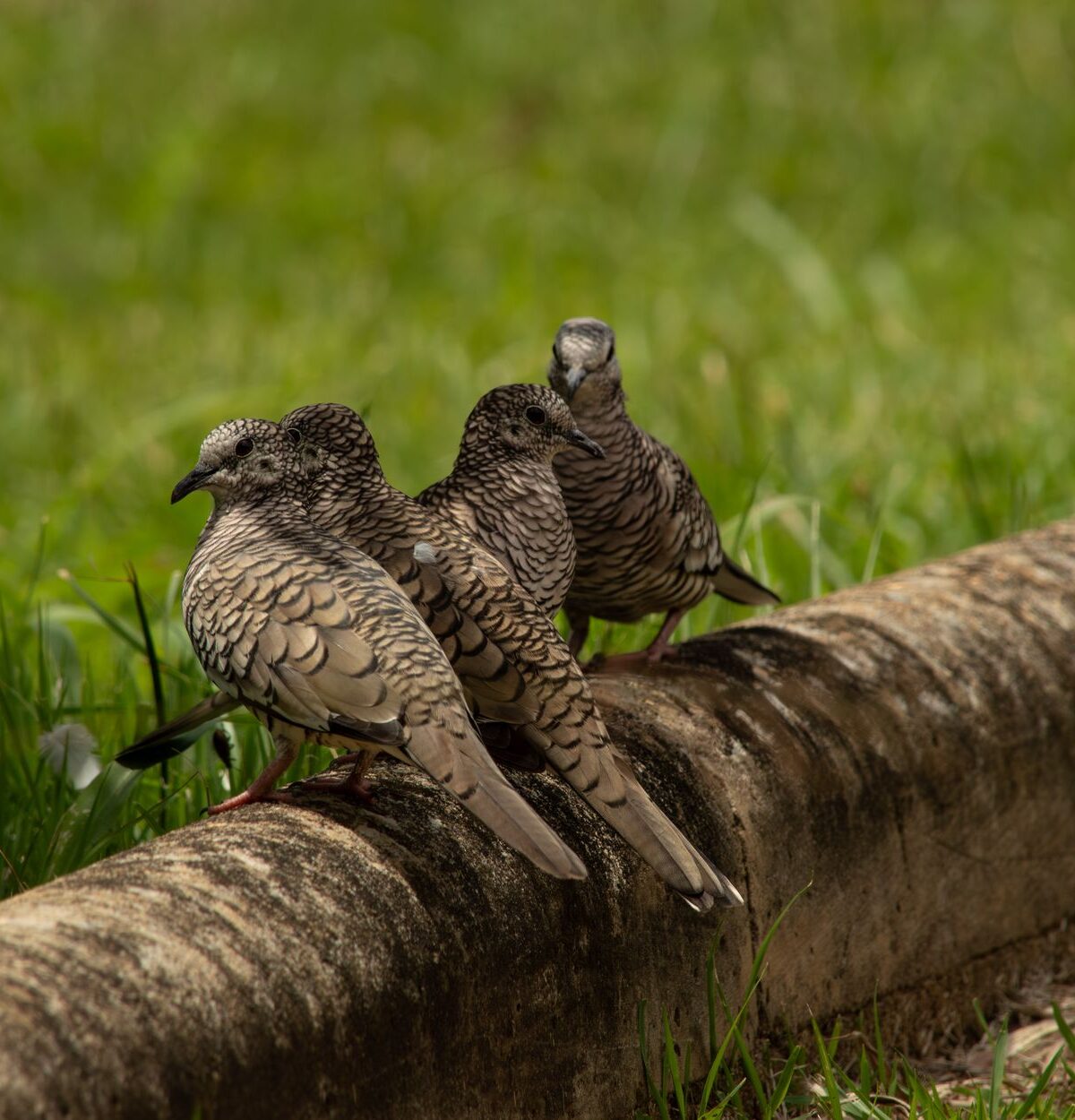
INCA DOVE
Columbina inca
DESCRIPTION
Inca Dove (Columbina inca) is a small, slender dove characterized by its long, pointed tail and distinctive scaled appearance on the neck and upper body. This species exhibits a soft gray-brown plumage with a slightly paler underbelly, making it well-camouflaged in its arid habitats. Inca Doves are often seen foraging on the ground in urban areas, displaying a calm demeanor and a unique, soft cooing call that adds to their charm.
FUN FACTS
- Inca Doves are known for their unique cooing sound, which is often described as a soft, mournful call that can be heard in their natural habitats
- They are also remarkable for their ability to thrive in urban environments, often seen foraging in parks and gardens, showcasing their adaptability to human presence
QUICK INFO
Lifespan3-5 years in the wild
Average Weight80-120 g
Average Length24-28 cm
Diet TypeGranivore
Social Structurepair or group, often seen in small flocks
Activity PatternDiurnal
Breeding SeasonYear-round in favorable conditions
- Habitat
- Inca Doves inhabit open, dry areas such as deserts, scrublands, and urban environments. They prefer habitats with scattered vegetation that provides cover and foraging opportunities.
- Biomes
- Desert, Urban
- Native Range
- Inca Doves are native to the southwestern United States, Mexico, and parts of Central America.
- Continent
- North America, Central America
- Countries
- United States, Mexico, Guatemala, Honduras, El Salvador, Nicaragua, Costa Rica, Panama
- Diet
- Inca Doves primarily feed on seeds, grains, and small fruits, often foraging in open areas. They are known to consume food scraps in urban environments as well.
- Diet Type
- Granivore
- Favorite Food
- seeds and grains
- Social Structure
- pair or group, often seen in small flocks
- Activity Pattern
- Diurnal
- Group Size
- 2-20
- Territorial
- 0
 CR
CR
 LC
LC
 VU
VU
80-120 g
Weight
24-28 cm
Length
- Coloration
- soft gray-brown with scaled appearance on the neck
- Lifespan
- 3-5 years in the wild
- Offspring per Birth
- 2
- Sexual Maturity
- 6-12 months
- Breeding Season
- Year-round in favorable conditions
LC
Least Concern
IUCN Red List Status
- Population Status
- The population of Inca Doves is currently stable, with a wide distribution across their native range.
- Wild Population Estimate
- unknown
- Population Trend
- Stable
- Endangered
- 0
- Threats
- Inca Doves face threats from habitat loss due to urbanization and agricultural expansion. However, they are adaptable and often thrive in human-altered environments.
- Predators
- hawks, cats, snakes, and other birds of prey
- Defense Mechanisms
- Inca Doves rely on their ability to blend into their surroundings and often take flight to escape predators.
- Compatible Animals
- none
- Found in Zoos
- Uncommon