


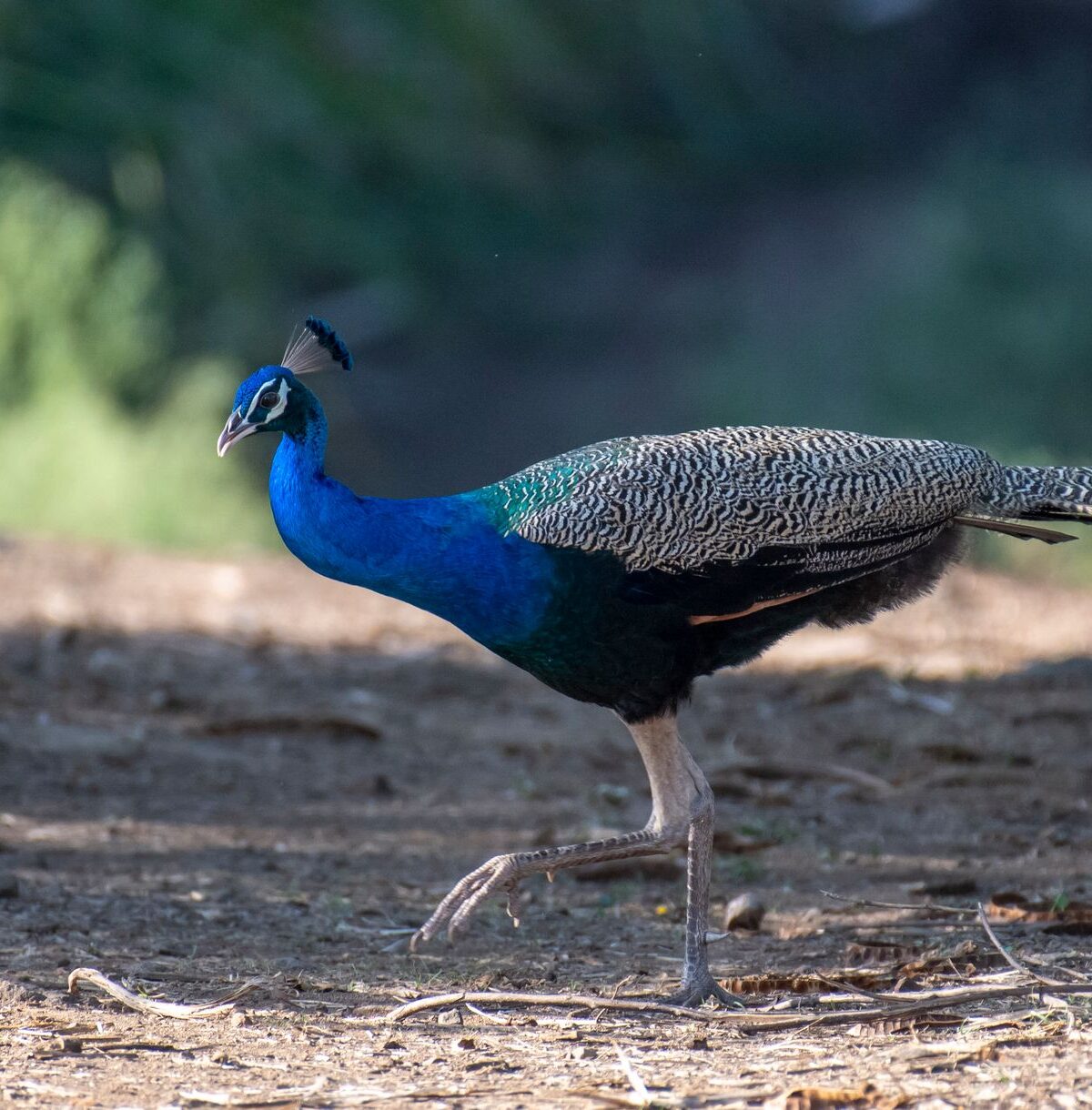
INDIAN BLUE PEAFOWL
DESCRIPTION
Also called Peacock and Indian Peafowl, this species is renowned for its vibrant plumage, particularly the males, which display iridescent blue and green feathers during courtship rituals. The Indian Blue Peafowl is a large bird, with males reaching up to 2.3 meters in length, including their spectacular tail feathers. They are known for their loud calls and are often found in open forests, grasslands, and near water sources, where they forage for food.
FUN FACTS
- The Indian Blue Peafowl is the national bird of India, symbolizing grace and beauty in Indian culture
- Their tail feathers, known as a train, can have up to 200 eye-like patterns, which are used to attract mates during courtship displays.| Peafowl are known for their loud and distinctive calls, which can be heard from a distance
- These calls serve various purposes, including signaling alarm and attracting mates, and they can be quite vocal, especially during the breeding season
QUICK INFO
Lifespan15-20 years in the wild, up to 25 years in captivi
Average Weight4-6 kg
Average Length1.8-2.5 m
Diet TypeOmnivore
Social StructureThey are generally social birds, often found in small groups or flocks, especially outside the breeding season.
Activity PatternDiurnal
Breeding SeasonSpring (March-May)
- Habitat
- This species thrives in a variety of habitats, including forests, grasslands, and agricultural areas. They prefer regions with access to water and open spaces for foraging.
- Biomes
- Tropical Rainforest, Savanna, Grassland
- Native Range
- The Indian Blue Peafowl is native to the Indian subcontinent, including India, Sri Lanka, and parts of Southeast Asia.
- Continent
- Asia
- Countries
- India, Sri Lanka, Nepal, Bangladesh, Myanmar
- Diet
- Indian Blue Peafowl primarily feeds on seeds, fruits, insects, and small mammals. Their diet is diverse, allowing them to adapt to various habitats.
- Diet Type
- Omnivore
- Favorite Food
- seeds, fruits, insects
- Social Structure
- They are generally social birds, often found in small groups or flocks, especially outside the breeding season.
- Activity Pattern
- Diurnal
- Group Size
- 5-20
- Territorial
- 1
 VU
VU
 CR
LC
CR
LC
4-6 kg
Weight
1.8-2.5 m
Length
- Coloration
- Males are characterized by their striking blue and green plumage, while females are more subdued in color, typically brown and gray.
- Sexual Dimorphism
- Males are significantly larger and more colorful than females, with long tail feathers that can exceed their body length.
- Lifespan
- 15-20 years in the wild, up to 25 years in captivi
- Offspring per Birth
- 3-5
- Sexual Maturity
- 2-3 years
- Breeding Season
- Spring (March-May)
LC
Least Concern
IUCN Red List Status
- Population Status
- The population of Indian Blue Peafowl is currently stable, although habitat loss poses a threat.
- Wild Population Estimate
- 100,000-200,000
- Population Trend
- Stable
- Endangered
- 0
- Threats
- Main threats include habitat destruction due to agriculture and urbanization, as well as hunting in some areas. Conservation efforts are in place to protect their habitats.
- Conservation Program
- Various local and national conservation programs aimed at habitat preservation and protection from hunting.
- Predators
- Large birds of prey, such as eagles and hawks, as well as mammals like leopards and domestic dogs.
- Defense Mechanisms
- They use their impressive tail feathers to display and intimidate predators, and they can also run quickly to escape danger.
- Compatible Animals
- Other birds, such as ducks and geese, in zoo settings.
- Found in Zoos
- Common