


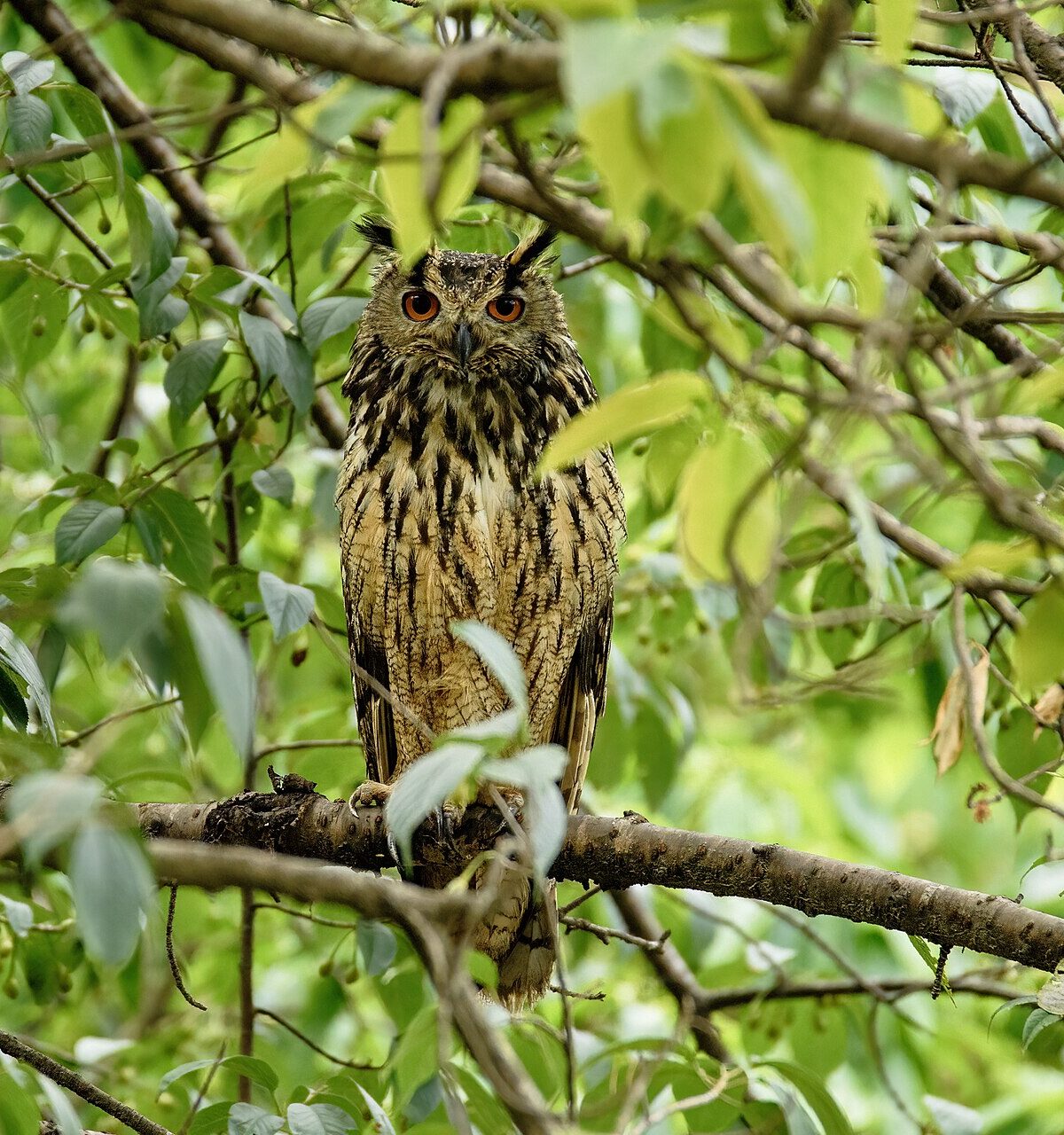
INDIAN EAGLE OWL
Bubo bubo bengalensis
DESCRIPTION
Indian eagle owl (Bubo bubo bengalensis) is a large and powerful owl known for its striking appearance, featuring prominent ear tufts and a robust body. Its plumage is predominantly brown with intricate patterns of black and white, providing excellent camouflage in its natural habitat. This species is primarily nocturnal, exhibiting a range of vocalizations and behaviors that are characteristic of owls, including silent flight and a keen hunting ability.
FUN FACTS
- The Indian eagle owl is one of the largest owl species in the world, with a wingspan that can reach up to 1.5 meters
- They are known for their impressive hunting skills, often taking down prey much larger than themselves, including small deer and large birds
- | Indian eagle owls have a unique vocalization that can be heard over long distances, often described as a deep, resonant hoot
- This call plays a crucial role in establishing territory and attracting mates during the breeding season
QUICK INFO
Lifespan10-15 years in the wild, up to 20 years in captivi
Average Weight1.5-3.5 kg
Average Length60-65 cm
Diet TypeCarnivore
Social Structuresolitary, pairs during breeding season
Activity PatternNocturnal
Breeding SeasonWinter (December-February)
- Habitat
- This owl prefers rocky hillsides, open forests, and scrublands, often nesting in crevices or abandoned structures. It is adaptable and can also be found in agricultural areas near human settlements.
- Biomes
- Temperate Forest, Grassland, Scrubland
- Native Range
- The Indian eagle owl is native to the Indian subcontinent, particularly found in India, Nepal, and parts of Pakistan.
- Continent
- Asia
- Countries
- India, Nepal, Pakistan
- Diet
- The Indian eagle owl primarily preys on small to medium-sized mammals and birds, utilizing its exceptional night vision to hunt effectively in low light conditions.
- Diet Type
- Carnivore
- Favorite Food
- rodents, birds
- Social Structure
- solitary, pairs during breeding season
- Activity Pattern
- Nocturnal
- Group Size
- 1-2
- Territorial
- 1
1.5-3.5 kg
Weight
60-65 cm
Length
- Coloration
- brown with black and white mottling
- Sexual Dimorphism
- females are generally larger than males
- Lifespan
- 10-15 years in the wild, up to 20 years in captivi
- Offspring per Birth
- 1-4
- Sexual Maturity
- 2-3 years
- Breeding Season
- Winter (December-February)
LC
Least Concern
IUCN Red List Status
- Population Status
- The population of Indian eagle owls is currently stable, though habitat loss poses a potential threat.
- Wild Population Estimate
- unknown
- Population Trend
- Stable
- Endangered
- 0
- Threats
- Main threats include habitat destruction due to urbanization and agricultural expansion, as well as hunting in some regions. These factors can lead to localized declines in their populations.
- Predators
- larger birds of prey, humans
- Defense Mechanisms
- Indian eagle owls rely on their camouflage and silent flight to avoid detection by predators, and they can also exhibit aggressive behavior when threatened.
- Found in Zoos
- Uncommon