


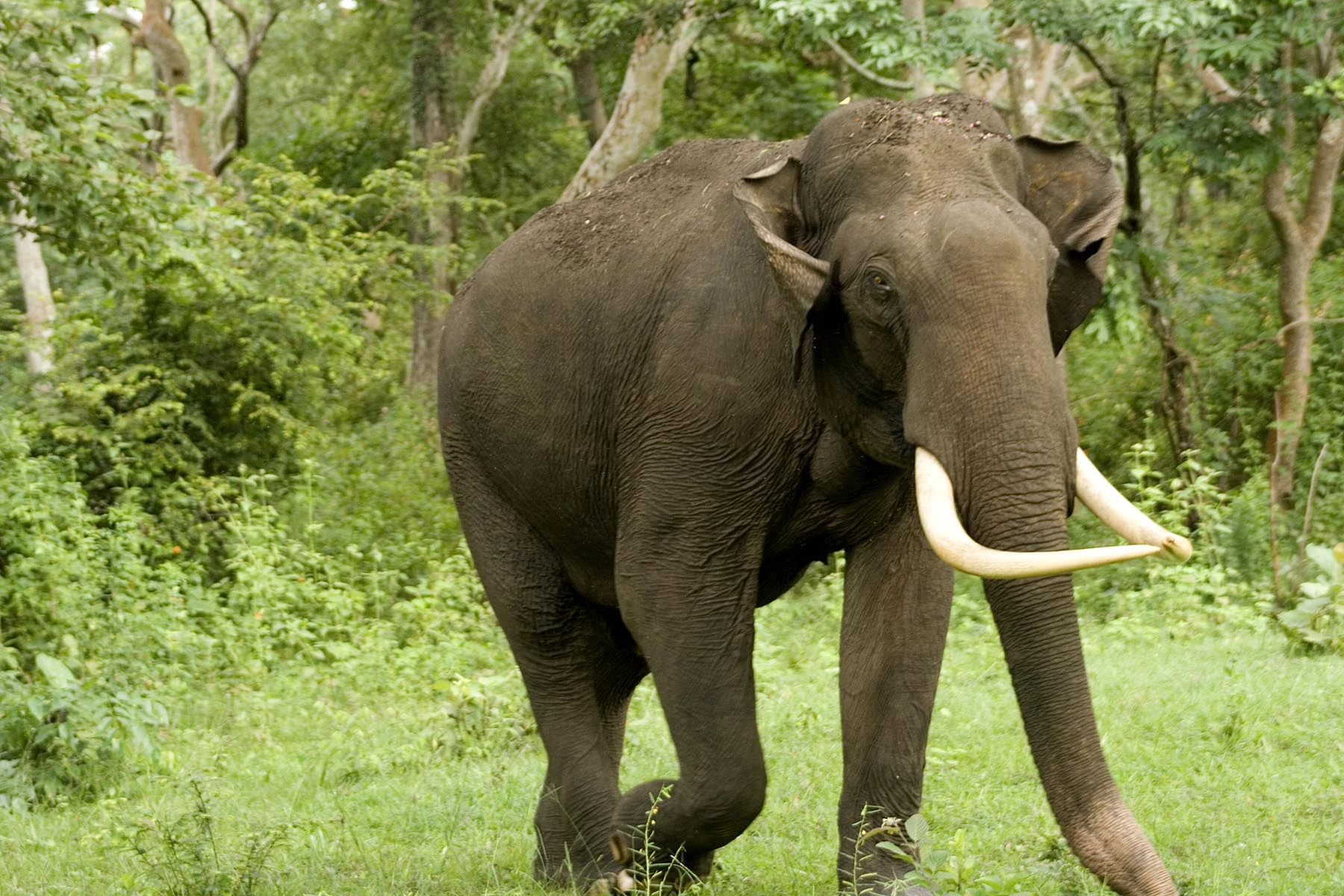
INDIAN ELEPHANT
DESCRIPTION
The Indian elephant is a subspecies of the Asian elephant, characterized by its smaller size compared to its African relatives. They have smaller ears, a more rounded back, and a single dome-shaped head. Indian elephants are known for their intelligence and complex social structures, often forming matriarchal herds led by older females.
FUN FACTS
- Indian elephants have a highly developed social structure and can recognize themselves in mirrors, indicating a high level of self-awareness
- | They are known for their strong memory and can remember locations of water sources and food for many years, which is crucial for their survival in the wild
QUICK INFO
Lifespan60-70 years in the wild, up to 80 in captivity
Average Weight3000-5000 kg
Average Length5.5-6.5 m
Diet TypeHerbivore
Social Structuregroup — Indian elephants live in matriarchal herds, which are usually composed of related females and their offspring.
Activity PatternDiurnal
Breeding SeasonYear-round, with peaks during the monsoon season
- Habitat
- Indian elephants inhabit a variety of environments, including grasslands, forests, and scrublands. They prefer areas with abundant water sources and food supply.
- Biomes
- Tropical Rainforest, Savanna, Grassland
- Native Range
- The Indian elephant is native to the Indian subcontinent, primarily found in India, Nepal, Bhutan, and parts of Bangladesh and Myanmar.
- Continent
- Asia
- Countries
- India, Nepal, Bhutan, Bangladesh, Myanmar
- Diet
- Indian elephants are herbivores, primarily feeding on grasses, leaves, fruits, and bark. They can consume up to 150 kg of vegetation in a single day.
- Diet Type
- Herbivore
- Favorite Food
- grasses, fruits, bark
- Social Structure
- group — Indian elephants live in matriarchal herds, which are usually composed of related females and their offspring.
- Activity Pattern
- Diurnal
- Group Size
- 5-30
- Territorial
- 0
 VU
VU
3000-5000 kg
Weight
5.5-6.5 m
Length
2.5-3.5 m at shoulder
Height (Shoulder)
- Coloration
- gray with patches of depigmentation, often with mud or dust covering their skin
- Sexual Dimorphism
- Males are generally larger than females and have tusks, while females usually do not.
- Lifespan
- 60-70 years in the wild, up to 80 in captivity
- Gestation Period
- 22 months
- Offspring per Birth
- 1
- Sexual Maturity
- 10-12 years
- Breeding Season
- Year-round, with peaks during the monsoon season
EN
Endangered
IUCN Red List Status
- Population Status
- The population of Indian elephants is currently declining due to habitat loss and human-elephant conflict.
- Wild Population Estimate
- 25,000-30,000
- Population Trend
- Decreasing
- Endangered
- 1
- Threats
- Main threats include habitat destruction, poaching for ivory and skin, and conflicts with humans as elephants encroach on agricultural land.
- Conservation Program
- Project Elephant, a government initiative aimed at protecting elephant habitats and reducing human-elephant conflict.
- Predators
- Humans are the primary threat, but young elephants may be vulnerable to large carnivores such as tigers and leopards.
- Defense Mechanisms
- Indian elephants use their size and strength to defend themselves, and they can also use vocalizations and body language to communicate threats.
- Found in Zoos
- Common