


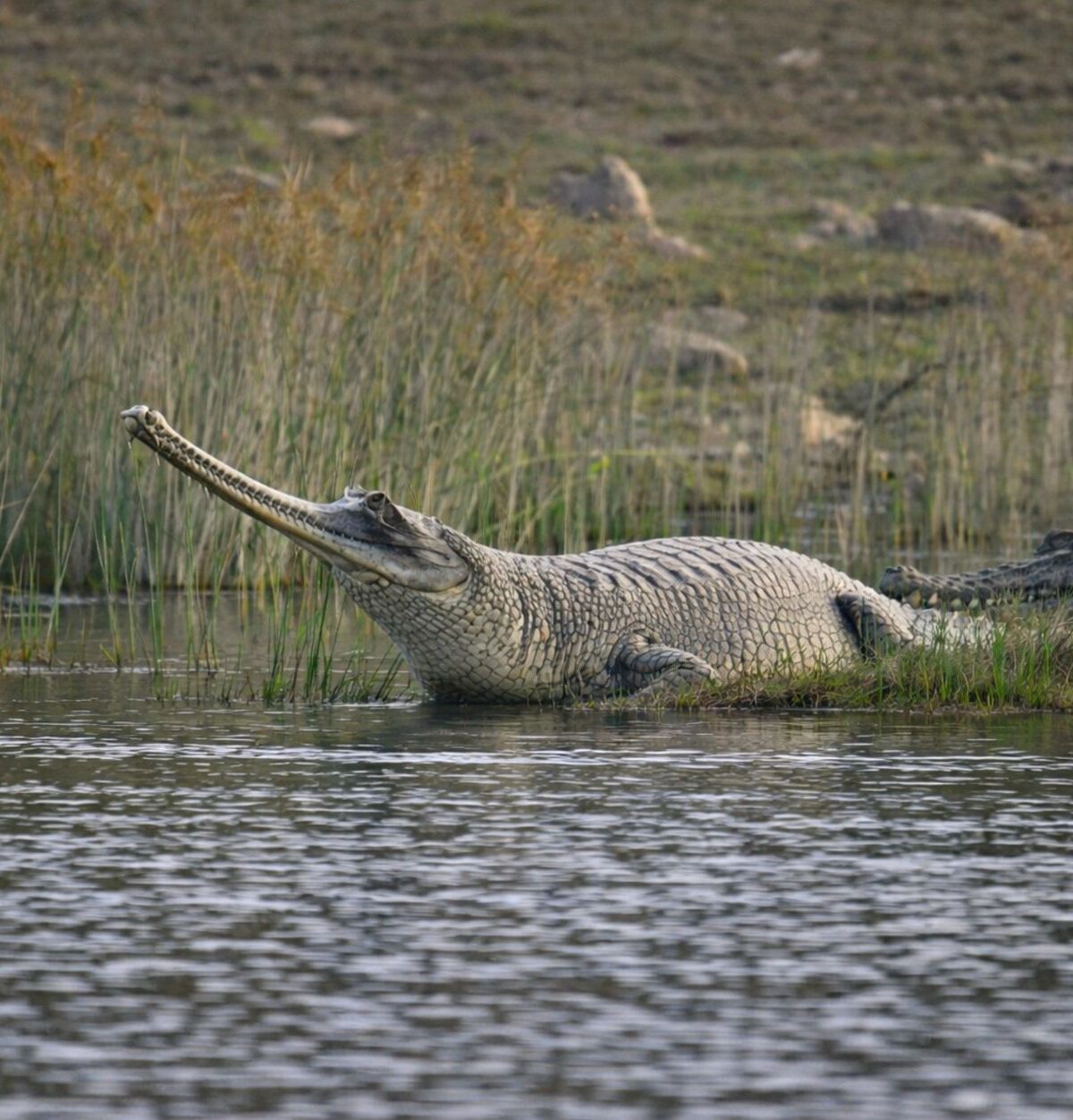
INDIAN GHARIAL
Gavialis gangeticus
DESCRIPTION
Indian Gharial (Gavialis gangeticus) is commonly known as Gharial, a distinctive crocodilian characterized by its long, narrow snout which is adapted for catching fish. This species exhibits a unique breeding behavior where males develop a bulbous growth on the tip of their snouts during the mating season, which is used to attract females. Indian Gharials are primarily found in riverine habitats, where they bask on riverbanks and hunt in the water, showcasing a semi-aquatic lifestyle.
FUN FACTS
- The Indian Gharial is one of the longest crocodilians, with some individuals reaching lengths of over 6 meters
- They are also known for their unique vocalizations, which include a series of hissing sounds used during mating displays and territorial disputes
QUICK INFO
Lifespan30-50 years in the wild
Average Weight150-200 kg
Average Length3-4 m
Diet TypePiscivore
Social Structuresolitary, occasionally seen in small groups during basking
Activity PatternDiurnal
Breeding SeasonWinter (December-February)
- Habitat
- They inhabit freshwater rivers and lakes, often preferring areas with sandy banks for basking and shallow waters for hunting.
- Biomes
- Freshwater, Riverine
- Native Range
- The Indian Gharial is native to the Indian subcontinent, primarily found in the rivers of India, Nepal, and Bangladesh.
- Continent
- Asia
- Countries
- India, Nepal, Bangladesh
- Diet
- Indian Gharials primarily feed on fish, using their specialized snouts to catch slippery prey in the water.
- Diet Type
- Piscivore
- Favorite Food
- fish
- Social Structure
- solitary, occasionally seen in small groups during basking
- Activity Pattern
- Diurnal
- Group Size
- 1-5
- Territorial
- 0
 VU
VU

150-200 kg
Weight
3-4 m
Length
- Coloration
- They have a dark olive-brown coloration with lighter underbellies, which helps them blend into their riverine environment.
- Sexual Dimorphism
- Males are larger and have a distinctive bulbous growth on their snouts during the breeding season.
- Lifespan
- 30-50 years in the wild
- Offspring per Birth
- 20-50 eggs
- Sexual Maturity
- 6-7 years
- Breeding Season
- Winter (December-February)
CR
Critically Endangered
IUCN Red List Status
- Population Status
- The population of Indian Gharials has significantly declined due to habitat loss and hunting.
- Wild Population Estimate
- Less than 2,500 individuals
- Population Trend
- Decreasing
- Endangered
- 1
- Threats
- Main threats include habitat destruction due to dam construction, pollution, and fishing activities that deplete their food sources. Additionally, they are often caught in fishing nets, leading to accidental deaths.
- Conservation Program
- The Gharial Conservation Project in India aims to protect and restore Gharial populations and their habitats.
- Predators
- Adult Indian Gharials have few natural predators, but young gharials may fall prey to larger fish, birds of prey, and other crocodilians.
- Defense Mechanisms
- They rely on their aquatic environment for defense, using their speed in water to escape threats.
- Found in Zoos
- Uncommon