


INDIAN MUNTJAK
Muntiacus muntjak
DESCRIPTION
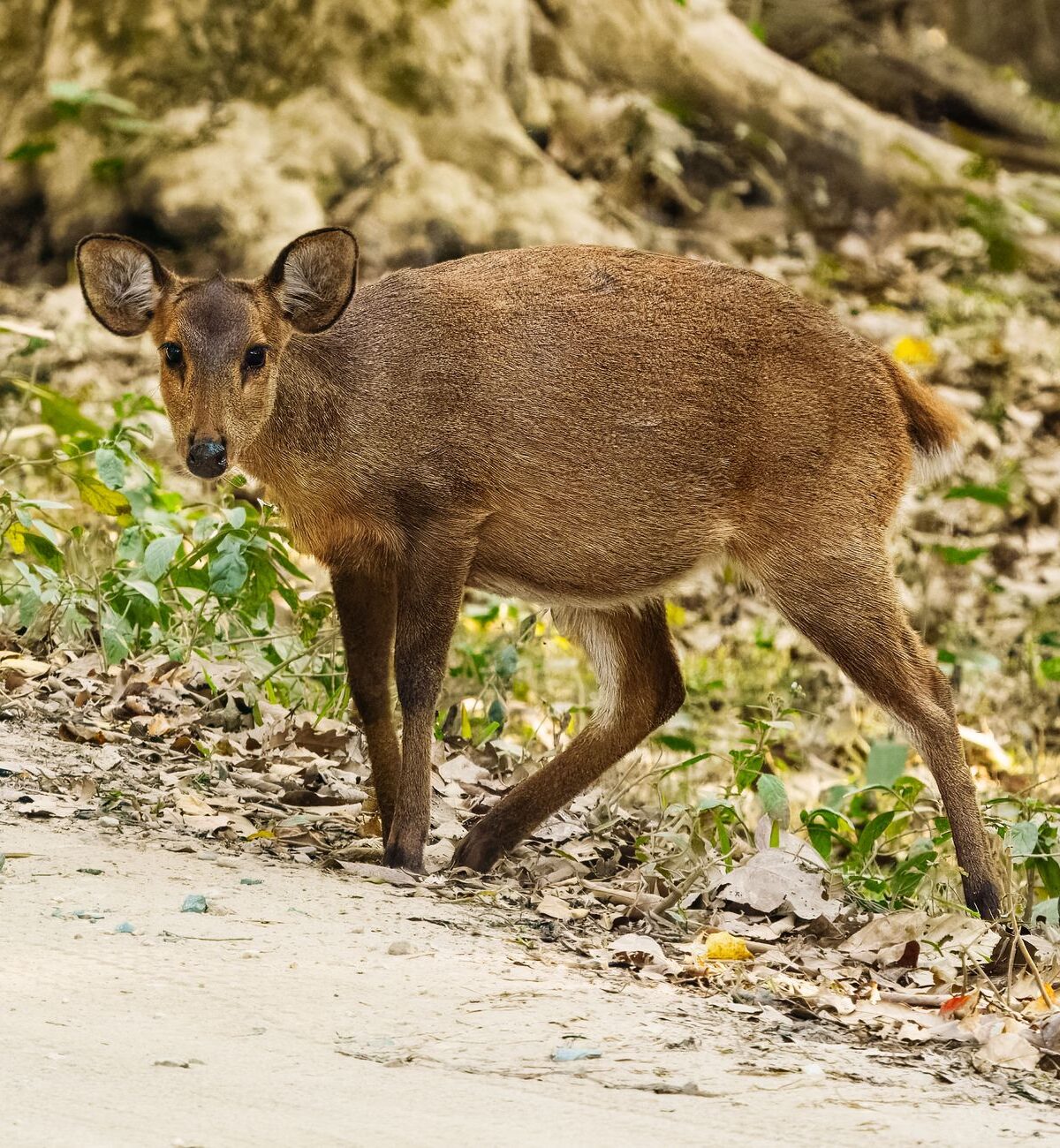
Indian Muntjak (Muntiacus muntjak) is also known as Barking Deer due to its distinctive vocalizations. This small deer species is characterized by its short, stocky body, large ears, and a reddish-brown coat with lighter underparts. They are primarily solitary or found in pairs, and are known for their secretive behavior, often hiding in dense vegetation to avoid predators.
FUN FACTS
- Indian Muntjaks are known for their unique vocalizations, which can sound like barking, hence their common name
- They are one of the smallest deer species, and their size allows them to navigate through dense underbrush with ease.|These deer have a unique adaptation where they can regrow their antlers annually, similar to other deer species
- Their solitary nature and secretive behavior make them a fascinating subject for wildlife enthusiasts
QUICK INFO
Lifespan10-15 years in the wild, up to 20 in captivity
Average Weight30-50 kg
Average Length1-1.2 m
Diet TypeHerbivore
Social Structuresolitary or in pairs, often seen alone or with a mate
Activity PatternCrepuscular
Breeding SeasonYear-round, peaks during monsoon
- Habitat
- Indian Muntjaks inhabit dense forests, grasslands, and scrublands. They prefer areas with ample cover to hide from predators and to forage for food.
- Biomes
- Tropical Rainforest, Temperate Forest, Grassland
- Native Range
- The Indian Muntjak is native to the Indian subcontinent, including parts of India, Nepal, and Bangladesh.
- Continent
- Asia
- Countries
- India, Nepal, Bangladesh
- Diet
- Indian Muntjaks are herbivores, primarily feeding on leaves, fruits, and shoots. They are known to browse on a variety of plant materials, adapting their diet based on seasonal availability.
- Diet Type
- Herbivore
- Favorite Food
- leaves, fruits, shoots
- Social Structure
- solitary or in pairs, often seen alone or with a mate
- Activity Pattern
- Crepuscular
- Group Size
- 1-2
- Territorial
- 1
 EN
EN
 VU
VU
30-50 kg
Weight
1-1.2 m
Length
0.6-1 m at shoulder
Height (Shoulder)
- Coloration
- reddish-brown coat with lighter underparts
- Sexual Dimorphism
- males have antlers, females do not
- Lifespan
- 10-15 years in the wild, up to 20 in captivity
- Gestation Period
- 210 days
- Offspring per Birth
- 1
- Sexual Maturity
- 1-2 years
- Breeding Season
- Year-round, peaks during monsoon
LC
Least Concern
IUCN Red List Status
- Population Status
- The population of Indian Muntjaks is currently stable, but they face threats from habitat loss.
- Wild Population Estimate
- unknown
- Population Trend
- Stable
- Endangered
- 0
- Threats
- Main threats include habitat destruction due to agriculture and urbanization, as well as poaching. These factors have led to localized declines in certain areas.
- Predators
- Tigers, leopards, and large birds of prey are known to prey on Indian Muntjaks.
- Defense Mechanisms
- They rely on their ability to remain hidden and their agility to escape from predators.
- Found in Zoos
- Uncommon