


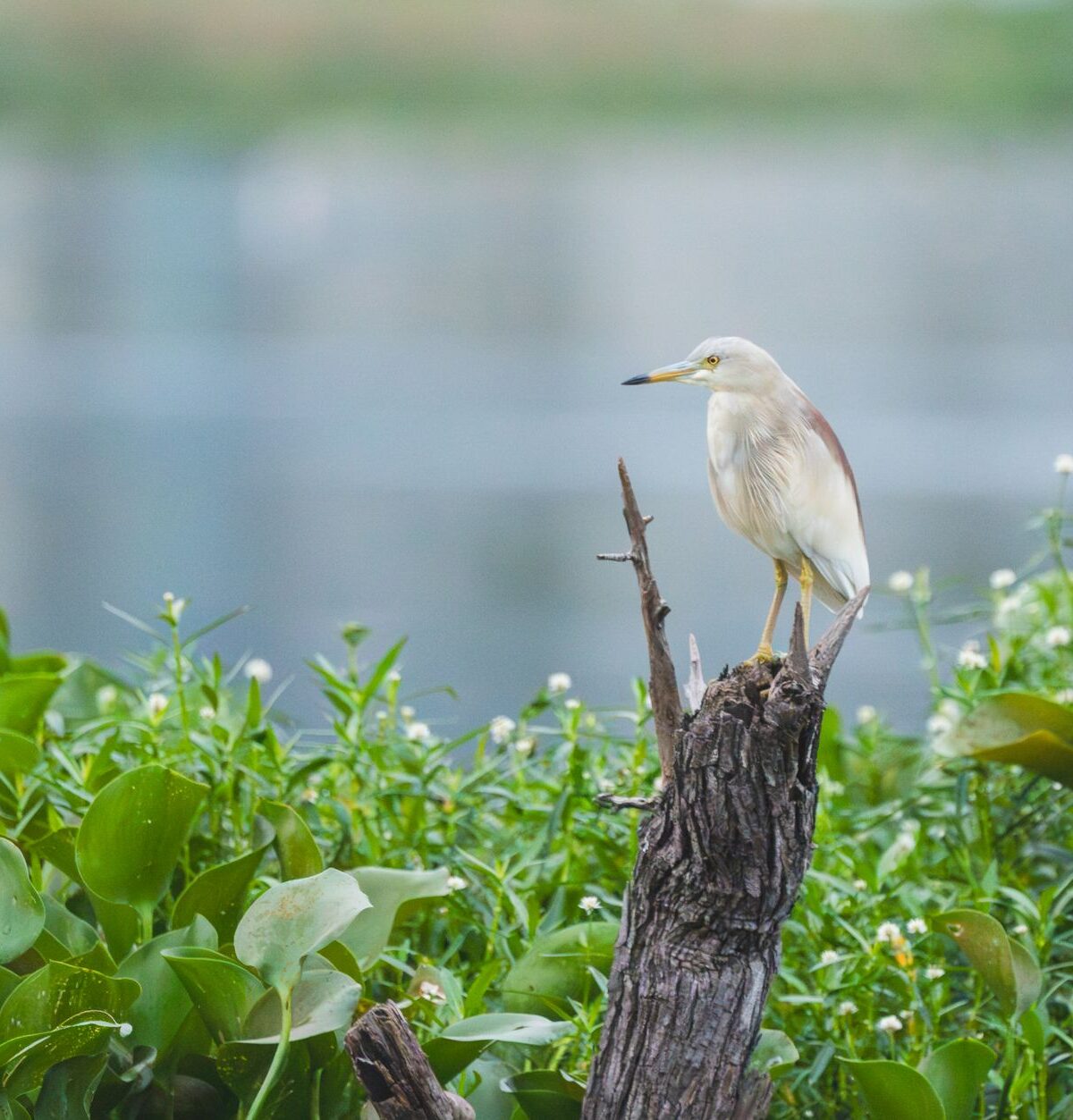
INDIAN POND HERON
Ardeola grayii
DESCRIPTION
Indian Pond Heron (Ardeola grayii) is a small heron known for its distinctive appearance, featuring a brown and white plumage that provides excellent camouflage among reeds and grasses. This species is often seen standing still near water bodies, waiting patiently to catch prey, showcasing its stealthy hunting behavior. It thrives in wetlands and is commonly found in rice fields, marshes, and along the edges of ponds and lakes, where it plays a crucial role in the local ecosystem by controlling fish and insect populations.
FUN FACTS
- Indian Pond Herons are known for their unique hunting technique, where they can remain motionless for extended periods, blending seamlessly into their surroundings
- This behavior allows them to ambush unsuspecting prey effectively
- | During the breeding season, Indian Pond Herons display a fascinating courtship ritual, which includes elaborate displays and vocalizations to attract mates
- Their nests are typically built in dense vegetation near water, providing safety for their young
QUICK INFO
Lifespan5-10 years in the wild
Average Weight200-300 g
Average Length50-60 cm
Diet TypeCarnivore
Social Structuresolitary or in pairs, typically seen alone while hunting
Activity PatternDiurnal
Breeding SeasonMonsoon season (June-August)
- Habitat
- This heron prefers shallow freshwater habitats such as ponds, marshes, and rice fields. It is often found in areas with abundant vegetation that provides cover and hunting opportunities.
- Biomes
- Wetlands, Grasslands
- Native Range
- The Indian Pond Heron is native to the Indian subcontinent, including parts of India, Pakistan, Nepal, and Bangladesh.
- Continent
- Asia
- Countries
- India, Pakistan, Nepal, Bangladesh
- Diet
- The Indian Pond Heron primarily feeds on small fish, amphibians, and insects, using its sharp beak to catch prey. It often hunts by standing still and waiting for the right moment to strike.
- Diet Type
- Carnivore
- Favorite Food
- small fish, insects
- Social Structure
- solitary or in pairs, typically seen alone while hunting
- Activity Pattern
- Diurnal
- Group Size
- 1-2
- Territorial
- 0
 LC
LC
 LC
LC
200-300 g
Weight
50-60 cm
Length
- Coloration
- brown and white with streaks, providing camouflage
- Lifespan
- 5-10 years in the wild
- Offspring per Birth
- 3-5 eggs
- Sexual Maturity
- 1-2 years
- Breeding Season
- Monsoon season (June-August)
LC
Least Concern
IUCN Red List Status
- Population Status
- The population of Indian Pond Herons is currently stable, with no major declines reported.
- Wild Population Estimate
- 100,000-200,000
- Population Trend
- Stable
- Endangered
- 0
- Threats
- The main threats to the Indian Pond Heron include habitat loss due to agricultural expansion and pollution of water bodies. Climate change also poses a risk by altering wetland ecosystems.
- Predators
- Larger birds of prey, snakes, and mammals such as foxes may prey on Indian Pond Herons, especially their eggs and chicks.
- Defense Mechanisms
- They rely on camouflage and stealth to avoid detection by predators.
- Found in Zoos
- Uncommon