


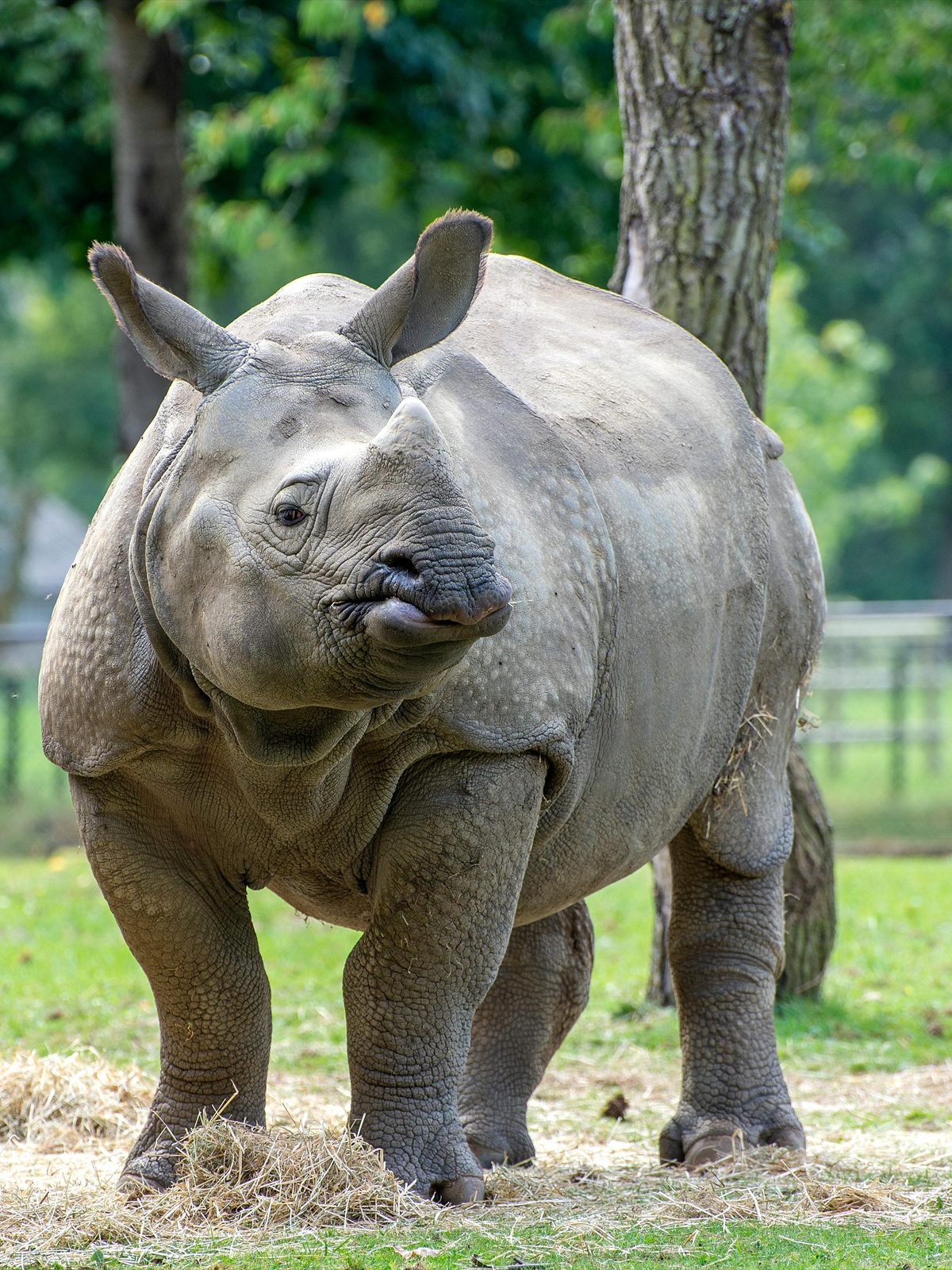
INDIAN RHINOCEROS
Rhinoceros unicornis
DESCRIPTION
The Indian Rhinoceros, also known as the Indian one-horned rhinoceros, is a large herbivorous mammal native to the Indian subcontinent. It is characterized by its single horn and thick, wrinkled skin that resembles armor plating.
FUN FACTS
- The Indian Rhinoceros can run at speeds of up to 30 km/h | They are excellent swimmers and often wallow in mud to cool off | Their horn is made of keratin, the same material as human hair and nails
QUICK INFO
Lifespan40-50 years in the wild, up to 60 in captivity
Average Weight1,800-2,700 kg
Average Length3.1-3.8 m
Diet TypeHerbivore
Social Structuresolitary, with occasional pairs or small groups
Activity PatternDiurnal
Breeding SeasonYear-round, with peaks during the monsoon season
- Habitat
- Indian Rhinoceroses inhabit grasslands and forests, particularly in areas near rivers and wetlands. They require access to water sources for drinking and wallowing.
- Biomes
- Grassland, Tropical Rainforest, Wetland
- Native Range
- The species is found in parts of India, Nepal, and Bhutan.
- Continent
- Asia
- Countries
- India, Nepal, Bhutan
- Diet
- The Indian Rhinoceros primarily feeds on grasses, leaves, and fruits. It prefers tall grasses and is known to graze in grasslands and riverine forests.
- Diet Type
- Herbivore
- Favorite Food
- grasses, leaves, fruits
- Social Structure
- solitary, with occasional pairs or small groups
- Activity Pattern
- Diurnal
- Group Size
- 1-3
- Territorial
- 1
 EN
EN
1,800-2,700 kg
Weight
3.1-3.8 m
Length
1.5-2 m at shoulder
Height (Shoulder)
- Coloration
- grayish-brown with a rough, wrinkled skin texture
- Sexual Dimorphism
- males are generally larger than females
- Lifespan
- 40-50 years in the wild, up to 60 in captivity
- Gestation Period
- 480 days
- Offspring per Birth
- 1
- Sexual Maturity
- 4-6 years
- Breeding Season
- Year-round, with peaks during the monsoon season
VU
Vulnerable
IUCN Red List Status
- Population Status
- The population of Indian Rhinoceroses has been recovering due to conservation efforts, but they remain vulnerable.
- Wild Population Estimate
- 3,500-4,000
- Population Trend
- Increasing
- Endangered
- 1
- Threats
- Main threats include habitat loss due to agriculture and human settlement, as well as poaching for their horns.
- Conservation Program
- Kaziranga National Park and Pobitora Wildlife Sanctuary are notable conservation areas for the species.
- Predators
- tigers, humans
- Defense Mechanisms
- They have thick skin and can charge at high speeds to defend themselves.
- Compatible Animals
- none
- Found in Zoos
- Uncommon