


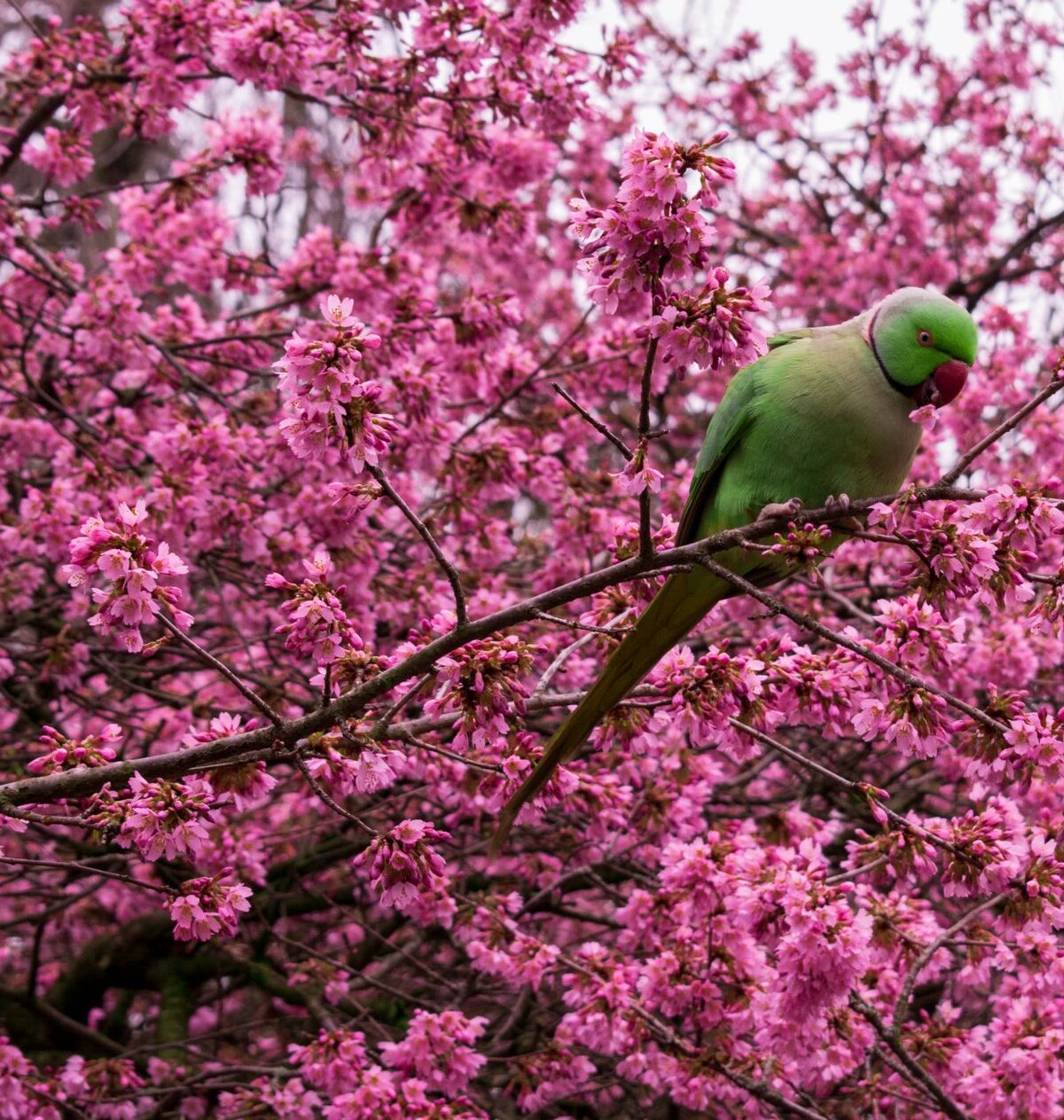
INDIAN RINGNECK PARAKEET
Psittacula krameri
DESCRIPTION
Indian Ringneck Parakeet (Psittacula krameri) is a medium-sized parakeet known for its vibrant green plumage and distinctive rose-colored neck ring in males. These birds are highly social and intelligent, often seen in flocks, engaging in playful behavior and vocalizations. They are adaptable and can thrive in various environments, often found in urban areas as well as their natural habitats.
FUN FACTS
- Indian Ringneck Parakeets are known for their exceptional vocal abilities, with some individuals capable of learning over 200 words and phrases
- They are also highly social creatures, often forming strong bonds with their human caretakers, making them popular pets in many households
QUICK INFO
Lifespan15-25 years in the wild, up to 30 years in captivi
Average Weight100-150 g
Average Length40-50 cm
Diet TypeHerbivore
Social StructureThey are typically found in pairs or small groups, often forming strong bonds with their mates.
Activity PatternDiurnal
Breeding SeasonSpring to early summer
- Habitat
- Indian Ringneck Parakeets inhabit a range of environments, including forests, woodlands, and urban areas. They prefer areas with abundant food sources and nesting sites.
- Biomes
- Tropical Rainforest, Savanna, Urban
- Native Range
- Originally native to the Indian subcontinent, they have also established populations in various parts of Africa and the Middle East.
- Continent
- Asia, Africa
- Countries
- India, Pakistan, Sri Lanka, Nepal, Bangladesh, Kenya, South Africa
- Diet
- They primarily feed on seeds, fruits, and nuts, occasionally consuming flowers and leaves.
- Diet Type
- Herbivore
- Favorite Food
- seeds, fruits, nuts
- Social Structure
- They are typically found in pairs or small groups, often forming strong bonds with their mates.
- Activity Pattern
- Diurnal
- Group Size
- 5-30
- Territorial
- 1
 VU
VU
 LC
LC
100-150 g
Weight
40-50 cm
Length
- Coloration
- Bright green with a distinctive rose-colored neck ring in males and a more subdued coloration in females.
- Sexual Dimorphism
- Males have a prominent neck ring, while females lack this feature.
- Lifespan
- 15-25 years in the wild, up to 30 years in captivi
- Offspring per Birth
- 3-6
- Sexual Maturity
- 2-3 years
- Breeding Season
- Spring to early summer
LC
Least Concern
IUCN Red List Status
- Population Status
- The population is currently stable, with a significant presence in both wild and urban areas.
- Wild Population Estimate
- 1,000,000+
- Population Trend
- Stable
- Endangered
- 0
- Threats
- Main threats include habitat loss due to deforestation and the illegal pet trade. However, they are adaptable and have established populations in urban areas.
- Predators
- Birds of prey, snakes, and larger mammals can pose threats to Indian Ringneck Parakeets, especially to their eggs and young.
- Defense Mechanisms
- They often use loud calls to warn of danger and can be quite agile in flight to evade predators.
- Compatible Animals
- Other parakeets, cockatiels, finches
- Found in Zoos
- Common