


INDIAN SARUS CRANE
Grus antigone antigone
DESCRIPTION
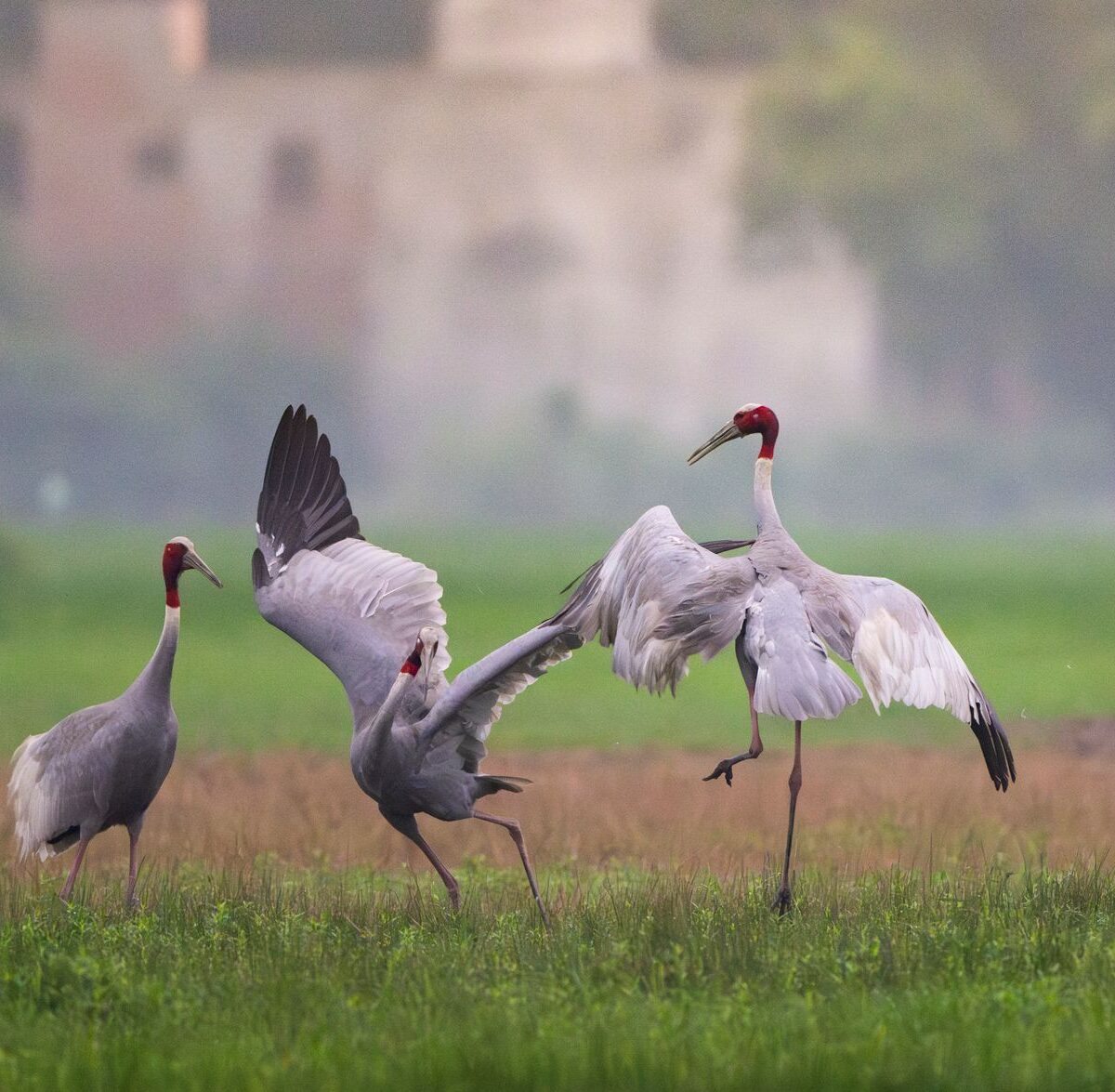
Indian sarus crane (Grus antigone antigone) is commonly known as the Sarus crane. This large, tall bird is characterized by its long legs, elongated neck, and striking red head and neck, which contrast with its predominantly gray plumage. They are known for their elaborate courtship dances and are often seen in pairs or small groups, showcasing their strong social bonds and monogamous behavior.
FUN FACTS
- The Indian sarus crane is the tallest flying bird in the world, reaching heights of up to 1.8 meters
- They are also known for their unique courtship dances, which involve synchronized movements and vocalizations that can be quite a spectacle to witness.|Sarus cranes are highly regarded in Indian culture and are often associated with monogamy and fidelity, making them a symbol of love and loyalty
- Their presence in agricultural fields is also beneficial, as they help control pest populations
QUICK INFO
Lifespan20-30 years in the wild
Average Weight6-8 kg
Average Length1.5-1.8 m
Diet TypeOmnivore
Social Structurepair, often seen in monogamous pairs that maintain strong bonds
Activity PatternDiurnal
Breeding SeasonMonsoon season (June-September)
- Habitat
- These cranes inhabit wetlands, marshes, and agricultural fields, often near water sources. They prefer open areas where they can easily forage and display their courtship behaviors.
- Biomes
- Wetlands, Grasslands
- Native Range
- The Indian sarus crane is native to the Indian subcontinent, primarily found in northern and central India, as well as parts of Nepal and Bangladesh.
- Continent
- Asia
- Countries
- India, Nepal, Bangladesh
- Diet
- Indian sarus cranes primarily feed on a variety of plant materials, including grains, seeds, and tubers, as well as small invertebrates. They forage in wetlands and agricultural fields, often using their long bills to probe the ground.
- Diet Type
- Omnivore
- Favorite Food
- grains, seeds, tubers
- Social Structure
- pair, often seen in monogamous pairs that maintain strong bonds
- Activity Pattern
- Diurnal
- Group Size
- 2-10
- Territorial
- 1

 VU
LC
VU
LC
6-8 kg
Weight
1.5-1.8 m
Length
1.5 m at shoulder
Height (Shoulder)
- Coloration
- predominantly gray with a red head and neck
- Sexual Dimorphism
- males are generally larger than females
- Lifespan
- 20-30 years in the wild
- Offspring per Birth
- 1-2
- Sexual Maturity
- 3-4 years
- Breeding Season
- Monsoon season (June-September)
VU
Vulnerable
IUCN Red List Status
- Population Status
- The population of Indian sarus cranes is currently declining due to habitat loss and human encroachment.
- Wild Population Estimate
- 20,000-30,000
- Population Trend
- Decreasing
- Endangered
- 1
- Threats
- Main threats include habitat destruction due to agricultural expansion, drainage of wetlands, and human disturbance. These factors have led to a significant decline in their population.
- Conservation Program
- Various local conservation programs aimed at habitat restoration and protection of wetlands
- Predators
- Foxes, large birds of prey, and domestic dogs
- Defense Mechanisms
- They rely on their size and ability to fly to escape threats, and they may also use loud calls to warn of danger.
- Compatible Animals
- other cranes, waterfowl
- Found in Zoos
- Uncommon