


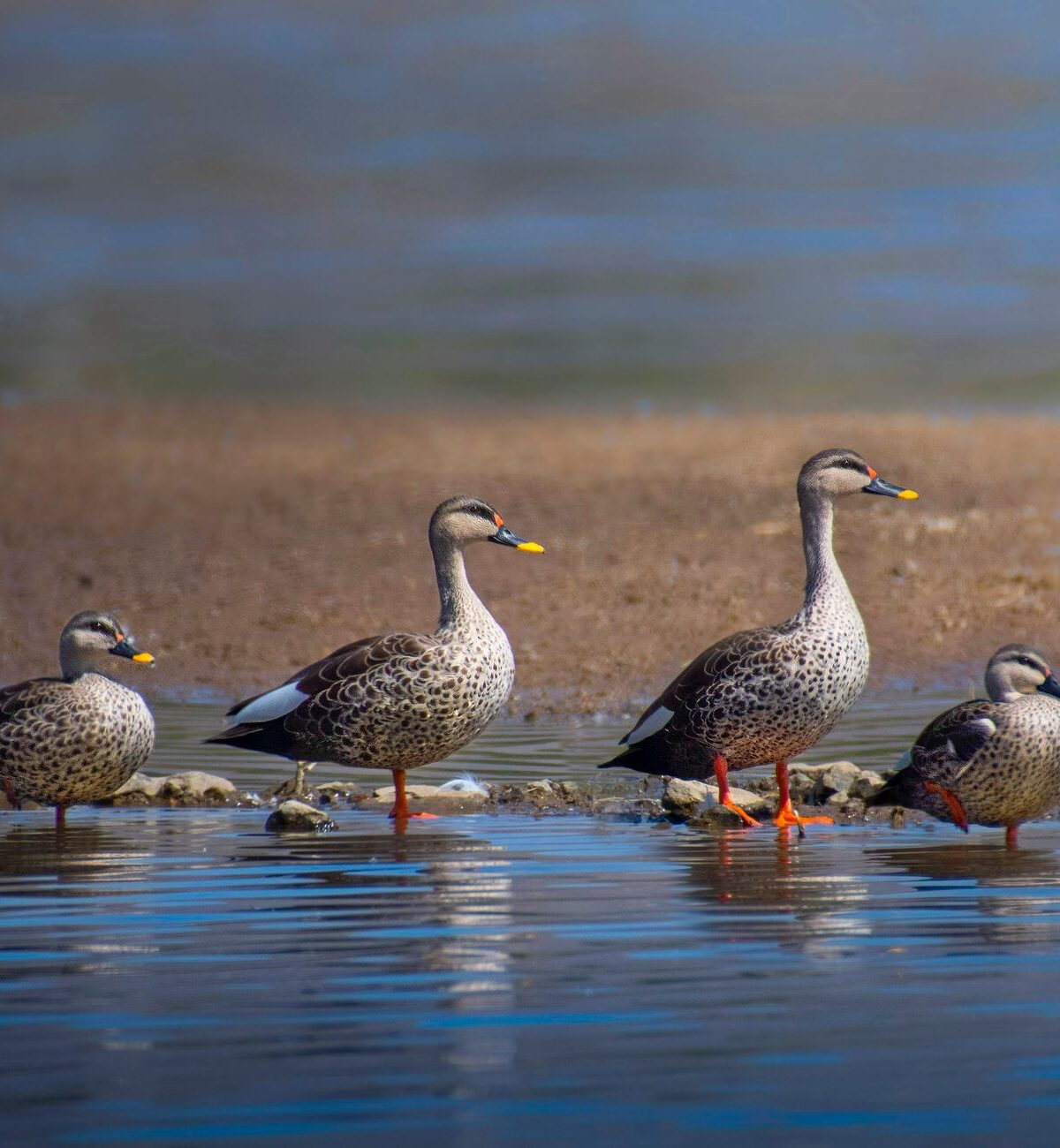
INDIAN SPOT-BILLED DUCK
Anas poecilorhyncha poecilorhyncha
DESCRIPTION
Indian spot-billed duck (Anas poecilorhyncha poecilorhyncha) is also known as the spot-billed duck and Indian duck. This medium-sized dabbling duck is characterized by its distinctive yellow and black spot on the bill, which is a key identification feature. The species exhibits a variety of colors, with males typically having a darker head and a more vibrant plumage compared to the females, which are generally mottled brown.
FUN FACTS
- The Indian spot-billed duck is known for its unique vocalizations, which include a variety of quacks and whistles that can be heard during courtship displays
- Additionally, these ducks are excellent foragers, often seen dabbling in shallow waters, which allows them to access a diverse diet of plants and small aquatic creatures
QUICK INFO
Lifespan10-15 years in the wild
Average Weight800-1,200 g
Average Length60-70 cm
Diet TypeOmnivore
Social StructureThey are often found in pairs or small groups, especially during the breeding season.
Activity PatternDiurnal
Breeding SeasonMonsoon season (June-September)
- Habitat
- This species inhabits freshwater wetlands, marshes, and rice fields. It prefers shallow waters where it can easily forage for food.
- Biomes
- Wetlands, Grasslands
- Native Range
- The Indian spot-billed duck is native to the Indian subcontinent, primarily found in India, Bangladesh, and parts of Southeast Asia.
- Continent
- Asia
- Countries
- India, Bangladesh, Myanmar, Nepal, Sri Lanka
- Diet
- The Indian spot-billed duck primarily feeds on aquatic plants, seeds, and small invertebrates. It forages in shallow waters, dabbling to reach food items.
- Diet Type
- Omnivore
- Favorite Food
- aquatic plants, seeds, invertebrates
- Social Structure
- They are often found in pairs or small groups, especially during the breeding season.
- Activity Pattern
- Diurnal
- Group Size
- 2-20
- Territorial
- 0

 VU
VU
800-1,200 g
Weight
60-70 cm
Length
- Coloration
- Males have a dark green head, white neck ring, and brown body, while females are mottled brown with a lighter face.
- Sexual Dimorphism
- Males are more colorful with a darker head and distinct markings compared to the more camouflaged females.
- Lifespan
- 10-15 years in the wild
- Offspring per Birth
- 8-12
- Sexual Maturity
- 1 year
- Breeding Season
- Monsoon season (June-September)
LC
Least Concern
IUCN Red List Status
- Population Status
- The population of Indian spot-billed ducks is currently stable, with no major declines reported.
- Wild Population Estimate
- 50,000-100,000
- Population Trend
- Stable
- Endangered
- 0
- Threats
- Main threats include habitat loss due to wetland drainage and pollution. Hunting and disturbance from human activities also pose risks to their populations.
- Predators
- Foxes, large birds of prey, and domestic dogs are known predators of the Indian spot-billed duck.
- Defense Mechanisms
- They rely on their ability to quickly take flight and their cryptic coloration for camouflage.
- Compatible Animals
- Other duck species, geese, swans
- Found in Zoos
- Uncommon