


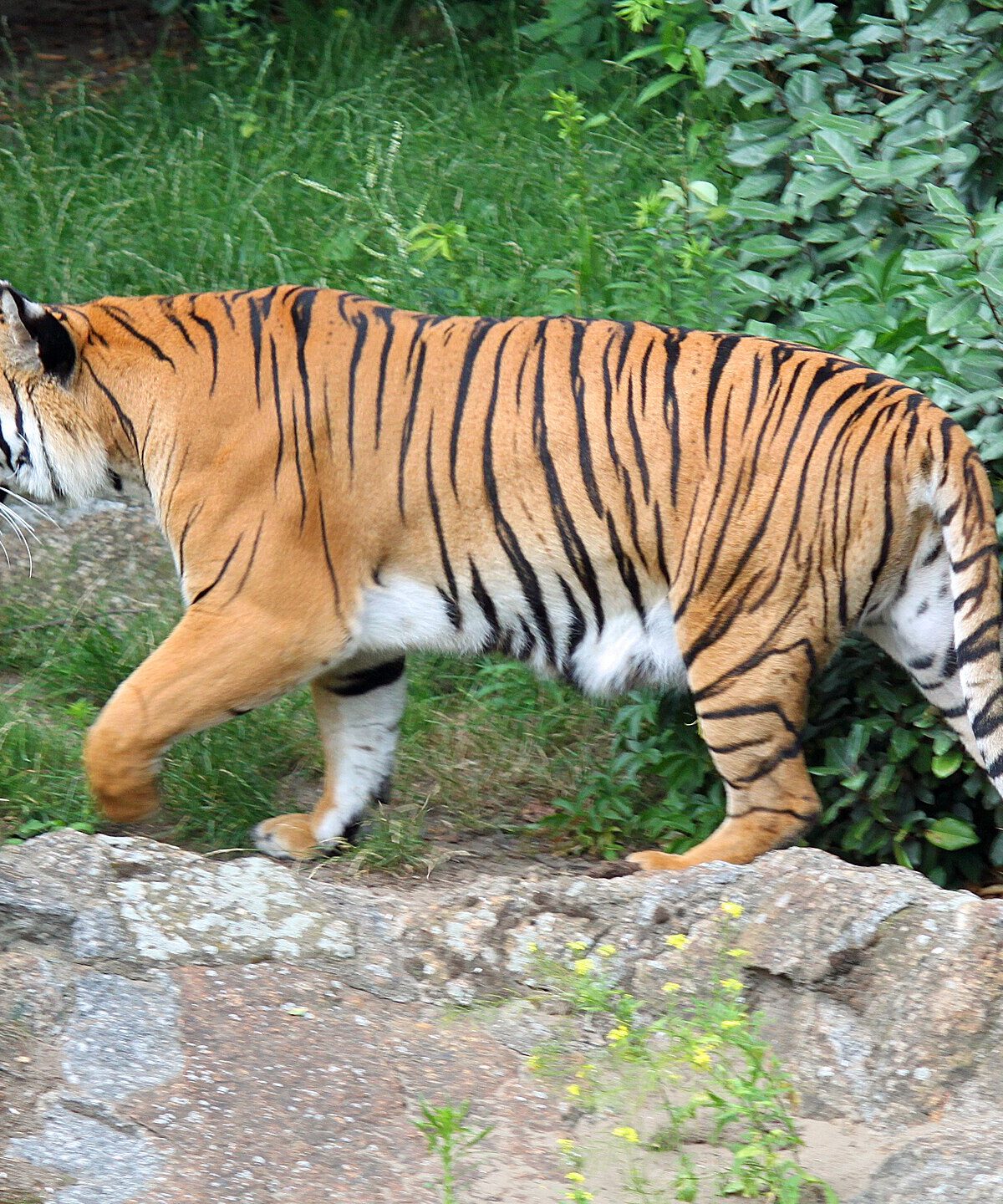
INDOCHINESE TIGER
Panthera tigris corbetti
DESCRIPTION
Indochinese Tiger (Panthera tigris corbetti) is commonly known as Corbett's Tiger and is a subspecies of tiger found primarily in Southeast Asia. This tiger is characterized by its smaller size compared to other tiger subspecies, with a more slender build and darker fur with narrower stripes. They are solitary animals, primarily active at night, and are known for their stealth and strength as apex predators in their habitats.
FUN FACTS
- Indochinese Tigers are known for their unique stripe patterns, which are as individual as human fingerprints, allowing researchers to identify them in the wild
- | Unlike some other tiger subspecies, Indochinese Tigers are more adapted to mountainous terrains, showcasing their versatility in different habitats
QUICK INFO
Lifespan10-15 years in the wild, up to 20 years in captivi
Average Weight100-200 kg
Average Length2.4-2.8 m
Diet TypeCarnivore
Social Structuresolitary, with males and females coming together only for mating
Activity PatternNocturnal
Breeding SeasonYear-round, with peaks depending on the region
- Habitat
- Indochinese Tigers inhabit dense forests, grasslands, and mountainous regions, often preferring areas with abundant cover for stalking prey. They require large territories to support their hunting needs.
- Biomes
- Tropical Rainforest, Temperate Forest, Grassland
- Native Range
- The native range of the Indochinese Tiger includes parts of Southeast Asia, particularly in countries like Thailand, Vietnam, Laos, Cambodia, and Myanmar.
- Continent
- Asia
- Countries
- Thailand, Vietnam, Laos, Cambodia, Myanmar
- Diet
- Indochinese Tigers primarily hunt large ungulates such as deer and wild boar, but they are also known to prey on smaller mammals when necessary.
- Diet Type
- Carnivore
- Favorite Food
- deer, wild boar
- Social Structure
- solitary, with males and females coming together only for mating
- Activity Pattern
- Nocturnal
- Group Size
- 1
- Territorial
- 1
100-200 kg
Weight
2.4-2.8 m
Length
- Coloration
- dark orange coat with narrow black stripes
- Sexual Dimorphism
- males are larger than females
- Lifespan
- 10-15 years in the wild, up to 20 years in captivi
- Gestation Period
- 93-112 days
- Offspring per Birth
- 2-4
- Sexual Maturity
- 3-4 years
- Breeding Season
- Year-round, with peaks depending on the region
EN
Endangered
IUCN Red List Status
- Population Status
- The population of Indochinese Tigers is currently declining due to habitat loss and poaching.
- Wild Population Estimate
- 1,200-1,800
- Population Trend
- Decreasing
- Endangered
- 1
- Threats
- Main threats to the Indochinese Tiger include habitat destruction due to logging and agriculture, as well as poaching for their body parts. The decline in prey availability also poses a significant threat to their survival.
- Conservation Program
- Various conservation programs are in place, including anti-poaching initiatives and habitat restoration efforts.
- Defense Mechanisms
- Indochinese Tigers rely on their strength, agility, and camouflage to evade threats and ambush prey.
- Found in Zoos
- Uncommon