


INDRI
Indri indri
DESCRIPTION
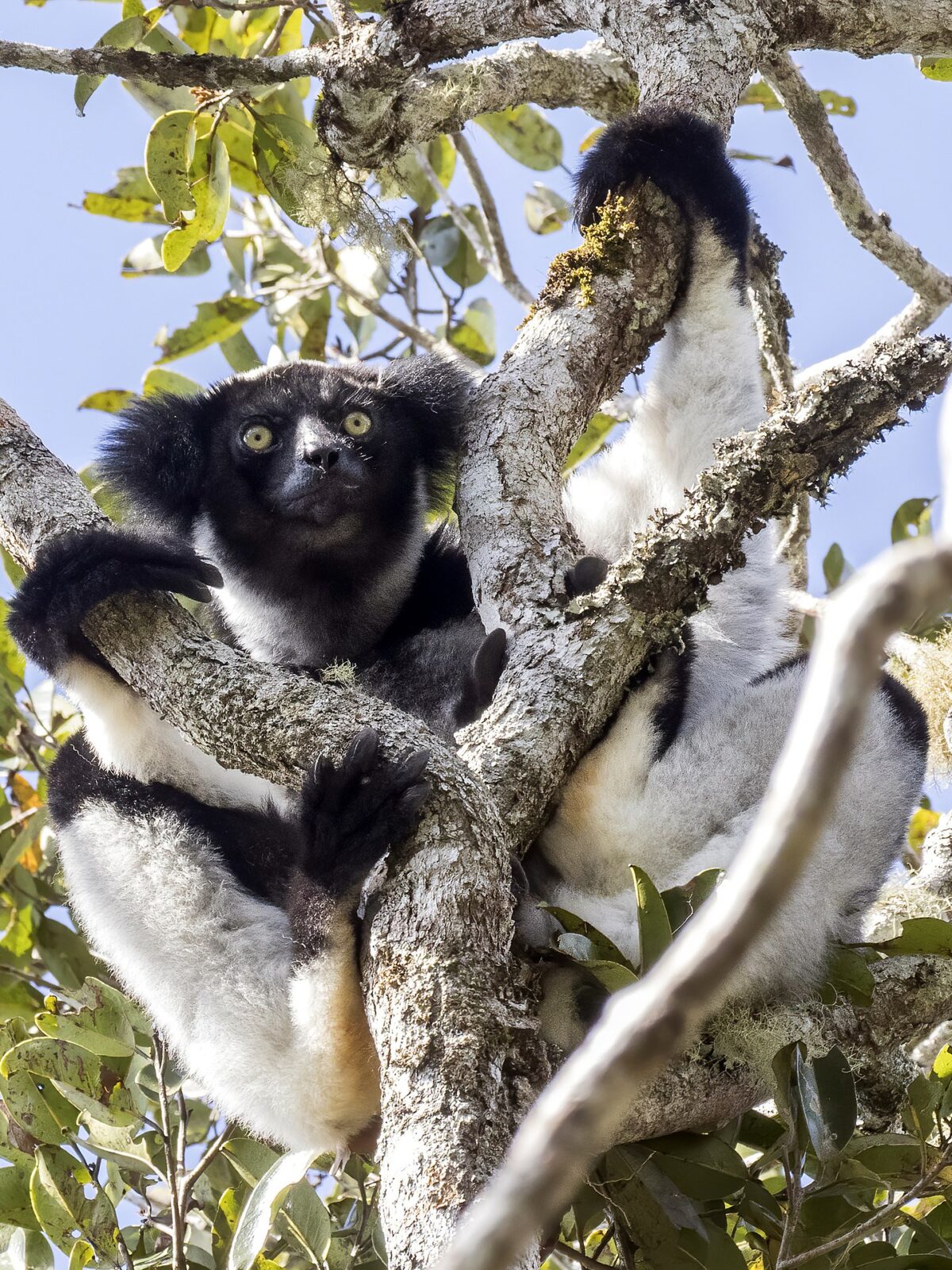
Indri (Indri indri) is commonly known as Babakoto and is the largest living lemur species. It has a distinctive appearance with a black and white coat, large eyes, and a lack of a long tail, which sets it apart from other lemurs. Indris are known for their loud, haunting calls that can be heard over long distances, and they primarily inhabit the rainforests of Madagascar, where they play a crucial role in the ecosystem as seed dispersers.
FUN FACTS
- Indris are unique among lemurs as they do not have a tail, which is a characteristic feature of most other lemur species
- They are also known for their impressive vocalizations, which can be heard up to 2 kilometers away, serving both as a means of communication and a way to establish territory
QUICK INFO
Lifespan15-20 years in the wild, up to 30 in captivity
Average Weight6-10 kg
Average Length70-90 cm
Diet TypeHerbivore
Social Structurepair, typically found in small family groups consisting of a mated pair and their offspring.
Activity PatternDiurnal
Breeding SeasonSpring (September-November)
- Habitat
- Indris inhabit the dense rainforests of Madagascar, where they are arboreal and spend most of their time in the trees. They prefer areas with abundant foliage to support their herbivorous diet.
- Biomes
- Tropical Rainforest
- Native Range
- Indri is native to Madagascar, specifically found in the eastern rainforests of the island.
- Continent
- Africa
- Countries
- Madagascar
- Diet
- Indris are herbivores, primarily feeding on leaves, fruits, and flowers. They have a preference for young leaves and are known to consume a variety of plant species.
- Diet Type
- Herbivore
- Favorite Food
- young leaves, fruits, flowers
- Social Structure
- pair, typically found in small family groups consisting of a mated pair and their offspring.
- Activity Pattern
- Diurnal
- Group Size
- 2-6
- Territorial
- 1
6-10 kg
Weight
70-90 cm
Length
- Coloration
- black and white fur with a distinctive pattern
- Sexual Dimorphism
- males and females are similar in size, but females may be slightly larger.
- Lifespan
- 15-20 years in the wild, up to 30 in captivity
- Gestation Period
- 120 days
- Offspring per Birth
- 1
- Sexual Maturity
- 2-3 years
- Breeding Season
- Spring (September-November)
EN
Endangered
IUCN Red List Status
- Population Status
- The population of Indri is currently declining due to habitat loss and hunting.
- Wild Population Estimate
- 10,000-20,000
- Population Trend
- Decreasing
- Endangered
- 1
- Threats
- The main threats to Indri include deforestation due to agriculture and logging, as well as hunting for bushmeat. These activities have significantly reduced their habitat and population numbers.
- Conservation Program
- Conservation programs in Madagascar focus on habitat protection and community education.
- Predators
- Humans are the primary threat to Indri, but they may also be vulnerable to introduced species such as domestic dogs.
- Defense Mechanisms
- Indris use their loud vocalizations to communicate and establish territory, which can deter potential threats.
- Found in Zoos
- Uncommon