


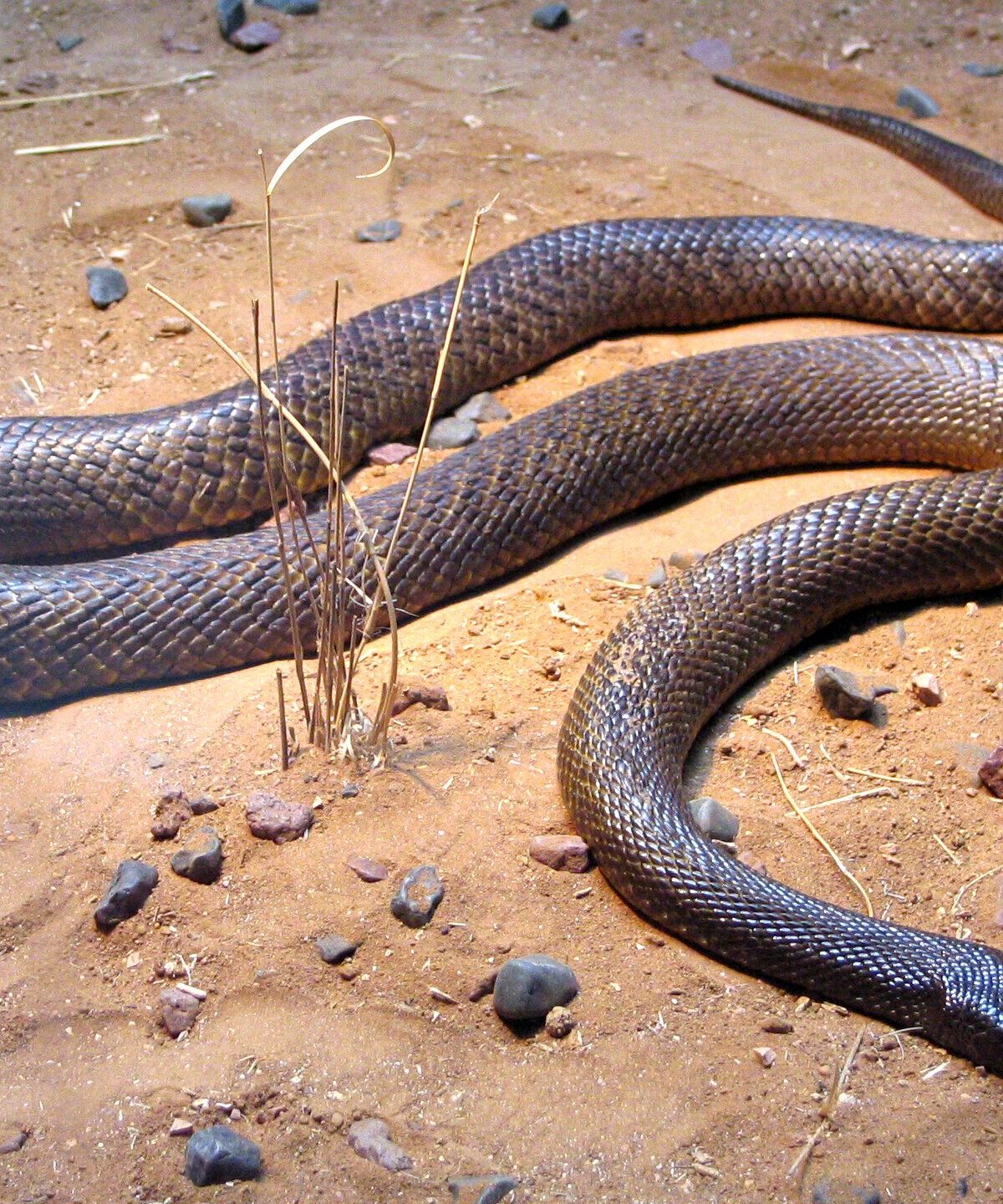
INLAND TAIPAN
Oxyuranus microlepidotus
DESCRIPTION
Inland Taipan (Oxyuranus microlepidotus) is commonly known as the fierce snake and is recognized as the most venomous snake in the world. This species has a slender body with small, smooth scales and can vary in color from light brown to dark olive, often with a lighter underbelly. It is primarily found in arid regions of Australia and is known for its reclusive nature, preferring to avoid human contact and remaining hidden in burrows or under rocks.
FUN FACTS
- The Inland Taipan's venom is estimated to be 50 times more toxic than that of the Indian cobra, making it the most venomous snake in the world
- Despite its lethal venom, the Inland Taipan is rarely encountered by humans due to its remote habitat and reclusive behavior
- | Interestingly, the Inland Taipan has a unique hunting strategy; it can strike with incredible speed and precision, injecting venom that can kill a small mammal in less than an hour
- This efficiency allows it to thrive in its harsh environment, where food can be scarce
QUICK INFO
Lifespan10-15 years in the wild, up to 20 years in captivi
Average Weight1.5-2.5 kg
Average Length1.8-2.5 m
Diet TypeCarnivore
Social Structuresolitary, typically found alone except during mating season
Activity PatternNocturnal
Breeding SeasonSpring (September-November)
- Habitat
- Inland Taipans inhabit arid and semi-arid regions, often found in grasslands, scrublands, and open woodlands. They prefer areas with loose soil for burrowing and places to hide from predators.
- Biomes
- Desert, Grassland
- Native Range
- The native range of the Inland Taipan is limited to the arid interior of Australia, particularly in the regions of Queensland and South Australia.
- Continent
- Australia
- Countries
- Australia
- Diet
- Inland Taipans primarily feed on small mammals, particularly rodents. They are highly efficient hunters, using their potent venom to immobilize prey quickly.
- Diet Type
- Carnivore
- Favorite Food
- rodents
- Social Structure
- solitary, typically found alone except during mating season
- Activity Pattern
- Nocturnal
- Group Size
- 1
- Territorial
- 0
 VU
VU
 CR
CR
1.5-2.5 kg
Weight
1.8-2.5 m
Length
- Coloration
- light brown to dark olive with a lighter underbelly
- Sexual Dimorphism
- males are generally smaller than females
- Lifespan
- 10-15 years in the wild, up to 20 years in captivi
- Gestation Period
- 60-70 days
- Offspring per Birth
- 10-20
- Sexual Maturity
- 2-3 years
- Breeding Season
- Spring (September-November)
LC
Least Concern
IUCN Red List Status
- Population Status
- The population status of the Inland Taipan is currently stable, but specific numbers are difficult to estimate due to their elusive nature.
- Wild Population Estimate
- unknown
- Population Trend
- Stable
- Endangered
- 0
- Threats
- Main threats include habitat destruction and climate change, which can impact their arid environments. Additionally, they may be at risk from invasive species and human encroachment.
- Predators
- Birds of prey, such as eagles and hawks, may prey on juvenile Inland Taipans. However, as adults, they have few natural predators due to their venomous nature.
- Defense Mechanisms
- Inland Taipans rely on their potent venom and speed to defend themselves from threats. When cornered, they may display aggressive behavior, including hissing and striking.
- Found in Zoos
- Uncommon