


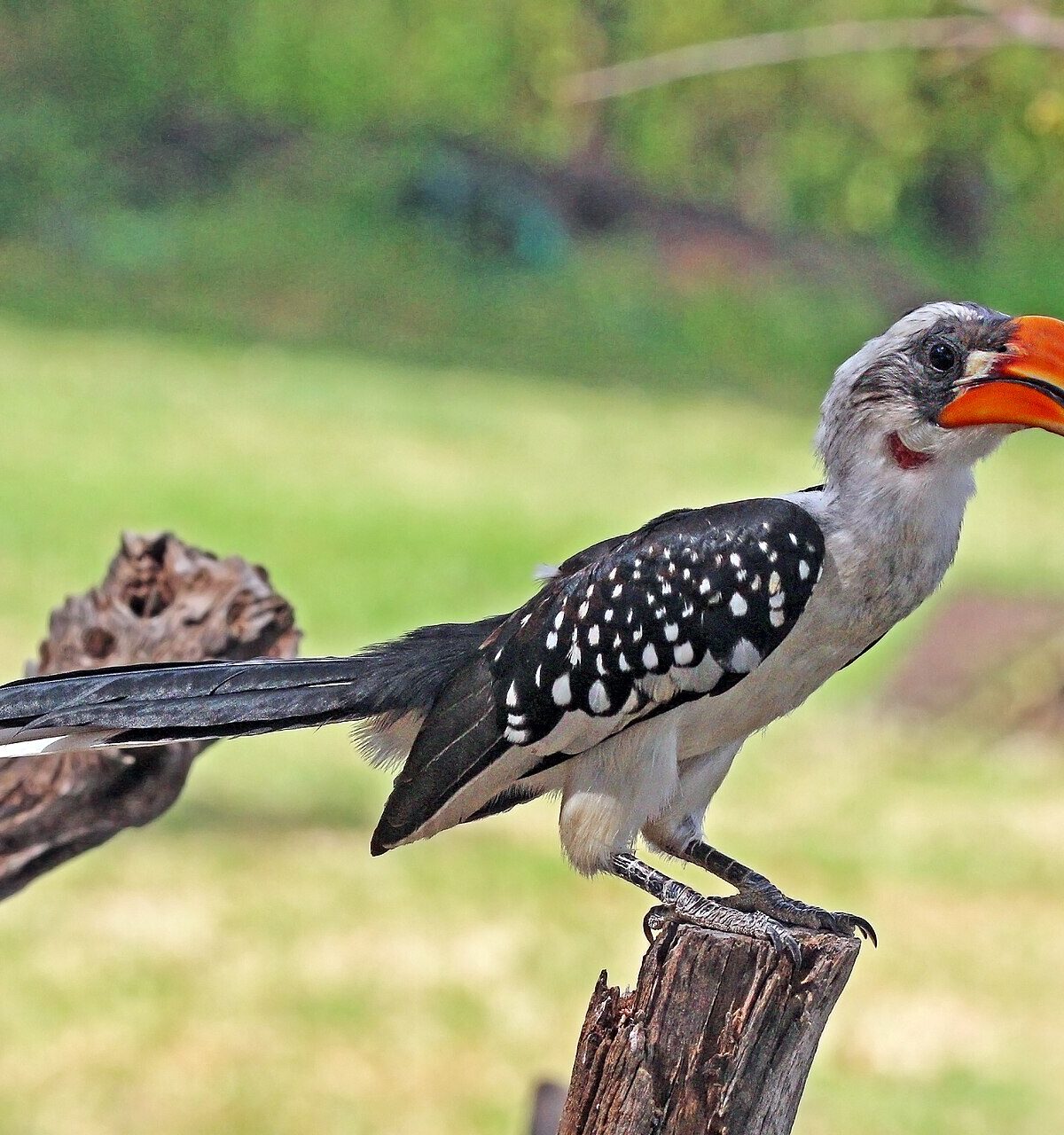
JACKSON'S HORNBILL
Tockus jacksoni
DESCRIPTION
Jackson's Hornbill (Tockus jacksoni) is a striking bird known for its distinctive long, curved bill and vibrant plumage. This species exhibits sexual dimorphism, with males typically having a larger bill than females. They are often found in pairs or small groups, displaying social behaviors that include vocalizations and mutual grooming.
FUN FACTS
- Jackson's Hornbill is known for its unique nesting behavior, where the female seals herself inside a tree cavity during breeding, relying on the male to bring her food
- This fascinating adaptation helps protect the young from predators while ensuring the female's safety during incubation.| The bill of Jackson's Hornbill is not only a tool for feeding but also plays a role in attracting mates, with males displaying their vibrant bills during courtship rituals
QUICK INFO
Lifespan15-20 years in the wild, up to 30 in captivity
Average Weight150-200 g
Average Length50-60 cm
Diet TypeOmnivore
Social Structurepair, often seen in monogamous pairs that maintain strong bonds.
Activity PatternDiurnal
Breeding SeasonSpring (March-May)
- Habitat
- This species inhabits tropical and subtropical forests, often favoring areas with abundant fruiting trees. They are also found in woodlands and savannas, where they can forage for food.
- Biomes
- Tropical Rainforest, Savanna
- Native Range
- Jackson's Hornbill is native to the eastern regions of Africa, particularly in countries like Kenya and Tanzania.
- Continent
- Africa
- Countries
- Kenya, Tanzania
- Diet
- Jackson's Hornbill primarily feeds on fruits, insects, and small vertebrates. They play a crucial role in their ecosystem by aiding in seed dispersal.
- Diet Type
- Omnivore
- Favorite Food
- fruits, insects
- Social Structure
- pair, often seen in monogamous pairs that maintain strong bonds.
- Activity Pattern
- Diurnal
- Group Size
- 2-6
- Territorial
- 1
 LC
LC
 VU
VU
150-200 g
Weight
50-60 cm
Length
- Coloration
- They have a predominantly black body with a striking yellow and orange bill, and white markings on the wings and tail.
- Sexual Dimorphism
- Males have larger bills than females.
- Lifespan
- 15-20 years in the wild, up to 30 in captivity
- Offspring per Birth
- 2-4
- Sexual Maturity
- 3-4 years
- Breeding Season
- Spring (March-May)
LC
Least Concern
IUCN Red List Status
- Population Status
- The population of Jackson's Hornbill is currently stable, but habitat loss poses a potential threat.
- Wild Population Estimate
- 10,000-20,000
- Population Trend
- Stable
- Endangered
- 0
- Threats
- Main threats include habitat destruction due to deforestation and human encroachment. Additionally, hunting for the pet trade poses a risk to their populations.
- Predators
- Snakes, large birds of prey, and mammals such as monkeys may prey on Jackson's Hornbill, especially on their eggs and young.
- Defense Mechanisms
- They use their strong bills to defend themselves and can also rely on their agility to escape predators.
- Found in Zoos
- Uncommon