


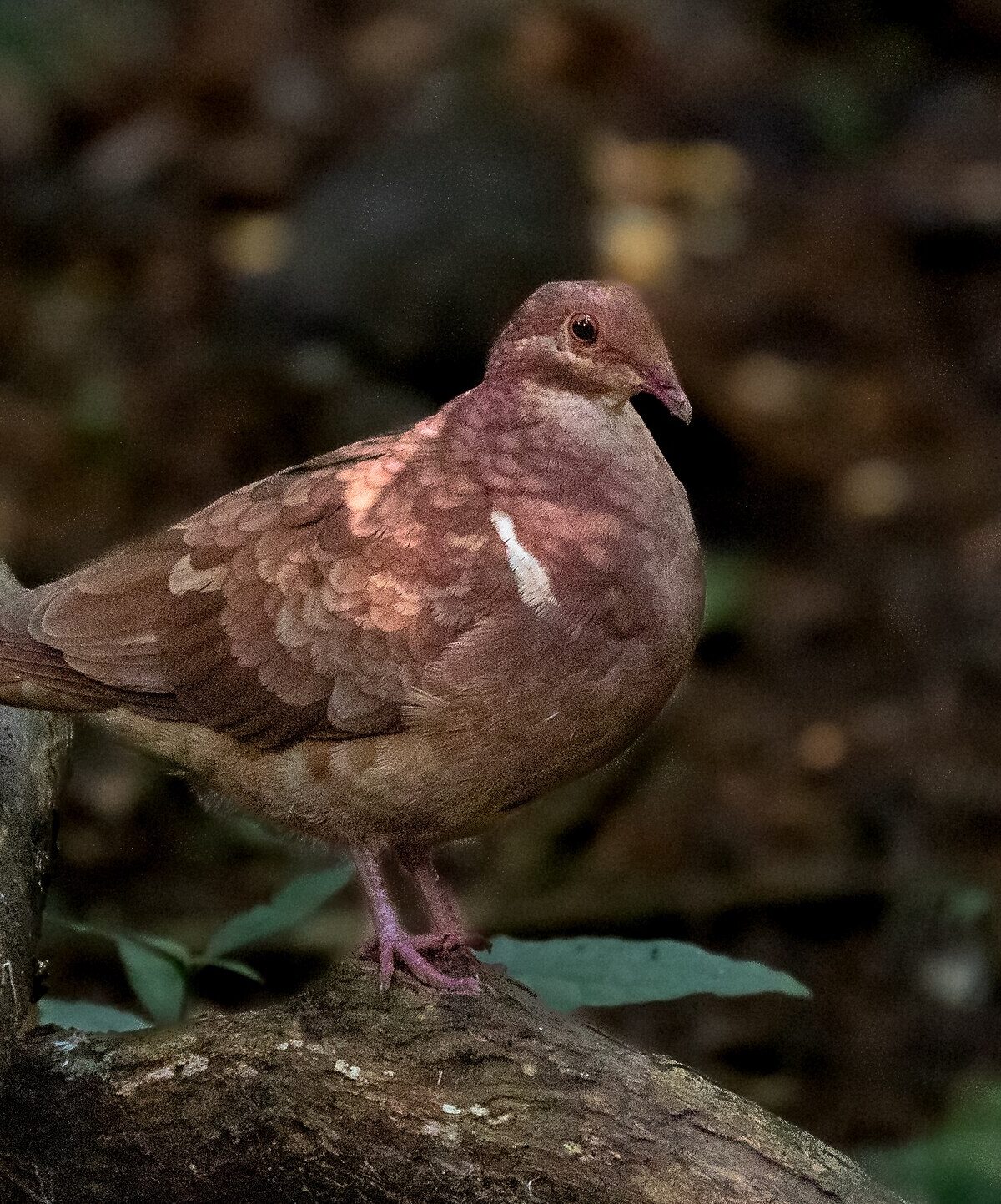
JAMAICAN QUAIL-DOVE
Geotrygon montana
DESCRIPTION
Jamaican Quail-Dove (Geotrygon montana) is a medium-sized dove characterized by its plump body, short tail, and distinctive coloration. It has a grayish-brown plumage with a slightly iridescent green and purple sheen on the wings and neck, making it well-camouflaged in its forest habitat. This species is known for its shy and elusive behavior, often foraging on the forest floor for seeds and fruits, and is more often heard than seen due to its quiet nature.
FUN FACTS
- Jamaican Quail-Doves are known for their unique courtship displays, which include a series of soft cooing calls and gentle bowing movements
- These displays are often performed in the presence of a mate, showcasing their bond and readiness to breed
- | Despite their name, Jamaican Quail-Doves are not closely related to quails; they belong to the dove family and share more characteristics with other doves than with quail species
- Their elusive nature makes them a fascinating subject for birdwatchers and ornithologists alike
QUICK INFO
Lifespanup to 10 years in the wild
Average Weight200-300 g
Average Length28-30 cm
Diet TypeHerbivore
Social Structuresolitary or in pairs, often seen alone or with a mate
Activity PatternDiurnal
Breeding SeasonYear-round, peaking during the rainy season
- Habitat
- This species inhabits moist, tropical forests and dense undergrowth, often favoring areas with abundant leaf litter. It is typically found at elevations ranging from sea level to about 1,200 meters.
- Biomes
- Tropical Rainforest
- Native Range
- The Jamaican Quail-Dove is endemic to Jamaica, found throughout the island in suitable forested habitats.
- Continent
- North America
- Countries
- Jamaica
- Diet
- The Jamaican Quail-Dove primarily feeds on seeds, fruits, and occasionally leaves. It forages on the ground, using its strong beak to pick up food items.
- Diet Type
- Herbivore
- Favorite Food
- seeds and fruits
- Social Structure
- solitary or in pairs, often seen alone or with a mate
- Activity Pattern
- Diurnal
- Group Size
- 1-2
- Territorial
- 0
 LC
LC

200-300 g
Weight
28-30 cm
Length
- Coloration
- grayish-brown with iridescent green and purple highlights
- Sexual Dimorphism
- males and females are similar in appearance, with slight variations in size
- Lifespan
- up to 10 years in the wild
- Offspring per Birth
- 1-2
- Sexual Maturity
- 6-12 months
- Breeding Season
- Year-round, peaking during the rainy season
LC
Least Concern
IUCN Red List Status
- Population Status
- The population of Jamaican Quail-Dove is currently considered stable, but habitat loss poses a potential threat.
- Wild Population Estimate
- unknown
- Population Trend
- Stable
- Endangered
- 0
- Threats
- The main threats to the Jamaican Quail-Dove include habitat destruction due to deforestation and urban development. Additionally, hunting and predation by introduced species can impact local populations.
- Predators
- feral cats, rats, and other small mammals
- Defense Mechanisms
- Jamaican Quail-Doves rely on their cryptic coloration to blend into their surroundings, making them less visible to predators.
- Found in Zoos
- Uncommon