


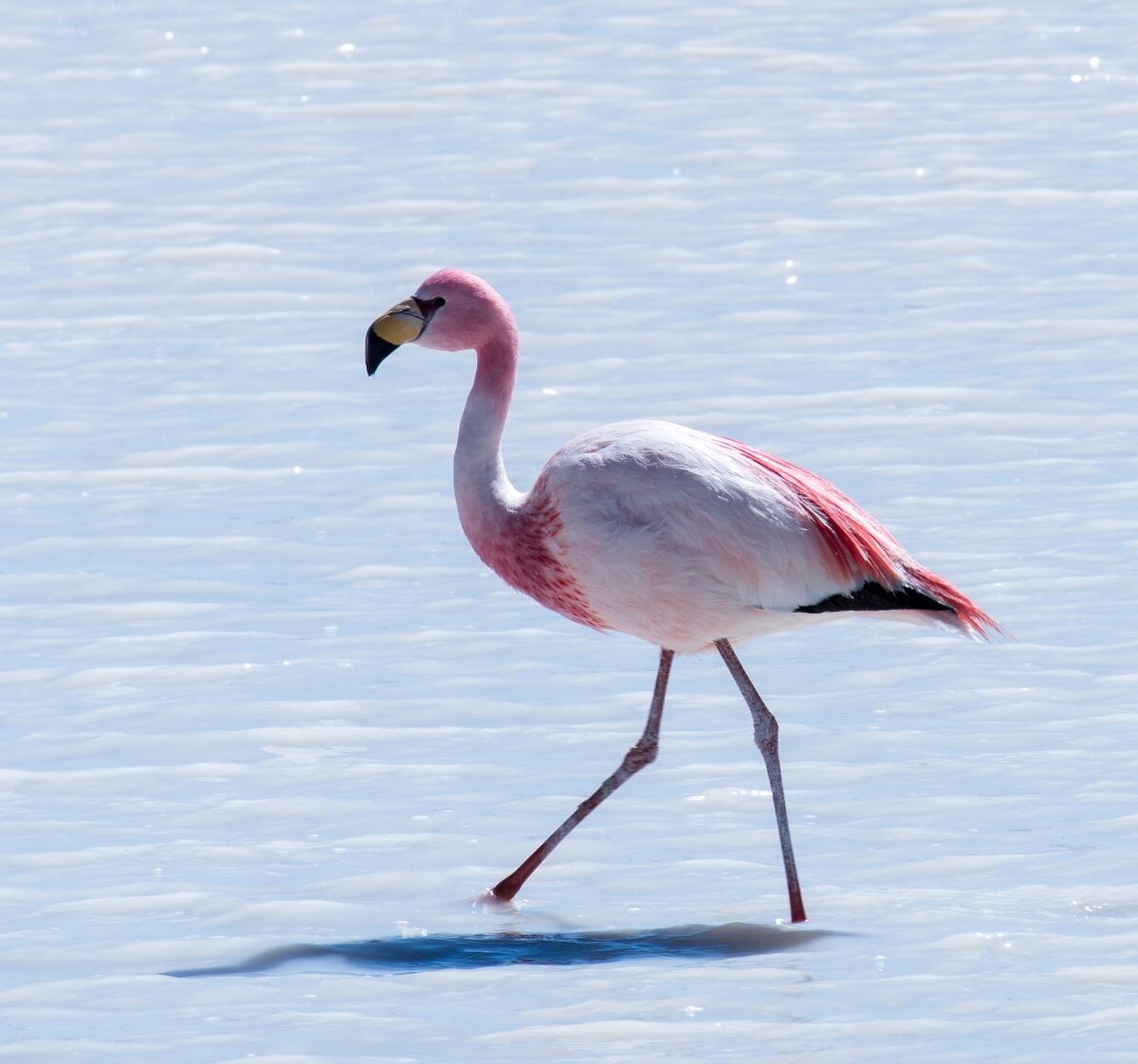
JAMES' FLAMINGO
Phoenicoparrus jamesi
DESCRIPTION
James' Flamingo (Phoenicoparrus jamesi), also known as the Andean Flamingo, is a medium-sized flamingo characterized by its pale pink plumage and distinctive yellow-orange facial markings. This species is primarily found in high-altitude saline lakes and lagoons in the Andes mountains of South America. They are social birds, often seen in large flocks, and are known for their unique feeding behavior, which involves filtering small organisms from the water using their specialized beaks.
FUN FACTS
- James' Flamingo is one of the rarest flamingo species and is often overshadowed by the more common Greater Flamingo
- Their unique feeding habits and high-altitude habitat make them a fascinating subject for study in avian ecology.| The coloration of James' Flamingo is influenced by their diet, particularly the carotenoids found in the algae they consume
- This means that their vibrant pink color can vary depending on the availability of food sources in their environment
QUICK INFO
Lifespan20-30 years in the wild
Average Weight2.5-4 kg
Average Length0.9-1.1 m
Diet TypeOmnivore
Social StructureThey are typically found in groups, which can range from small family units to large flocks. This social structure helps them in foraging and provides protection from predators.
Activity PatternDiurnal
Breeding SeasonSpring (October-December)
- Habitat
- This species inhabits high-altitude saline lakes and lagoons, often at elevations above 3,000 meters. They prefer shallow waters where they can easily forage for food.
- Biomes
- Wetlands, High-altitude lakes
- Native Range
- James' Flamingo is native to the high Andes of South America, particularly in countries like Bolivia, Chile, Peru, and Argentina.
- Continent
- South America
- Countries
- Bolivia, Chile, Peru, Argentina
- Diet
- James' Flamingo primarily feeds on algae, diatoms, and small invertebrates found in saline waters. They use their specialized beaks to filter food from the water.
- Diet Type
- Omnivore
- Favorite Food
- algae, diatoms
- Social Structure
- They are typically found in groups, which can range from small family units to large flocks. This social structure helps them in foraging and provides protection from predators.
- Activity Pattern
- Diurnal
- Group Size
- 50-1000
- Territorial
- 0
2.5-4 kg
Weight
0.9-1.1 m
Length
- Coloration
- pale pink with yellow-orange facial markings
- Sexual Dimorphism
- Males are generally larger than females, but coloration is similar.
- Lifespan
- 20-30 years in the wild
- Offspring per Birth
- 1
- Sexual Maturity
- 3-4 years
- Breeding Season
- Spring (October-December)
LC
Least Concern
IUCN Red List Status
- Population Status
- The population of James' Flamingo is currently stable, but they are affected by habitat loss and environmental changes.
- Wild Population Estimate
- 20,000-30,000
- Population Trend
- Stable
- Endangered
- 0
- Threats
- Main threats include habitat destruction due to mining and agriculture, as well as climate change affecting water levels in their habitats. Pollution and human disturbance also pose risks to their populations.
- Predators
- Main predators include birds of prey and large mammals that may threaten their nests and young. However, adult flamingos have few natural predators due to their size and social behavior.
- Defense Mechanisms
- They rely on their large flocks for protection and can take flight quickly if threatened.
- Compatible Animals
- Other flamingo species, waterfowl
- Found in Zoos
- Uncommon