


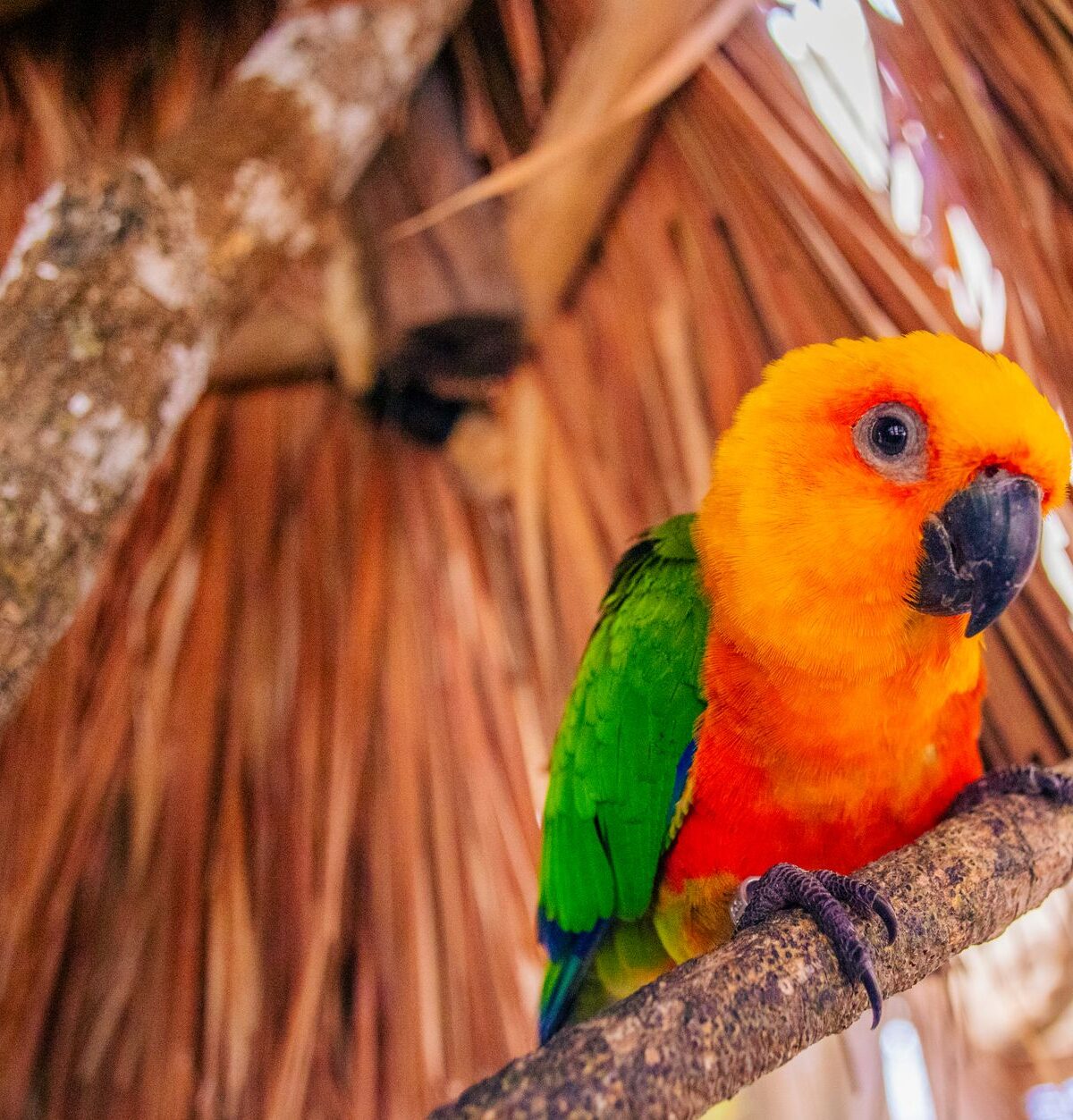
JANDAYA CONURE
Aratinga jandaya
DESCRIPTION
Jandaya Conure (Aratinga jandaya) is commonly known as the Jandaya Parakeet and is a vibrant, medium-sized parrot characterized by its bright yellow and green plumage. These birds exhibit playful and social behavior, often forming strong bonds with their owners or companions. In the wild, they inhabit tropical forests and are known for their acrobatic skills and vocalizations, which they use to communicate with each other.
FUN FACTS
- Jandaya Conures are known for their playful and affectionate nature, often forming strong bonds with their human caretakers
- They are also quite vocal and can learn to mimic sounds and words, making them entertaining companions.|These birds are highly intelligent and require mental stimulation to thrive
- Providing them with toys and opportunities for social interaction is essential for their well-being
QUICK INFO
Lifespan15-20 years in the wild, up to 30 in captivity
Average Weight100-150 g
Average Length25-30 cm
Diet TypeHerbivore
Social Structuregroup — Jandaya Conures are typically found in small flocks, which helps them socialize and forage together.
Activity PatternDiurnal
Breeding SeasonSpring (March-May)
- Habitat
- Jandaya Conures thrive in tropical and subtropical forests, often found in areas with abundant fruiting trees. They prefer habitats that provide plenty of cover and nesting sites.
- Biomes
- Tropical Rainforest
- Native Range
- The native range of the Jandaya Conure includes the northeastern regions of South America, particularly in Brazil.
- Continent
- South America
- Countries
- Brazil
- Diet
- Jandaya Conures primarily feed on seeds, fruits, and nuts, enjoying a varied diet that includes a range of plant materials. They are known to forage in trees and on the ground for their food.
- Diet Type
- Herbivore
- Favorite Food
- seeds, fruits, nuts
- Social Structure
- group — Jandaya Conures are typically found in small flocks, which helps them socialize and forage together.
- Activity Pattern
- Diurnal
- Group Size
- 5-15
- Territorial
- 0
 LC
LC
 VU
VU
100-150 g
Weight
25-30 cm
Length
- Coloration
- bright yellow body with green wings and tail, orange underwing coverts
- Sexual Dimorphism
- males and females are similar in appearance, making it difficult to distinguish between sexes without genetic testing.
- Lifespan
- 15-20 years in the wild, up to 30 in captivity
- Offspring per Birth
- 3-5
- Sexual Maturity
- 1-2 years
- Breeding Season
- Spring (March-May)
LC
Least Concern
IUCN Red List Status
- Population Status
- The population of Jandaya Conures is currently stable, but they face habitat loss due to deforestation.
- Wild Population Estimate
- unknown
- Population Trend
- Stable
- Endangered
- 0
- Threats
- Main threats include habitat destruction and illegal trapping for the pet trade. Conservation efforts are needed to protect their natural habitats.
- Predators
- snakes, birds of prey, and larger mammals may prey on Jandaya Conures, especially when they are nesting.
- Defense Mechanisms
- Jandaya Conures use their vocalizations to alert others of danger and may also engage in evasive flight to escape predators.
- Compatible Animals
- other small parrots, finches, canaries
- Found in Zoos
- Common