


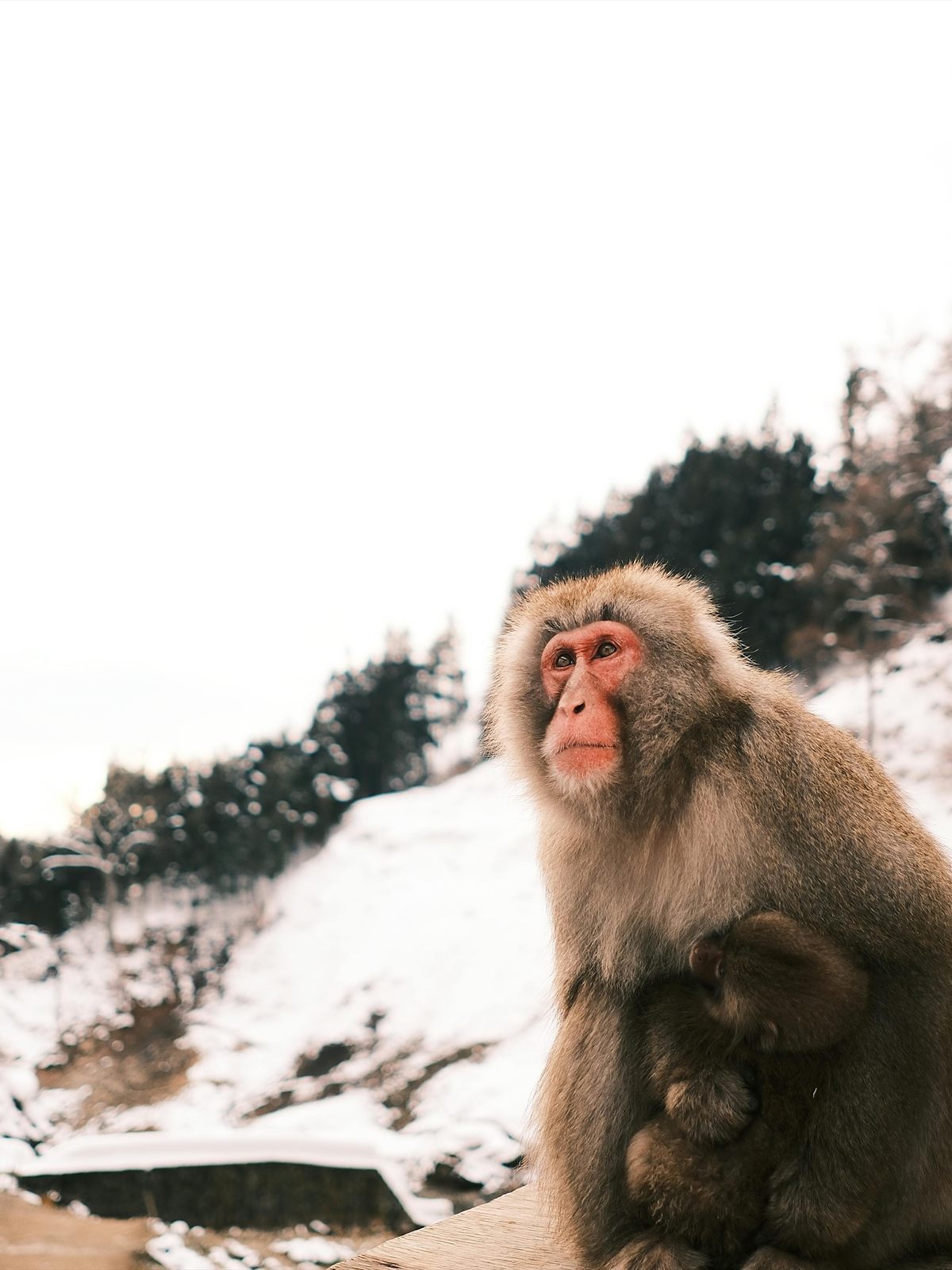
JAPANESE MACAQUE
Macaca fuscata
DESCRIPTION
The Japanese Macaque, also known as the snow monkey, is a species of primate native to Japan. They are known for their thick fur and ability to thrive in cold climates, often seen bathing in hot springs during winter.
FUN FACTS
- Japanese Macaques are the northernmost non-human primates
- | They are known for their unique behavior of bathing in hot springs during winter
- | They have a complex social structure with grooming playing a key role in their relationships
QUICK INFO
Lifespan20-30 years in the wild, up to 40 in captivity
Average Weight8-14 kg
Average Length0.5-0.8 m
Diet TypeOmnivore
Social StructureGroup — they live in matriarchal societies with strong social bonds.
Activity PatternDiurnal
Breeding SeasonWinter (December-February)
- Habitat
- They inhabit a range of environments, from subtropical forests to mountainous regions. Their adaptability allows them to live in diverse habitats across Japan.
- Biomes
- Temperate Forest, Mountain
- Native Range
- Endemic to Japan, found on several islands including Honshu, Shikoku, and Kyushu.
- Continent
- Asia
- Countries
- Japan
- Diet
- Japanese Macaques are omnivorous, feeding on a variety of foods including fruits, seeds, and small invertebrates. They are also known to forage for roots and tubers.
- Diet Type
- Omnivore
- Favorite Food
- Fruits, seeds, and roots
- Social Structure
- Group — they live in matriarchal societies with strong social bonds.
- Activity Pattern
- Diurnal
- Group Size
- 20-100
- Territorial
- 0
 VU
VU
8-14 kg
Weight
0.5-0.8 m
Length
- Coloration
- Thick fur that ranges from brown to gray, with a pink face and behind.
- Sexual Dimorphism
- Males are generally larger than females.
- Lifespan
- 20-30 years in the wild, up to 40 in captivity
- Gestation Period
- 165 days
- Offspring per Birth
- 1
- Sexual Maturity
- 3-4 years
- Breeding Season
- Winter (December-February)
LC
Least Concern
IUCN Red List Status
- Population Status
- The population is stable, with a healthy number of individuals in the wild.
- Wild Population Estimate
- 100,000+
- Population Trend
- Stable
- Endangered
- 0
- Threats
- Habitat loss and human-wildlife conflict are the main threats to their population. They are also affected by climate change.
- Predators
- Humans, large birds of prey
- Defense Mechanisms
- They use vocalizations and social displays to warn off threats.
- Compatible Animals
- None
- Found in Zoos
- Common