


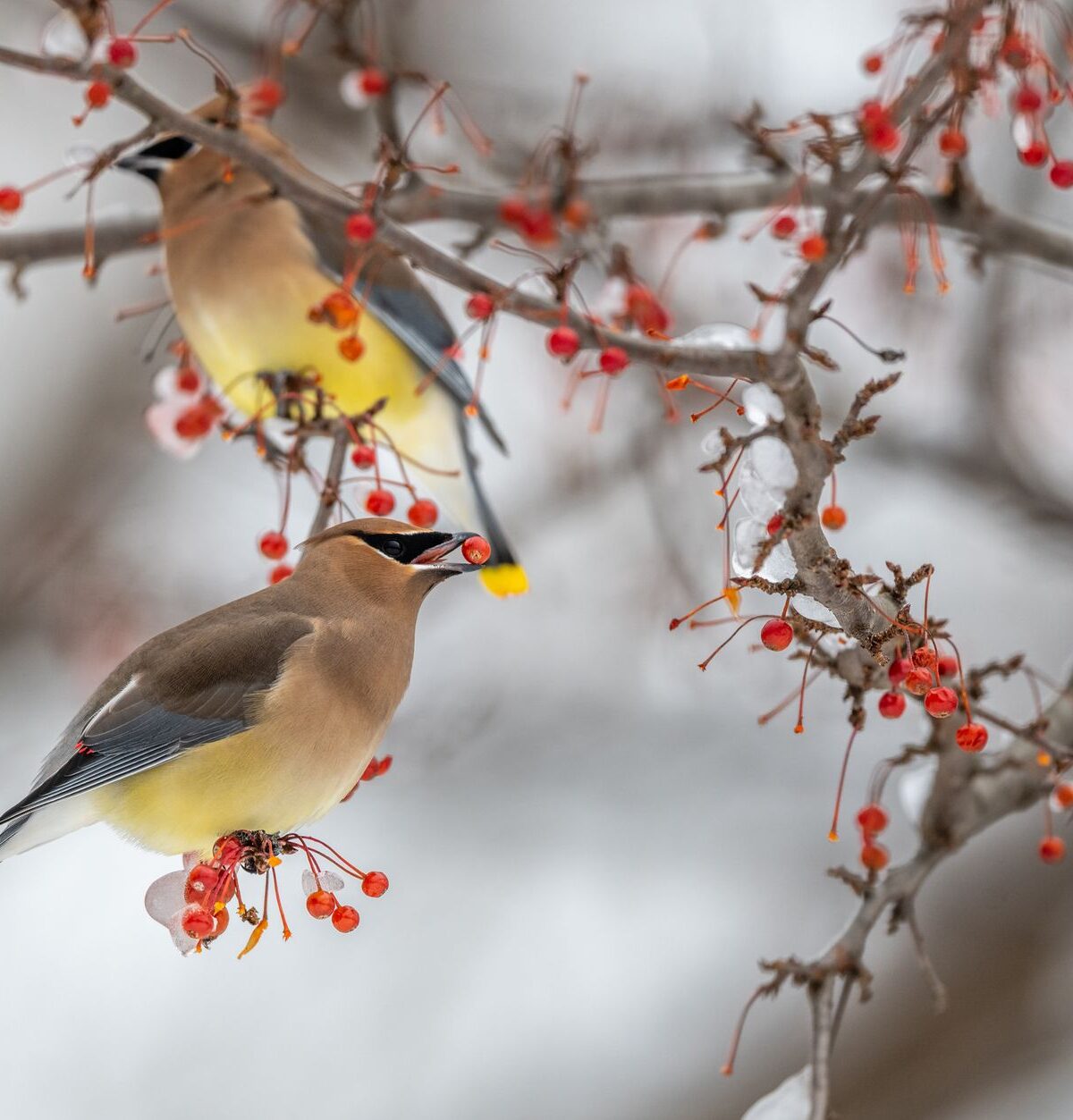
JAPANESE WAXWING
Bombycilla japonica
DESCRIPTION
Japanese waxwing (Bombycilla japonica) is a medium-sized passerine bird known for its striking appearance, featuring a soft, brownish-gray plumage with a distinctive crest and bright red tips on its wings. This species is often seen in flocks, exhibiting social behavior as they forage for food together. They are known for their melodious calls and are often found in fruit-bearing trees, where they play a significant role in seed dispersal within their ecosystems.
FUN FACTS
- Japanese waxwings are known for their unique feeding behavior, where they can consume fermented berries, leading to intoxication
- This can result in amusing and erratic flight patterns, making them a fascinating subject for birdwatchers
- | These birds are also known for their striking appearance, which includes a crest and colorful wing tips, making them a favorite among bird enthusiasts and photographers alike
QUICK INFO
LifespanUp to 10 years in the wild.
Average Weight30-50 g
Average Length18-21 cm
Diet TypeOmnivore
Social StructureThey are typically found in groups, often forming flocks of 10-50 individuals during foraging.
Activity PatternDiurnal
Breeding SeasonSpring (April-June)
- Habitat
- They inhabit temperate forests, woodlands, and urban areas, often favoring regions with abundant fruit sources. During winter, they may migrate to areas with more available food.
- Biomes
- Temperate Forest, Urban
- Native Range
- The native range of the Japanese waxwing includes parts of East Asia, particularly Japan, Korea, and northeastern China.
- Continent
- Asia
- Countries
- Japan, Korea, China, Russia
- Diet
- Japanese waxwings primarily feed on fruits, berries, and insects, showing a preference for soft fruits during the breeding season.
- Diet Type
- Omnivore
- Favorite Food
- berries, fruits
- Social Structure
- They are typically found in groups, often forming flocks of 10-50 individuals during foraging.
- Activity Pattern
- Diurnal
- Group Size
- 10-50
- Territorial
- 0

 LC
LC
30-50 g
Weight
18-21 cm
Length
- Coloration
- Soft brownish-gray with a distinctive crest and red wing tips.
- Lifespan
- Up to 10 years in the wild.
- Offspring per Birth
- 3-5
- Sexual Maturity
- 1 year
- Breeding Season
- Spring (April-June)
LC
Least Concern
IUCN Red List Status
- Population Status
- The population of Japanese waxwings is currently stable, with no significant declines reported.
- Wild Population Estimate
- Unknown
- Population Trend
- Stable
- Endangered
- 0
- Threats
- Main threats include habitat loss due to urbanization and agricultural expansion, which reduce their food sources. Additionally, climate change may impact their migratory patterns and food availability.
- Predators
- Common predators include hawks, owls, and domestic cats.
- Defense Mechanisms
- They often rely on their flocking behavior to confuse predators and may use their agility to evade capture.
- Found in Zoos
- Uncommon