


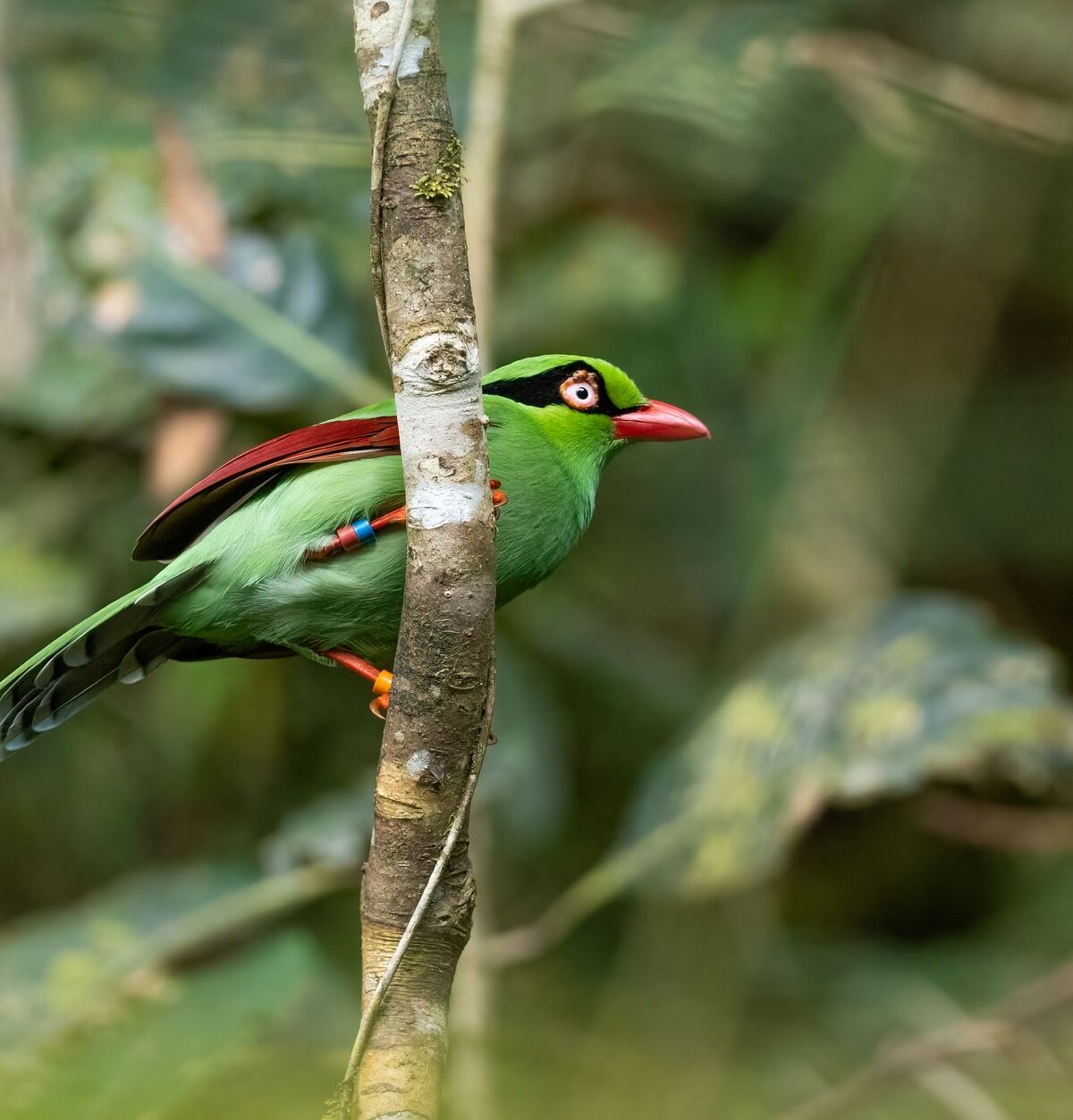
JAVAN GREEN MAGPIE
Cissa thalassina
DESCRIPTION
Javan Green Magpie (Cissa thalassina) is a striking bird known for its vibrant green plumage and contrasting black head. This species exhibits a unique behavior of foraging in the understory of tropical forests, often seen hopping around in search of insects and fruits. Its ecological role is significant as it helps in seed dispersal while also being a part of the complex food web in its native habitat.
FUN FACTS
- The Javan Green Magpie is not only admired for its beauty but also for its intelligence, often displaying problem-solving skills in captivity
- Additionally, it has a unique vocalization that can mimic other bird calls, making it a fascinating species for birdwatchers and enthusiasts alike
QUICK INFO
LifespanUp to 10 years in the wild.
Average Weight100-150 g
Average Length28-30 cm
Diet TypeOmnivore
Social StructureThey are typically found in pairs or small groups, often forming loose social bonds.
Activity PatternDiurnal
Breeding SeasonSpring (March-May)
- Habitat
- This species inhabits tropical rainforests, particularly in areas with dense vegetation. It prefers lower to mid-level canopies where it can easily find food and shelter.
- Biomes
- Tropical Rainforest
- Native Range
- The Javan Green Magpie is native to the island of Java in Indonesia.
- Continent
- Asia
- Countries
- Indonesia
- Diet
- The Javan Green Magpie primarily feeds on insects, fruits, and small invertebrates. It forages actively in trees and shrubs, using its keen eyesight to spot food.
- Diet Type
- Omnivore
- Favorite Food
- insects, fruits
- Social Structure
- They are typically found in pairs or small groups, often forming loose social bonds.
- Activity Pattern
- Diurnal
- Group Size
- 2-6
- Territorial
- 1
 LC
LC
 VU
VU
100-150 g
Weight
28-30 cm
Length
- Coloration
- Vibrant green body with a black head and a white-tipped tail.
- Lifespan
- Up to 10 years in the wild.
- Offspring per Birth
- 2-4
- Sexual Maturity
- 1-2 years
- Breeding Season
- Spring (March-May)
EN
Endangered
IUCN Red List Status
- Population Status
- The population is currently considered to be decreasing due to habitat loss.
- Wild Population Estimate
- Unknown
- Population Trend
- Decreasing
- Endangered
- 1
- Threats
- Main threats include habitat destruction due to deforestation and illegal trapping for the pet trade. These factors have significantly impacted their population in the wild.
- Predators
- Snakes, birds of prey, and larger mammals may prey on Javan Green Magpies.
- Defense Mechanisms
- They use their agility to escape predators and often hide in dense foliage.
- Found in Zoos
- Uncommon