


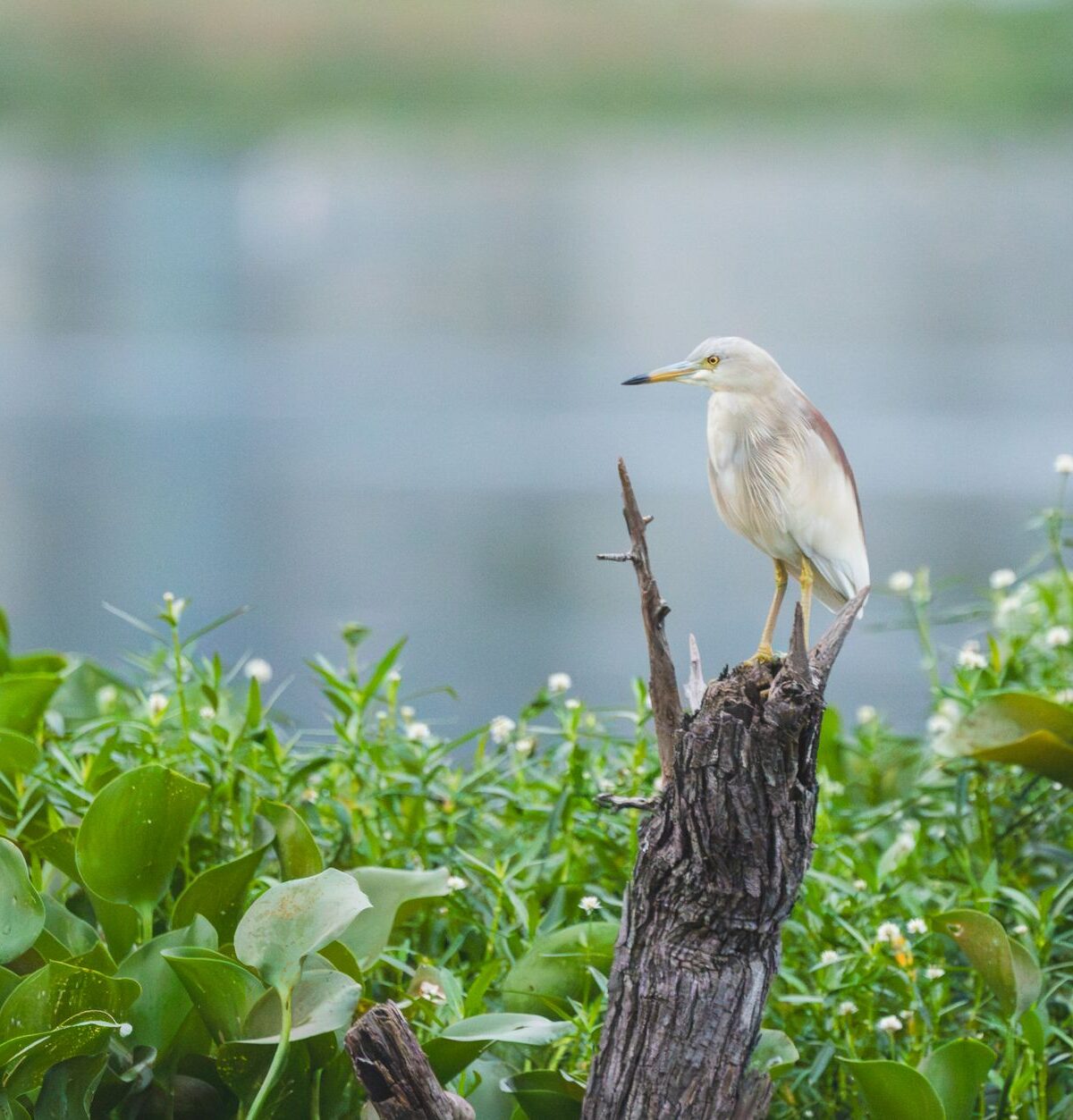
JAVAN POND HERON
Ardeola speciosa
DESCRIPTION
Javan Pond Heron (Ardeola speciosa) is commonly known as the Asian Pond Heron and Indian Pond Heron. This medium-sized heron exhibits a distinctive plumage that changes with the seasons; during the breeding season, it showcases a striking combination of white and chestnut colors, while in non-breeding plumage, it appears more muted with brown and gray tones. It is often found in wetlands and rice paddies, where it can be seen standing still or walking slowly in search of prey, demonstrating a patient hunting style.
FUN FACTS
- Javan Pond Herons are known for their unique hunting technique, where they can remain motionless for extended periods, waiting for the perfect moment to strike at their prey
- Additionally, they are highly adaptable birds, often seen in urban areas where they can find suitable foraging grounds in parks and gardens.|During the breeding season, the males perform elaborate displays to attract females, showcasing their vibrant plumage and engaging in courtship behaviors that include bowing and calling
- This display is crucial for establishing territory and attracting mates, highlighting the importance of visual signals in their reproductive success
QUICK INFO
Lifespan10-15 years in the wild
Average Weight200-300 g
Average Length50-60 cm
Diet TypeCarnivore
Social Structuresolitary, often seen alone or in pairs while foraging
Activity PatternDiurnal
Breeding SeasonSpring to early summer
- Habitat
- This species thrives in freshwater wetlands, rice fields, and marshes. It prefers areas with abundant vegetation for cover and hunting.
- Biomes
- Wetlands, Grasslands
- Native Range
- The Javan Pond Heron is native to Southeast Asia, particularly found in countries like Indonesia, Malaysia, and Thailand.
- Continent
- Asia
- Countries
- Indonesia, Malaysia, Thailand, Vietnam, Myanmar
- Diet
- The Javan Pond Heron primarily feeds on small fish, amphibians, and invertebrates. It uses its sharp bill to catch prey while wading in shallow waters.
- Diet Type
- Carnivore
- Favorite Food
- small fish, amphibians
- Social Structure
- solitary, often seen alone or in pairs while foraging
- Activity Pattern
- Diurnal
- Group Size
- 1-2
- Territorial
- 0
 LC
LC
200-300 g
Weight
50-60 cm
Length
- Coloration
- breeding adults have a mix of white and chestnut, while non-breeding adults are more brown and gray
- Sexual Dimorphism
- males and females are similar in appearance, but males may be slightly larger
- Lifespan
- 10-15 years in the wild
- Offspring per Birth
- 3-5 eggs
- Sexual Maturity
- 1-2 years
- Breeding Season
- Spring to early summer
LC
Least Concern
IUCN Red List Status
- Population Status
- The population of Javan Pond Heron is currently stable, but habitat loss poses a potential threat.
- Wild Population Estimate
- 50,000-100,000
- Population Trend
- Stable
- Endangered
- 0
- Threats
- Main threats include habitat destruction due to agricultural expansion and pollution of wetland areas. Climate change also poses a risk to their breeding habitats.
- Predators
- larger birds of prey, snakes, and mammals such as foxes
- Defense Mechanisms
- They rely on camouflage and stillness to avoid detection by predators.
- Found in Zoos
- Uncommon