


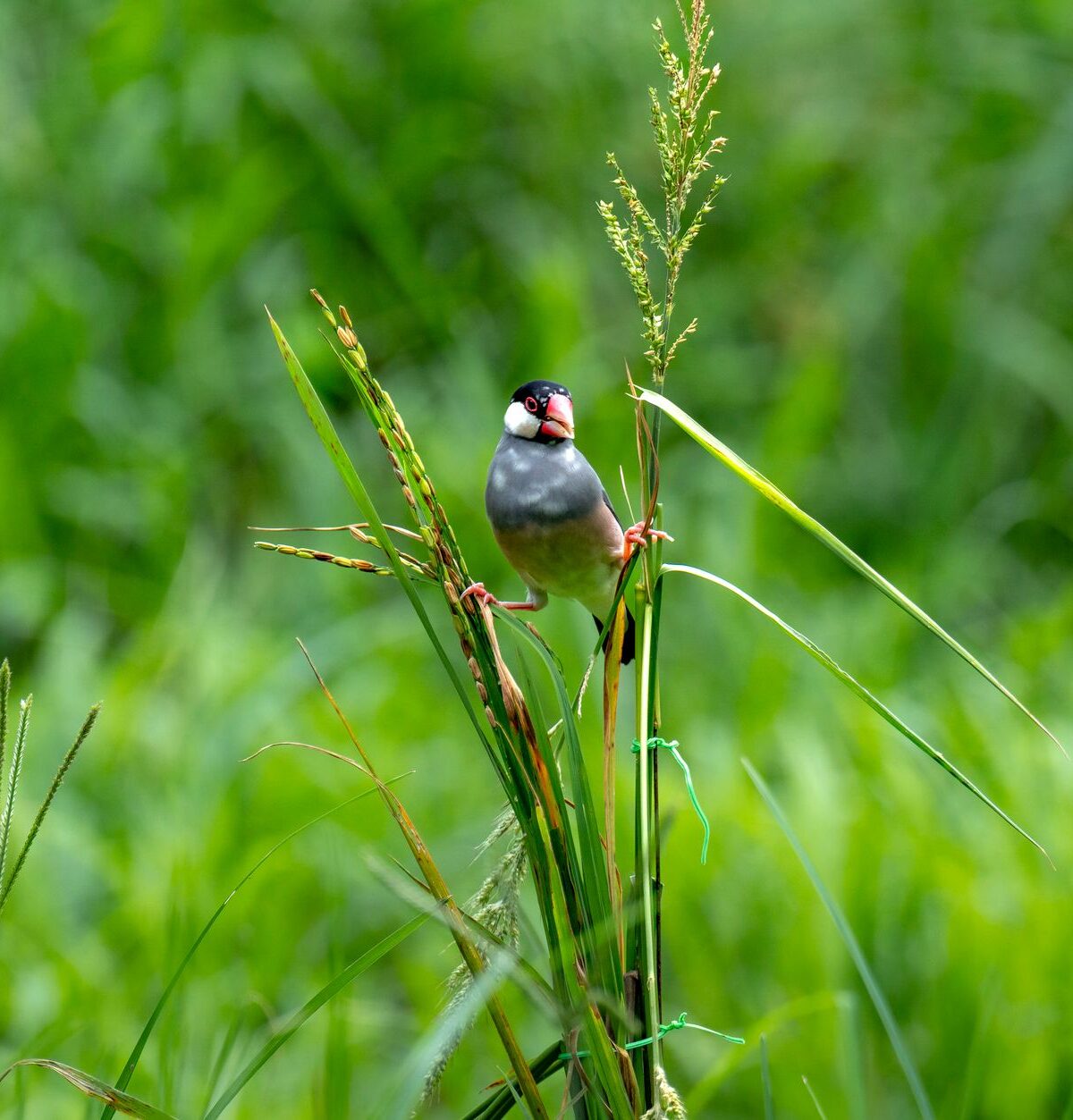
JAVAN SPARROW
Passer javanicus
DESCRIPTION
Javan Sparrow (Passer javanicus) is commonly known as the Java Sparrow and Rice Sparrow. This small bird is characterized by its distinctive gray body, black crown, and pinkish bill, making it easily recognizable. They are social birds often found in flocks, displaying a lively and active behavior as they forage for food and interact with one another.
FUN FACTS
- Javan Sparrows are known for their beautiful songs, which they use to attract mates and establish territory
- They are also popular in aviculture, often kept as pets due to their charming personalities and social nature.|These birds have a unique behavior of bathing in shallow water, which helps them maintain their plumage and keep cool in hot weather
- Their social structure allows them to engage in playful interactions, making them a delight to observe
QUICK INFO
Lifespan5-7 years in the wild, up to 10 years in captivity
Average Weight20-30 g
Average Length12-14 cm
Diet TypeGranivore
Social StructureThey are typically found in groups, often forming flocks of 10-50 individuals.
Activity PatternDiurnal
Breeding SeasonSpring to early summer
- Habitat
- Javan Sparrows inhabit a variety of environments, including grasslands, agricultural fields, and urban areas. They are often found near water sources, which provide them with ample food and nesting opportunities.
- Biomes
- Grassland, Agricultural, Urban
- Native Range
- The native range of the Javan Sparrow includes the islands of Java, Bali, and surrounding areas in Indonesia.
- Continent
- Asia
- Countries
- Indonesia, Malaysia, Singapore, Brunei
- Diet
- Javan Sparrows primarily feed on seeds, grains, and fruits, showing a particular preference for rice. They are known to forage on the ground and in trees, often in large groups.
- Diet Type
- Granivore
- Favorite Food
- seeds, grains
- Social Structure
- They are typically found in groups, often forming flocks of 10-50 individuals.
- Activity Pattern
- Diurnal
- Group Size
- 10-50
- Territorial
- 0

 VU
VU
20-30 g
Weight
12-14 cm
Length
- Coloration
- Gray body with a black crown and pink bill.
- Sexual Dimorphism
- Males are generally more vibrant in color than females, especially during the breeding season.
- Lifespan
- 5-7 years in the wild, up to 10 years in captivity
- Offspring per Birth
- 3-6
- Sexual Maturity
- 6 months
- Breeding Season
- Spring to early summer
LC
Least Concern
IUCN Red List Status
- Population Status
- The population of Javan Sparrows is currently stable, although they face habitat loss.
- Wild Population Estimate
- Unknown
- Population Trend
- Stable
- Endangered
- 0
- Threats
- Main threats include habitat destruction due to agricultural expansion and urbanization. Additionally, they are sometimes captured for the pet trade.
- Predators
- Cats, birds of prey, and snakes are known predators of Javan Sparrows.
- Defense Mechanisms
- They often rely on their flocking behavior to evade predators, using alarm calls to warn others of danger.
- Compatible Animals
- Other small finches, canaries
- Found in Zoos
- Common