


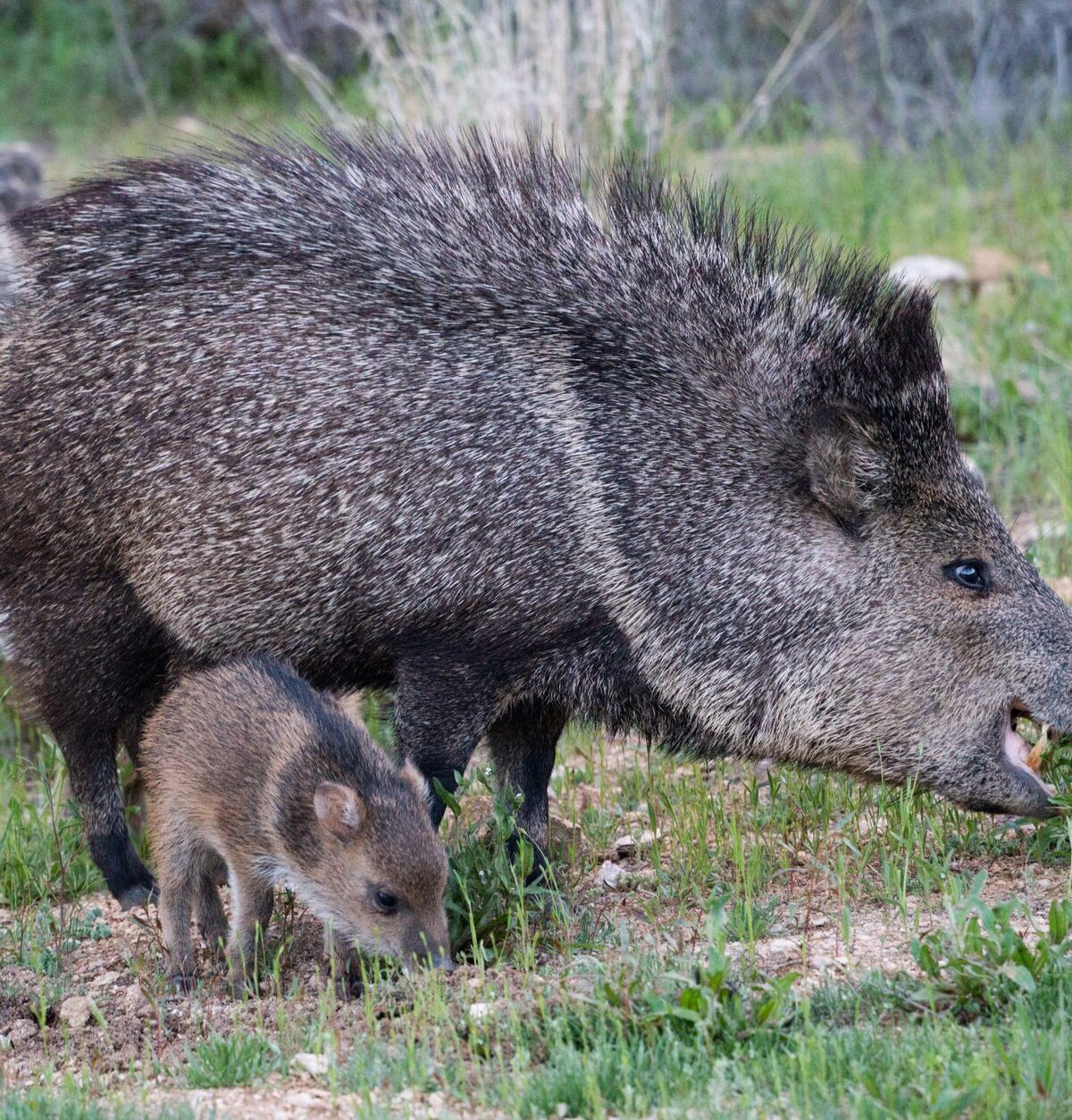
JAVELINAS
DESCRIPTION
Javelinas, also known as collared peccaries, are medium-sized mammals resembling wild pigs. They have a stocky build, short legs, and a distinctive collar of white fur around their necks. These animals are social creatures, often found in groups, and are known for their strong sense of smell and vocalizations, which they use to communicate with one another.
FUN FACTS
- Javelinas have a unique social structure and communicate with each other through a variety of sounds, including grunts and barks
- They also have a keen sense of smell, which they use to locate food and detect predators
- | Despite their pig-like appearance, javelinas are more closely related to hippos and whales than to domestic pigs
- They have a special digestive system that allows them to efficiently process tough plant materials, making them well-adapted to their environments
QUICK INFO
Lifespan10-15 years in the wild, up to 20 years in captivi
Average Weight40-90 kg
Average Length1.2-1.5 m
Diet TypeOmnivore
Social StructureGroup, typically consisting of family units or small herds.
Activity PatternDiurnal
Breeding SeasonYear-round, with peaks in spring and fall
- Habitat
- Javelinas inhabit a range of environments, including forests, grasslands, and deserts. They prefer areas with dense vegetation that provide cover and food sources.
- Biomes
- Desert, Grassland, Forest
- Native Range
- Javelinas are native to the Americas, primarily found in the southwestern United States, Mexico, and parts of Central America.
- Continent
- North America, Central America
- Countries
- United States, Mexico, Guatemala, Honduras, Nicaragua
- Diet
- Javelinas are omnivorous and have a varied diet that includes fruits, roots, nuts, and small animals. They are known to forage for food in their natural habitat, often rooting through the ground for edible items.
- Diet Type
- Omnivore
- Favorite Food
- Fruits, roots, nuts
- Social Structure
- Group, typically consisting of family units or small herds.
- Activity Pattern
- Diurnal
- Group Size
- 5-20
- Territorial
- 0
 LC
LC
40-90 kg
Weight
1.2-1.5 m
Length
0.6 m at shoulder
Height (Shoulder)
- Coloration
- Grayish-brown fur with a distinctive white collar
- Sexual Dimorphism
- Males are generally larger than females.
- Lifespan
- 10-15 years in the wild, up to 20 years in captivi
- Gestation Period
- 150 days
- Offspring per Birth
- 1-4
- Sexual Maturity
- 1-2 years
- Breeding Season
- Year-round, with peaks in spring and fall
LC
Least Concern
IUCN Red List Status
- Population Status
- Javelina populations are generally stable, but local populations can be affected by habitat loss and hunting.
- Wild Population Estimate
- 500,000-1,000,000
- Population Trend
- Stable
- Endangered
- 0
- Threats
- Main threats to javelinas include habitat destruction due to urban development and agriculture, as well as hunting. They are also susceptible to diseases that can be transmitted from domestic pigs.
- Predators
- Coyotes, mountain lions, and humans are the primary predators of javelinas.
- Defense Mechanisms
- Javelinas have sharp tusks that they use for defense against predators.
- Found in Zoos
- Common