


JERBOA
Jaculus spp.
DESCRIPTION
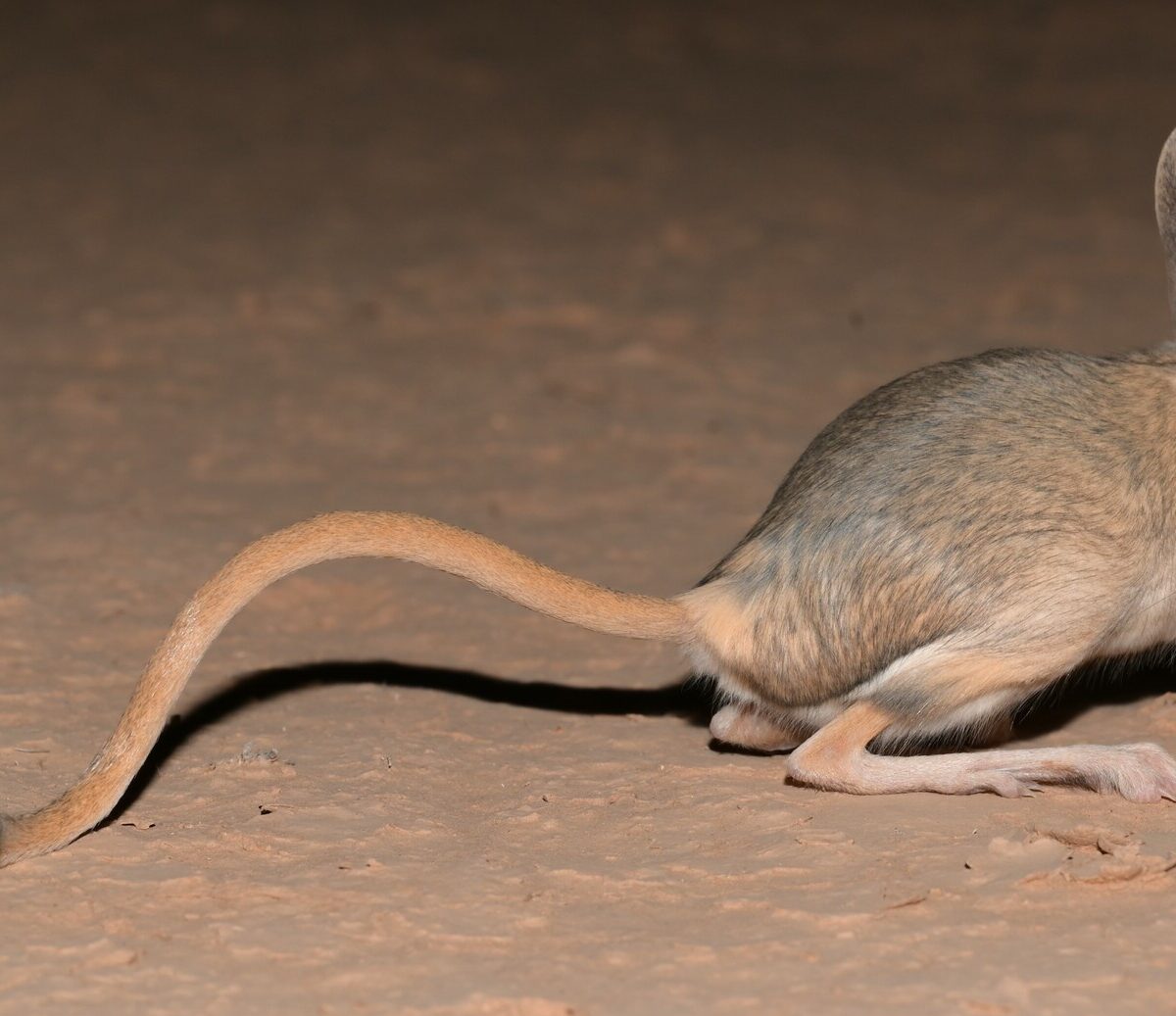
Jerboa (Jaculus spp.) is commonly known as the desert rat or jumping mouse, characterized by its long hind legs and short forelimbs, which enable it to make impressive leaps across sandy terrains. These small rodents are adapted to arid environments, featuring large ears and long tails that help with balance and thermoregulation. Jerboas are primarily nocturnal, foraging for food under the cover of darkness to avoid the heat of the day and predators.
FUN FACTS
- Jerboas can leap up to 3 meters in a single bound, making them one of the most agile rodents in the world
- Their large ears are not just for hearing; they also help dissipate heat, allowing them to stay cool in their hot desert environments.|Despite their small size, Jerboas can survive without drinking water, obtaining all the moisture they need from the seeds they consume
- This adaptation is crucial for living in the arid conditions of their natural habitat
QUICK INFO
Lifespan3-4 years in the wild, up to 6 years in captivity
Average Weight60-100 g
Average Length15-25 cm
Diet TypeHerbivore
Social Structuresolitary, typically living alone except during mating season
Activity PatternNocturnal
Breeding SeasonSpring to early summer
- Habitat
- Jerboas inhabit arid and semi-arid regions, often found in sandy deserts and grasslands. They create burrows to escape extreme temperatures and to store food.
- Biomes
- Desert, Grassland
- Native Range
- Jerboas are native to parts of North Africa and Asia, particularly in desert regions.
- Continent
- Africa, Asia
- Countries
- Egypt, Libya, Iran, Mongolia, China
- Diet
- Jerboas primarily feed on seeds, grains, and other plant materials, occasionally consuming insects. Their diet is adapted to their desert habitat, allowing them to thrive in environments with limited water sources.
- Diet Type
- Herbivore
- Favorite Food
- seeds, grains
- Social Structure
- solitary, typically living alone except during mating season
- Activity Pattern
- Nocturnal
- Group Size
- 1
- Territorial
- 0

 LC
LC
 VU
VU
 LC
LC
60-100 g
Weight
15-25 cm
Length
- Coloration
- light brown to sandy, providing camouflage in their desert environment
- Sexual Dimorphism
- males are generally larger than females
- Lifespan
- 3-4 years in the wild, up to 6 years in captivity
- Gestation Period
- 25-30 days
- Offspring per Birth
- 2-5
- Sexual Maturity
- 2-3 months
- Breeding Season
- Spring to early summer
LC
Least Concern
IUCN Red List Status
- Population Status
- The population status of Jerboas varies by species, with some being common while others are threatened due to habitat loss.
- Wild Population Estimate
- unknown
- Population Trend
- Stable
- Endangered
- 0
- Threats
- Main threats include habitat destruction due to agriculture and urbanization, as well as predation by domestic animals. Climate change also poses a risk to their arid habitats.
- Predators
- foxes, snakes, birds of prey, domestic cats
- Defense Mechanisms
- Jerboas rely on their speed and agility to escape predators, using their powerful hind legs to make quick jumps.
- Found in Zoos
- Uncommon