


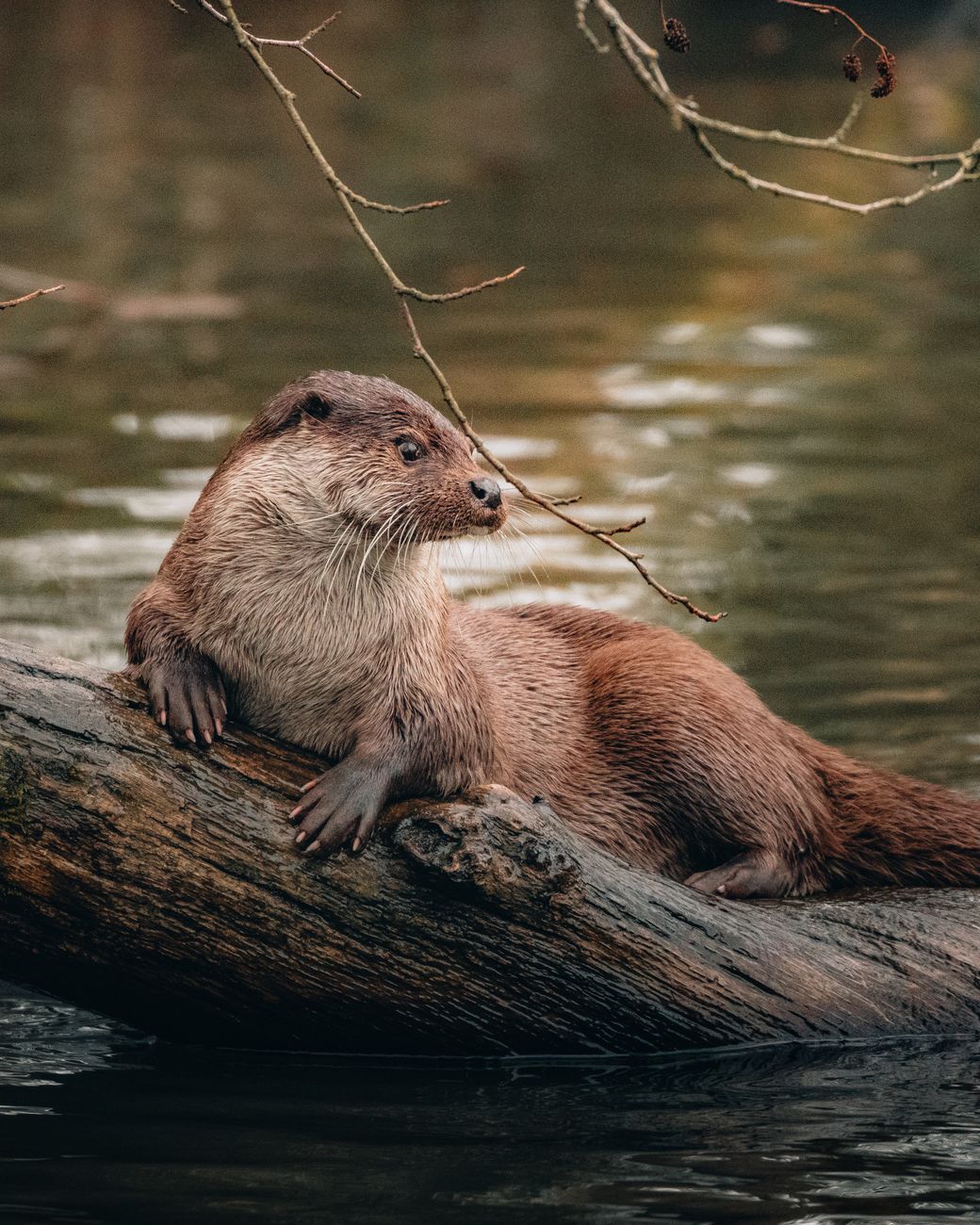
KæMPEODDER
Lutra canadensis
DESCRIPTION
Kæmpeodder (Lutra canadensis), commonly known as the North American river otter, is a semi-aquatic mammal characterized by its sleek, elongated body and webbed feet, which make it an adept swimmer. This species has a thick, water-repellent fur that ranges in color from dark brown to light tan, with a lighter underbelly. Kæmpeodder is known for its playful behavior, often seen sliding down mud or snowbanks, and it plays a crucial role in aquatic ecosystems by controlling fish populations and maintaining healthy waterways.
FUN FACTS
- Kæmpeodder is known for its playful nature, often engaging in activities such as sliding down snowbanks or playing with objects in the water
- This playful behavior is not just for fun; it helps young otters develop their hunting skills and social bonds
- | Kæmpeodder has a unique adaptation in its eyes, which have a special membrane that allows them to see clearly underwater
- This adaptation is crucial for hunting and navigating their aquatic habitats
QUICK INFO
Lifespan8-9 years in the wild, up to 15 years in captivity
Average Weight5-14 kg
Average Length0.9-1.2 m
Diet TypeCarnivore
Social Structurepair or group, often seen in family units
Activity PatternDiurnal
Breeding SeasonLate winter to early spring
- Habitat
- Kæmpeodder inhabits a variety of aquatic environments, including rivers, lakes, and coastal areas. They prefer habitats with abundant vegetation and access to clean water.
- Biomes
- Freshwater, Coastal
- Native Range
- The native range of Kæmpeodder extends across North America, from Canada to the southern United States.
- Continent
- North America
- Countries
- Canada, United States, Mexico
- Diet
- Kæmpeodder primarily feeds on fish, but it also consumes crustaceans, amphibians, and small mammals. Its diet can vary based on seasonal availability and habitat.
- Diet Type
- Carnivore
- Favorite Food
- fish
- Social Structure
- pair or group, often seen in family units
- Activity Pattern
- Diurnal
- Group Size
- 2-10
- Territorial
- 1

 LC
LC
5-14 kg
Weight
0.9-1.2 m
Length
- Coloration
- dark brown to light tan with a lighter underbelly
- Sexual Dimorphism
- males are generally larger than females
- Lifespan
- 8-9 years in the wild, up to 15 years in captivity
- Gestation Period
- 60-63 days
- Offspring per Birth
- 1-6
- Sexual Maturity
- 2-3 years
- Breeding Season
- Late winter to early spring
LC
Least Concern
IUCN Red List Status
- Population Status
- The population of Kæmpeodder is currently stable in many areas, although local declines may occur due to habitat loss.
- Wild Population Estimate
- 100,000+
- Population Trend
- Stable
- Endangered
- 0
- Threats
- Main threats to Kæmpeodder include habitat destruction, pollution, and vehicle collisions. Conservation efforts are focused on habitat protection and restoration.
- Predators
- Coyotes, bobcats, and large birds of prey can pose threats to juvenile Kæmpeodder, while adult otters have few natural predators.
- Defense Mechanisms
- Kæmpeodder uses its agility in water and its ability to dive to escape predators. They can also emit a strong odor to deter threats.
- Compatible Animals
- none
- Found in Zoos
- Common