


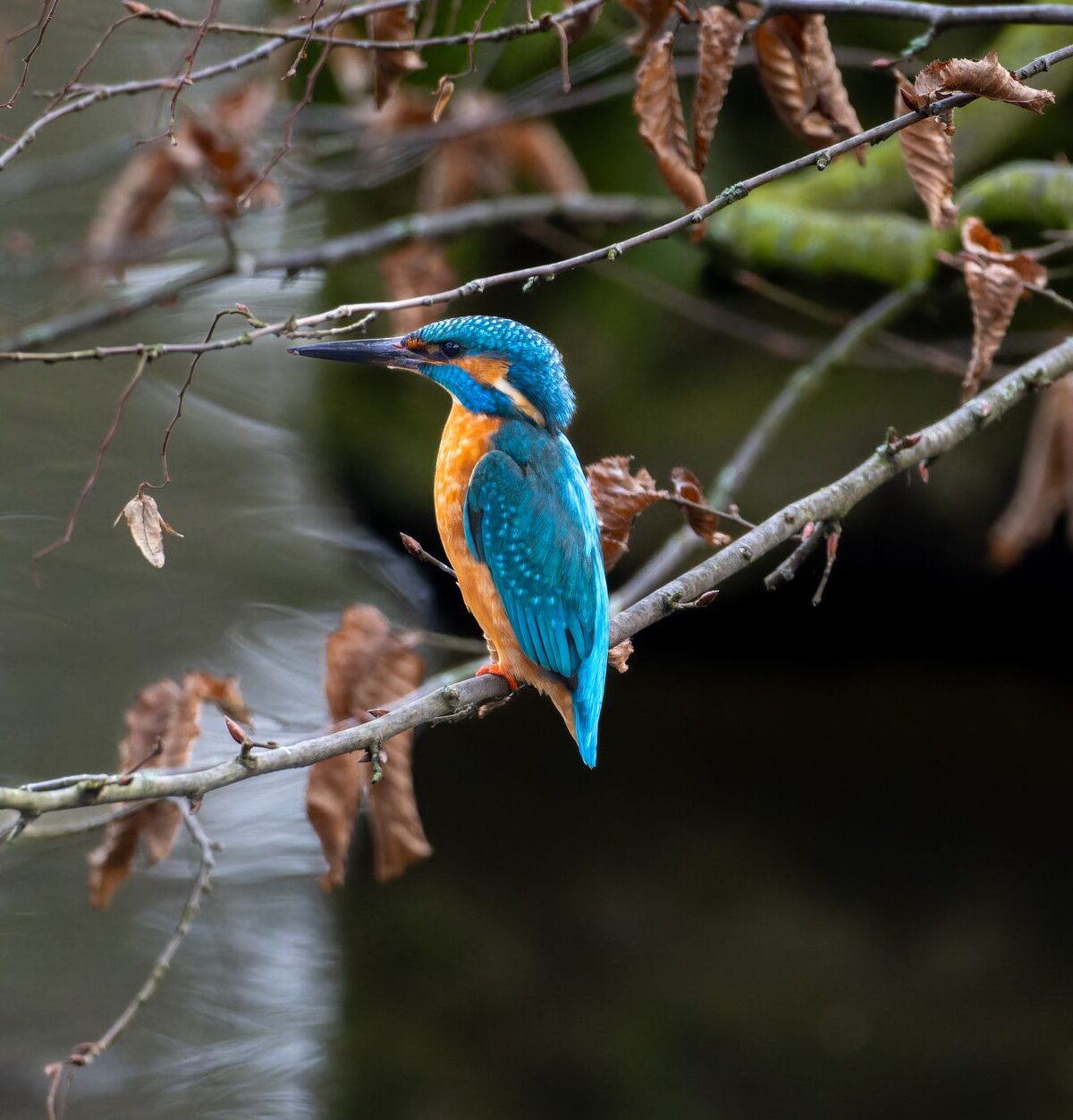
KINGFISHER
Alcedinidae
DESCRIPTION
Kingfisher (Alcedinidae) is a family of small to medium-sized birds known for their vibrant plumage and distinctive long, pointed bills. They are often found near water bodies, where they exhibit remarkable fishing skills, diving to catch fish and other aquatic prey. Their striking colors, which can include bright blues, greens, and oranges, make them a favorite among birdwatchers and nature enthusiasts.
FUN FACTS
- Kingfishers have excellent vision, allowing them to spot fish from great distances above the water
- Their eyes are specially adapted to see clearly both in air and underwater, which aids in their hunting success
- | The largest kingfisher species, the Giant Kingfisher, can reach lengths of up to 45 cm and is known for its loud, distinctive call
- This species is often found near rivers and lakes in sub-Saharan Africa, where it hunts for fish and small mammals
QUICK INFO
Lifespan5-10 years in the wild, up to 15 in captivity
Average Weight50-200 g
Average Length10-45 cm
Diet TypePiscivore
Social Structuresolitary or in pairs, often territorial
Activity PatternDiurnal
Breeding SeasonSpring to early summer
- Habitat
- Kingfishers inhabit a variety of environments, including rivers, lakes, and coastal areas. They prefer habitats with abundant water and vegetation for nesting and hunting.
- Biomes
- Freshwater, Coastal
- Native Range
- Kingfishers are found worldwide, except for the polar regions and some oceanic islands.
- Continent
- Africa, Asia, Europe, Australia, Americas
- Countries
- widespread across many countries
- Diet
- Kingfishers primarily feed on fish, but they also consume crustaceans, insects, and small amphibians. Their hunting technique involves perching silently and then diving into the water to catch their prey.
- Diet Type
- Piscivore
- Favorite Food
- fish
- Social Structure
- solitary or in pairs, often territorial
- Activity Pattern
- Diurnal
- Group Size
- 1-2
- Territorial
- 1
 LC
LC
50-200 g
Weight
10-45 cm
Length
- Coloration
- vibrant blues, greens, and oranges
- Sexual Dimorphism
- males and females often have similar coloration, but some species exhibit slight differences in size or coloration patterns.
- Lifespan
- 5-10 years in the wild, up to 15 in captivity
- Offspring per Birth
- 3-6
- Sexual Maturity
- 1-2 years
- Breeding Season
- Spring to early summer
LC
Least Concern
IUCN Red List Status
- Population Status
- Many species of kingfishers are common, but some are threatened due to habitat loss.
- Wild Population Estimate
- unknown
- Population Trend
- Stable
- Endangered
- 0
- Threats
- The main threats to kingfishers include habitat destruction, pollution, and climate change, which can affect their food sources and nesting sites. Some species are also impacted by human encroachment on their natural habitats.
- Predators
- larger birds of prey, snakes, and some mammals may prey on kingfishers, especially their eggs and young.
- Defense Mechanisms
- Kingfishers often rely on their speed and agility to evade predators, as well as their ability to blend into their surroundings.
- Found in Zoos
- Common