


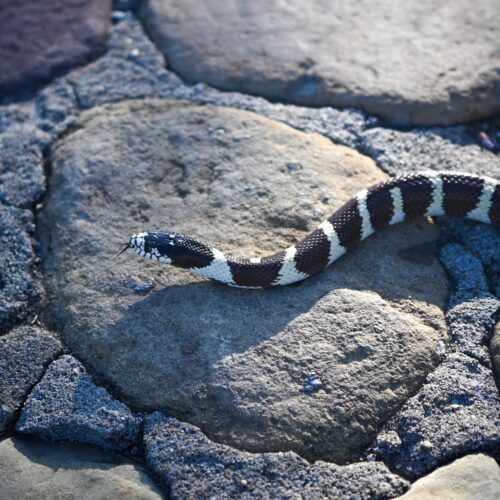
KINGSNAKE
DESCRIPTION
Kingsnakes are non-venomous constrictors known for their striking coloration and patterns, which can vary significantly among species. They typically exhibit a pattern of alternating bands or stripes, often in black, yellow, or white, making them visually appealing. These snakes are known for their docile nature and are often kept as pets, but they are also skilled hunters in the wild, preying on a variety of small animals.
FUN FACTS
- Kingsnakes are known for their ability to eat other snakes, including venomous species like rattlesnakes, without suffering any ill effects
- This unique trait makes them important for controlling snake populations in their habitats
- | They are also popular in the pet trade due to their striking appearance and relatively easy care requirements
- Kingsnakes can be found in a variety of color morphs, making them a favorite among reptile enthusiasts
QUICK INFO
Lifespan15-20 years in the wild, up to 30 in captivity
Average Weight0.5-2.5 kg
Average Length1.2-2.4 m
Diet TypeCarnivore
Social Structuresolitary
Activity PatternDiurnal
Breeding SeasonSpring (April-June)
- Habitat
- Kingsnakes inhabit a variety of environments, including forests, grasslands, and deserts. They are often found near water sources and are adept at climbing and burrowing.
- Biomes
- Temperate Forest, Grassland, Desert
- Native Range
- Kingsnakes are native to North America, ranging from southern Canada to northern Mexico.
- Continent
- North America
- Countries
- United States, Mexico, Canada
- Diet
- Kingsnakes primarily feed on other snakes, including venomous species, as well as small mammals, birds, and lizards. They are known for their ability to consume prey larger than themselves due to their flexible jaws.
- Diet Type
- Carnivore
- Favorite Food
- other snakes, small mammals
- Social Structure
- solitary
- Activity Pattern
- Diurnal
- Group Size
- 1
- Territorial
- 0
 VU
VU

0.5-2.5 kg
Weight
1.2-2.4 m
Length
- Coloration
- varies from black and yellow to brown and white patterns
- Sexual Dimorphism
- males are generally smaller than females
- Lifespan
- 15-20 years in the wild, up to 30 in captivity
- Offspring per Birth
- 3-24
- Sexual Maturity
- 2-3 years
- Breeding Season
- Spring (April-June)
LC
Least Concern
IUCN Red List Status
- Population Status
- Kingsnakes are generally common across their range, but local populations can vary.
- Wild Population Estimate
- unknown
- Population Trend
- Stable
- Endangered
- 0
- Threats
- Habitat loss and road mortality are the main threats to kingsnakes. They are also sometimes killed by humans due to misconceptions about their danger.
- Predators
- birds of prey, larger snakes, mammals such as raccoons and foxes
- Defense Mechanisms
- Kingsnakes may mimic the coloration of venomous snakes to deter predators and will also hiss and strike when threatened.
- Found in Zoos
- Common