


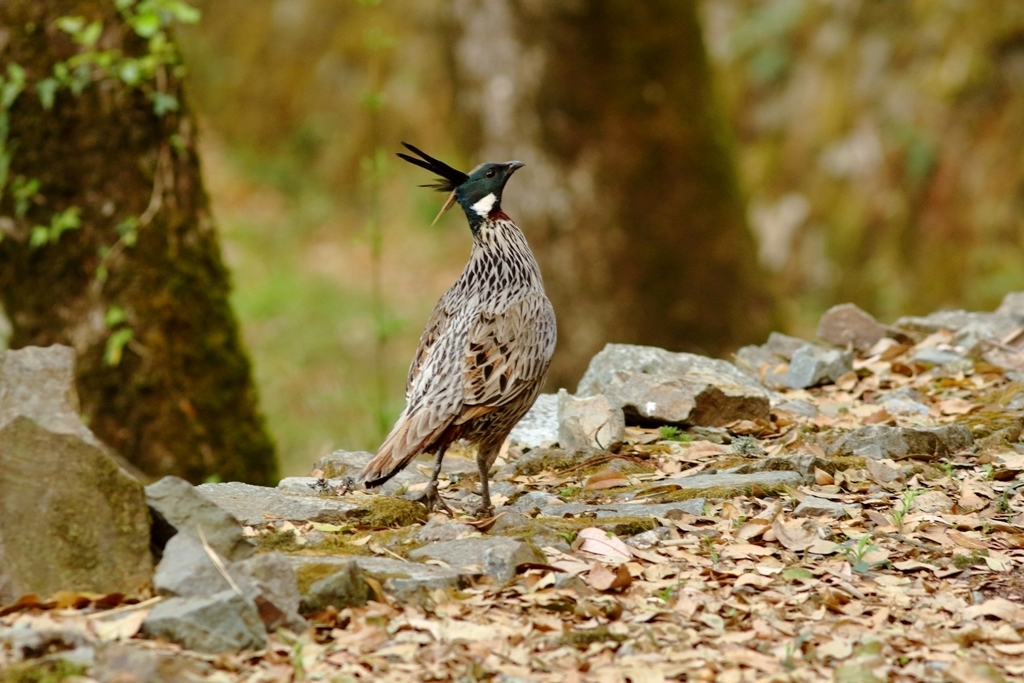
KOKLASS
Pucrasia macrolopha
DESCRIPTION
Koklass (Pucrasia macrolopha) is a medium-sized pheasant known for its striking plumage and distinctive call. The male Koklass has a unique combination of iridescent green and blue feathers, while the female is more cryptically colored in browns and grays to blend into its surroundings. This species is primarily found in the mountainous regions of the Himalayas, where it inhabits dense forests and shrubby areas, making it well-adapted to its rugged environment.
FUN FACTS
- Koklass is known for its unique vocalizations, which can be heard during the breeding season as males call to attract females
- These calls are not only important for mating but also serve to establish territory among males
- | The Koklass is a skilled climber, often seen navigating steep and rocky terrains in its mountainous habitat
- This ability allows it to escape predators and access food sources that are less available to other ground-dwelling birds
QUICK INFO
Lifespan5-10 years in the wild, up to 15 years in captivit
Average Weight1-1.5 kg
Average Length50-60 cm
Diet TypeOmnivore
Social Structuresolitary or in pairs, with males often displaying to attract females during the breeding season.
Activity PatternDiurnal
Breeding SeasonSpring (March-May)
- Habitat
- Koklass prefers dense forests and shrubby areas in mountainous regions, often at elevations between 1,500 and 3,500 meters. They are well-camouflaged in their natural habitat, which provides cover from predators.
- Biomes
- Temperate Forest, Montane Forest
- Native Range
- Koklass is native to the Himalayan region, specifically found in parts of India, Nepal, and Bhutan.
- Continent
- Asia
- Countries
- India, Nepal, Bhutan
- Diet
- Koklass primarily feeds on seeds, fruits, and leaves, foraging on the forest floor. They may also consume insects and small invertebrates, especially during the breeding season.
- Diet Type
- Omnivore
- Favorite Food
- seeds, fruits, leaves
- Social Structure
- solitary or in pairs, with males often displaying to attract females during the breeding season.
- Activity Pattern
- Diurnal
- Group Size
- 1-2
- Territorial
- 1
 LC
LC

 VU
VU
1-1.5 kg
Weight
50-60 cm
Length
- Coloration
- males have iridescent green and blue plumage, while females are brown and gray for camouflage.
- Sexual Dimorphism
- males are more colorful and larger than females.
- Lifespan
- 5-10 years in the wild, up to 15 years in captivit
- Offspring per Birth
- 4-8 eggs
- Sexual Maturity
- 1 year
- Breeding Season
- Spring (March-May)
LC
Least Concern
IUCN Red List Status
- Population Status
- The population of Koklass is currently stable, but habitat loss poses a potential threat.
- Wild Population Estimate
- unknown
- Population Trend
- Stable
- Endangered
- 0
- Threats
- Main threats include habitat destruction due to deforestation and human encroachment. Additionally, hunting poses a risk in some areas.
- Predators
- eagles, foxes, and other birds of prey.
- Defense Mechanisms
- Koklass relies on its excellent camouflage to avoid detection by predators, often remaining motionless when threatened.
- Found in Zoos
- Uncommon