


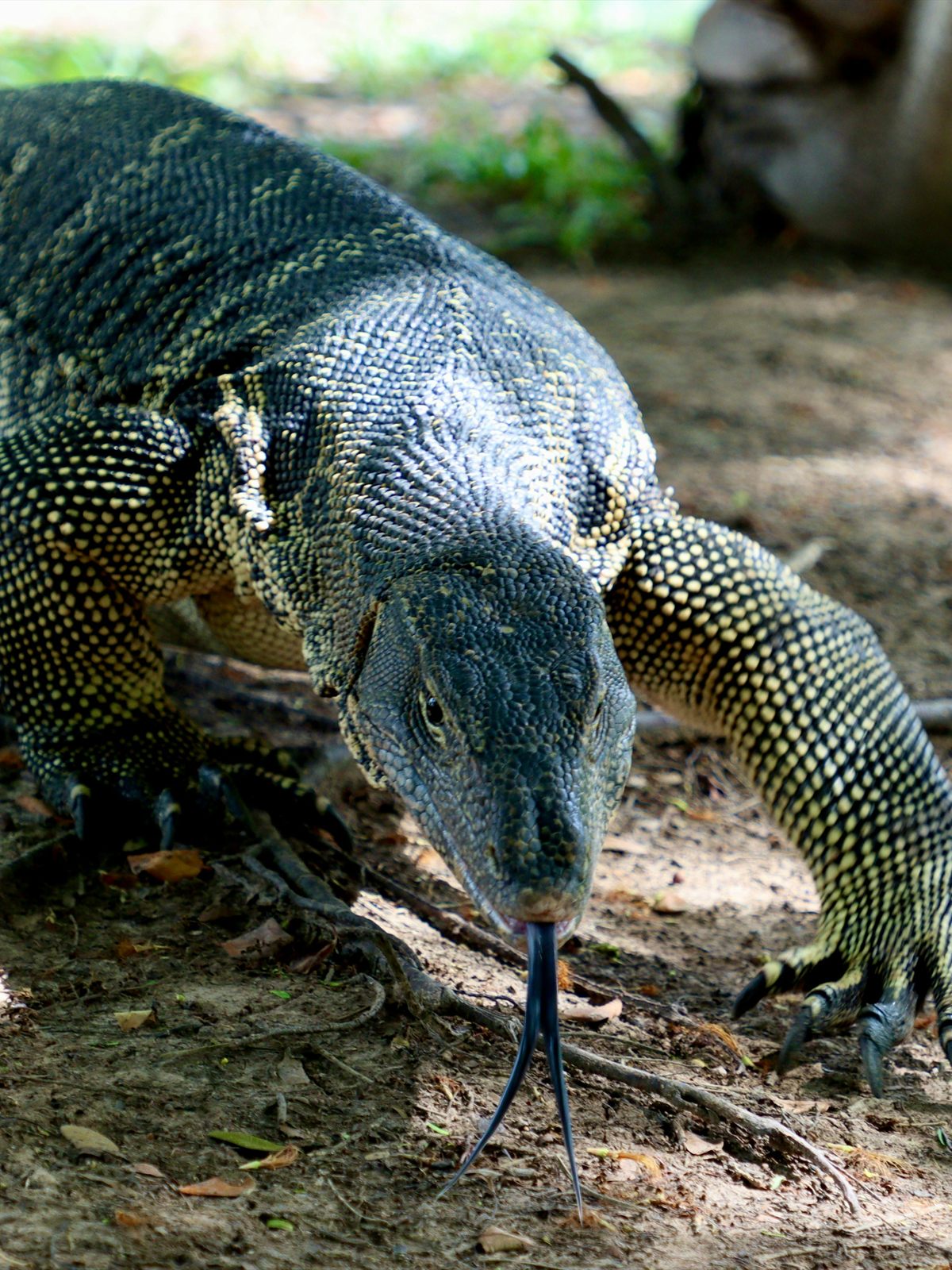
KOMODO DRAGON
Varanus komodoensis
DESCRIPTION
The Komodo dragon is the largest living lizard species, known for its impressive size and predatory behavior. Native to a few Indonesian islands, it is a formidable carnivore with a unique hunting strategy.
FUN FACTS
- Komodo dragons can run up to 20 km/h in short bursts | They have a keen sense of smell, using their forked tongues to detect scents | Their bite can be lethal due to venomous saliva
QUICK INFO
Lifespan30 years in the wild, up to 50 in captivity
Average Weight70-90 kg
Average Length2-3 m
Diet TypeCarnivore
Social Structuresolitary, typically found alone except during mating or feeding
Activity PatternDiurnal
Breeding SeasonSpring (April-June)
- Habitat
- Komodo dragons inhabit dry, open grasslands, savannas, and tropical forests. They prefer areas with plenty of cover for ambushing prey.
- Biomes
- Savanna, Tropical Forest
- Native Range
- The Komodo dragon is native to the islands of Komodo, Rinca, Flores, and Gili Motang in Indonesia.
- Continent
- Asia
- Countries
- Indonesia
- Diet
- Komodo dragons primarily eat large prey, including deer, pigs, and even smaller dragons. They are known to scavenge as well, consuming carrion when available.
- Diet Type
- Carnivore
- Favorite Food
- deer, pigs
- Social Structure
- solitary, typically found alone except during mating or feeding
- Activity Pattern
- Diurnal
- Group Size
- 1-3
- Territorial
- 1
70-90 kg
Weight
2-3 m
Length
- Coloration
- Typically brown or gray with a rough, scaly texture and occasional yellow or white markings.
- Sexual Dimorphism
- Males are generally larger than females.
- Lifespan
- 30 years in the wild, up to 50 in captivity
- Offspring per Birth
- 15-30
- Sexual Maturity
- 3-5 years
- Breeding Season
- Spring (April-June)
VU
Vulnerable
IUCN Red List Status
- Population Status
- The population is currently declining due to habitat loss and hunting.
- Wild Population Estimate
- 3,000-5,000
- Population Trend
- Decreasing
- Endangered
- 1
- Threats
- Main threats include habitat destruction, poaching, and climate change affecting their island habitats.
- Conservation Program
- Komodo National Park conservation efforts
- Defense Mechanisms
- They use their size and strength to intimidate, and their saliva contains bacteria that can infect prey.
- Found in Zoos
- Uncommon